
7 Power Pressing Machine Buying Tips for Global Buyers
Buying a Power Pressing Machine is not a simple price comparison. It is a decision about production speed, operator safety, maintenance, and long-term reliability. A machine may look impressive in a showroom, yet perform poorly with your actual materials, tooling, or production volume. Global buyers must examine more than tonnage and motor power.
Dan Petersen, a respected industrial safety authority, wrote, “Safety is a line management responsibility.” His statement remains highly relevant when selecting a Power Pressing Machine. The right equipment should include dependable guarding, emergency stops, clear controls, and documented safety procedures. Ask suppliers for test results, certifications, installation guidance, and service records. Do not accept vague promises.
Small details matter. Check the rated capacity, stroke length, slide adjustment, working speed, and die compatibility. Confirm whether the electrical system matches your factory. Review spare-parts availability in your region. A low purchase price can become expensive when a control board waits months for shipment. That happens.
This guide presents seven practical buying tips for global buyers. It considers machine structure, automation, energy use, operator training, after-sales support, total ownership cost, and supplier credibility. These areas help connect technical specifications with real workshop conditions. Still, no checklist can replace a physical trial. Material behavior may differ from the supplier’s sample. Tooling may introduce unexpected vibration. Buyers should remain critical, document every assumption, and request measurable evidence before signing. A careful decision may feel slower today, but it can prevent costly downtime tomorrow.
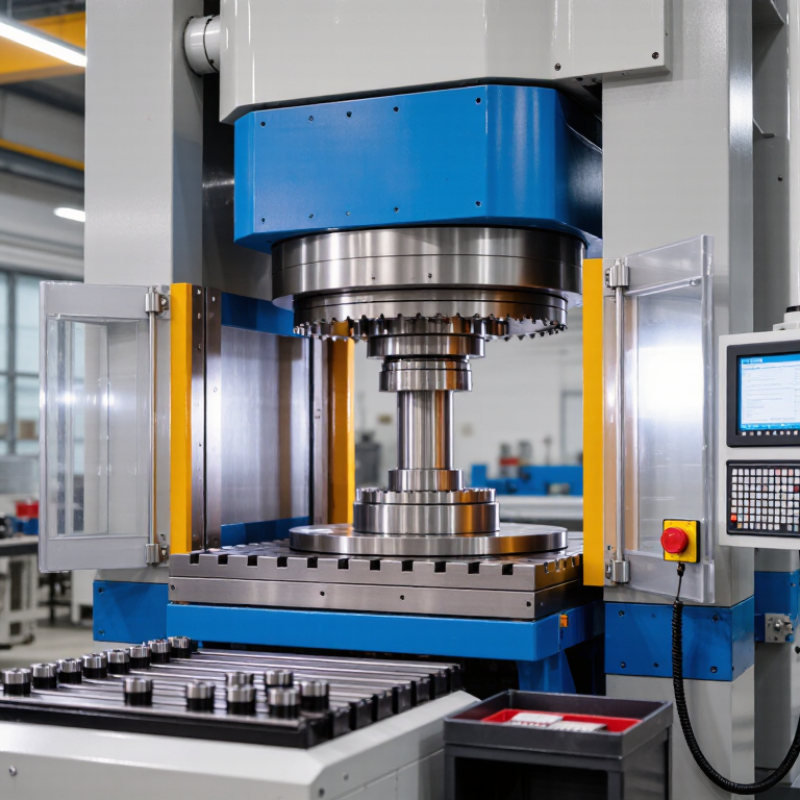
Define Your Power Pressing Machine Requirements
Before comparing machines, describe the work in measurable terms. Identify the material type, thickness, sheet size, and required forming depth. A small sample often reveals details that a catalog misses. Record the largest and most frequent jobs, not only the easiest ones.
Estimate the required pressing force with a qualified engineer or experienced technician. Material strength, bend length, tooling, and forming method all affect tonnage. Avoid choosing maximum capacity alone. Excess capacity can increase purchase and operating costs. Insufficient capacity may cause poor forming, premature wear, or unsafe stress. Check the machine’s stroke, daylight, throat depth, working speed, and repeatability. These specifications determine whether the machine fits your actual workflow. Measure your workshop space carefully. Include room for loading, unloading, maintenance, and material movement.
Consider electrical supply, production volume, operator skill, and future changes. A machine for occasional work may not need advanced automation. A busy production line may require cycle monitoring and programmable settings. Safety equipment must match the machine and workplace risk assessment. Consult current local requirements before installation. Do not rely on a generic checklist. It can miss important site conditions. I have seen specifications change after measuring real workpieces. That is normal. Confirm tooling compatibility, spare-part access, training, warranty terms, and service response in writing. A clear requirement sheet helps suppliers provide comparable quotations and reduces expensive misunderstandings.

Compare Machine Types, Capacities, and Key Specifications
When comparing power pressing machines, start with the forming method, not the advertised tonnage. Mechanical presses suit high-speed blanking and stamping, while hydraulic presses provide adjustable force and longer dwell time. Servo presses offer precise slide control, but their higher purchase cost deserves careful production analysis.
Capacity must match the real process. Check rated force, stroke length, slide speed, bed size, shut height, and allowable die weight. A 160-ton press may handle a shallow steel component but struggle with deep drawing. The 2024 World Steel in Figures report recorded about 1.89 billion tonnes of crude steel production in 2023, showing the scale of forming demand, but material grade still changes the calculation. Test the exact alloy and thickness whenever possible.
Energy use also matters. The International Energy Agency reports that industry consumed roughly 37% of global final energy in 2022. Hydraulic systems can waste energy during idle periods, while servo systems may reduce unnecessary motion. Verify this with measured operating data, not brochure estimates. Safety deserves equal attention: ISO 16092-1 covers general safety requirements for mechanical presses. I would request guarding details, emergency-stop tests, noise readings, and maintenance access. A rushed comparison misses small costs. My own buying checklist would also include spare-part lead times, operator training, and local electrical compatibility. This is easy to overlook.
Evaluate Safety Features, Controls, and Operating Efficiency
Buying a power pressing machine requires more than comparing pressure ratings. Safety features deserve close attention, especially for factories with multiple operators. Look for guarded work zones, emergency stops, overload protection, and reliable two-hand controls. These features should be easy to reach, test, and maintain. A machine can appear safe on paper but perform poorly when inspections are neglected.
Tip 1: Ask for documented safety tests, wiring diagrams, and maintenance instructions. Check whether protective devices remain active during setup and adjustment. Controls should be clearly labeled and responsive, with simple status indicators. A short learning curve reduces operating mistakes. Still, training cannot be ignored. Even experienced workers may bypass a control when production pressure rises.
Tip 2: Evaluate operating efficiency through cycle time, energy use, noise, and changeover effort. Variable pressure settings can prevent unnecessary power consumption and material damage. Review how quickly the machine reaches working pressure. Also examine access to filters, seals, and electrical components. Small maintenance delays can become expensive downtime. I have seen buyers focus on output figures and overlook cleaning access. That was a costly oversight. Ask for realistic production data, not only laboratory results. Confirm local electrical compatibility and safety requirements before purchase. Efficiency is valuable, but predictable operation matters more.
7 Power Press Machine Buying Tips for Global Buyers
This 100-point reference model prioritizes documented risk reduction, operator protection, control reliability, and measurable operating efficiency. Buyers should verify guarding, emergency-stop performance, control-system safety, electrical compliance, maintenance access, energy consumption, and production speed against applicable requirements such as ISO 12100, ISO 13849-1, IEC 60204-1, and ISO 16092-1.
Check Supplier Quality, Certifications, and After-Sales Support
Buying a power pressing machine requires more than comparing tonnage and price. Ask the supplier for factory photos, production records, and a live load test. Inspect frame welds, hydraulic connections, guarding, and emergency stops. Small oil marks may signal poor sealing. Request a test using material similar to your daily work. A machine that performs well with thin samples may struggle under continuous production.
Check whether the supplier holds relevant quality and safety certifications for your destination market. Ask for certificate numbers, issuing bodies, and current validity dates. Do not rely on a logo printed in a brochure. Compare the machine model, electrical specification, and certificate details carefully. A missing document can delay customs clearance or workplace approval. I once focused too heavily on certification files and overlooked operator training. That mistake was expensive.
After-sales support deserves equal attention. Confirm warranty coverage, response times, spare-parts availability, installation guidance, and remote troubleshooting methods. Request a clear list of excluded parts and labor. Ask how quickly the supplier can provide seals, sensors, and control components. Test their support before purchase by sending technical questions. Vague replies are a warning. Keep written records of every promise. A supplier may sound reliable during negotiation, yet perform differently after payment. Reference customers can reveal that gap, but their feedback may not match your working conditions.
Calculate Total Costs, Delivery Terms, and Long-Term Value
7 Power Pressing Machine Buying Tips for Global Buyers
Calculate the complete cost before comparing machine prices. Include tooling, control options, packaging, insurance, inland transport, installation, training, and spare parts. A low quotation can become expensive after customs clearance. Request a written cost sheet with every assumption.
Check the delivery term carefully. Confirm whether the price covers export handling, ocean freight, unloading, and final-site delivery. Ask for the production lead time, shipping window, and delay responsibility. Use a clear inspection plan before shipment. Test stroke accuracy, cycle speed, noise, guarding, and emergency stops against signed requirements. My first estimate once ignored port storage. It was not a small mistake.
Study long-term value, not only purchase price. Compare energy use per cycle, maintenance intervals, expected tooling life, and service response times. Ask how quickly common parts can arrive in your region. Review the warranty exclusions, especially for wear components. Keep records of test reports, manuals, training attendance, and service contacts. A five-year cost model is useful: purchase cost plus operation, maintenance, downtime, and disposal. Include currency changes and local taxes. They can shift the result. Seek evidence from comparable production environments, but verify the figures independently. A machine with a higher initial cost may deliver steadier output and fewer interruptions. Still, projected savings are not guaranteed. Challenge optimistic claims with practical trials and measurable acceptance targets.
| Buying Tip | Key Data Dimension | Cost or Calculation Method | Practical Benchmark | Recommended Buyer Action |
|---|---|---|---|---|
| 1 Define the Required Capacity | Rated force, material thickness, sheet width, stroke length, strokes per minute, and die dimensions. | Select a press with enough rated force for the highest expected load. Avoid using the maximum rated capacity continuously; include an engineering safety margin based on the forming operation. | Common general-purpose power presses are often specified from approximately 25 to 200 metric tonnes, while the correct capacity depends on the material, tooling, and operation. | Provide the supplier with material type, tensile strength, thickness range, part drawing, production quantity, and tooling details before requesting a quotation. |
| 2 Calculate the Total Cost of Ownership | Purchase price, tooling, installation, training, spare parts, electricity, maintenance, downtime, and disposal value. | Total Cost of Ownership = machine price + logistics + import charges + installation + energy and maintenance costs over the planned service period − residual value. | A lower purchase price can be outweighed by recurring costs. Compare at least a 5-year ownership period using the same production volume and operating hours. | Request a line-item quotation and calculate cost per finished part, not only the initial machine price. Include consumable items such as lubricants, belts, seals, and electrical components. |
| 3 Compare Delivery Terms Correctly | Incoterms, export packing, inland transport, ocean or air freight, insurance, customs clearance, duties, taxes, and destination delivery. | Landed Cost = quoted price + origin charges + freight + insurance + destination handling + customs duty + import tax + inland delivery. | Ocean freight is generally more economical for heavy machinery, while air freight is normally reserved for urgent documents or small spare parts. Confirm the applicable duty classification locally. | Ask for comparable quotations under the same delivery term, such as EXW, FOB, CIF, or DAP. Confirm which party pays unloading, terminal handling, customs brokerage, and final-site transport. |
| 4 Verify Electrical and Site Requirements | Voltage, frequency, phase, motor power, maximum current, foundation load, machine footprint, working height, and ambient conditions. | Check that the machine rating matches the local electrical supply. Estimate annual energy cost using: input kW × operating hours × electricity rate. | Industrial power presses commonly require three-phase power. Typical motor ratings vary considerably with press size and duty cycle, so the final value must be confirmed on the technical data sheet. | Confirm the local voltage and frequency before production. Obtain foundation drawings, total machine weight, anchor-bolt details, lifting points, and recommended clearance around the machine. |
| 5 Evaluate Safety and Compliance | Guarding, two-hand controls, emergency stops, light curtains, overload protection, clutch and brake design, lockout provisions, and technical documentation. | Budget for any safety upgrades, guarding changes, certification, inspection, or electrical modifications required by the installation country and workplace regulations. | Safety requirements differ by jurisdiction and application. A machine should not be accepted solely because it has an emergency-stop button; the complete safeguarding system must be assessed. | Request a safety component list, risk assessment, wiring diagram, operating manual, conformity documents, and factory acceptance test records. Have a qualified local safety professional review the installation. |
| 6 Check Serviceability and Spare-Parts Support | Warranty period, response time, spare-parts availability, recommended maintenance intervals, lubrication points, and technician support. | Estimate annual maintenance cost from scheduled service, replacement parts, technician travel, and planned downtime. Add the production value lost during unexpected stoppages. | Keep a recommended initial spare-parts set for wear and failure-prone items. Lead times should be confirmed in writing; international replacement parts may require several weeks. | Obtain exploded diagrams, parts numbers, maintenance schedules, troubleshooting procedures, and a written warranty. Confirm whether remote commissioning and operator training are included. |
| 7 Measure Long-Term Production Value | Availability, cycle time, changeover time, repeatability, scrap rate, operator requirements, usable working life, and resale value. | Cost per Good Part = annualized ownership cost ÷ annual good-part output. Include setup time, quality losses, downtime, and labor in the comparison. | Compare suppliers using the same test material and tooling. A machine with higher repeatability and shorter changeovers may provide greater value even when its purchase price is higher. | Request a documented production trial using representative material and tooling. Record output rate, dimensional results, noise, vibration, changeover time, and scrap percentage before signing final acceptance. |
| Planning note: The benchmarks above are general purchasing guidelines rather than a substitute for machine-specific engineering, local electrical rules, customs advice, or workplace safety assessment. Final specifications, prices, freight costs, duties, and delivery dates should be confirmed in the supplier's written quotation and contract. | ||||
Article Source:
At Premium PSU, we are specialists in designing and manufacturing power conversion systems for the industrial market. Our product range includes high reliability power supplies from 50W to 72kW.
PREMIUM PSU
C/ Dolors Aleu, 19-21, 2nd Floor
08908 – Hospitalet de Llobregat
Barcelona-SPAIN
t.+34 93 223 26 85