What is an AC to DC Converter and How Does it Work?
In the era of renewable energy and electrification, the demand for efficient power conversion technology is booming. An AC to DC converter plays a crucial role in this landscape. According to a report by MarketsandMarkets, the global power electronics market is projected to reach $42.5 billion by 2026, underlining the increasing need for reliable AC to DC conversion solutions.
These converters transform alternating current (AC) into direct current (DC), which is essential for various applications. Common devices using AC to DC converters include smartphones, laptops, and electric vehicles. The efficiency of these converters is vital. As of 2022, average conversion efficiency rates are reported at around 85%, but many converters still struggle with performance issues.
Understanding the workings of AC to DC converters is essential for various industries. However, challenges remain, as some devices face overheating and energy loss. These issues must be addressed to enhance performance and reliability. Thus, continual innovation in AC to DC technology is crucial for future advancements in energy efficiency.
What is an AC to DC Converter? Definition and Overview
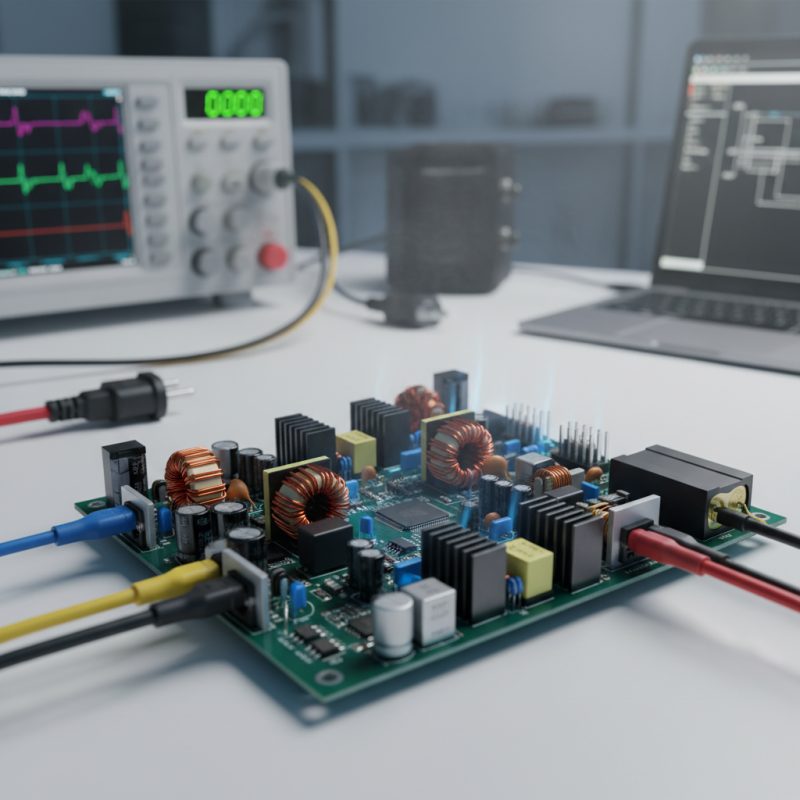
An AC to DC converter is a device that transforms alternating current (AC) into direct current (DC). AC flows in both directions, while DC flows in one direction. This conversion is essential for many electronic applications, as most electronic devices require DC power. Understanding this process highlights its importance in our daily lives.
The core components of an AC to DC converter include a transformer, rectifier, and filter. The transformer steps down the voltage to a suitable level. The rectifier then converts AC to DC. Rectifiers can be simple diodes, but more complex configurations exist. After this, the filter smooths the output, reducing ripples. Yet, sometimes the filter does not fully eliminate fluctuations.
Despite its usefulness, the efficiency of AC to DC converters can be an issue. Some energy is often lost as heat. This inefficiency can lead to higher electricity bills and environmental concerns. It's crucial to explore ways to improve these systems to make them more effective. The journey of converting AC to DC is valuable, yet it has room for growth and advancement.
The Working Principle of AC to DC Conversion Explained
AC to DC converters play a vital role in our daily power systems. They convert alternating current (AC) into direct current (DC). This transformation is essential since many electronic devices operate on DC power. The process is not always seamless and involves several steps which can produce inefficiencies.
The working principle begins with rectification. Rectifiers, often diodes, allow current to flow in one direction only. This converts the AC sine wave into a pulsating DC signal. However, this raw output isn't a steady voltage. It requires smoothing. Capacitors, placed in the circuit, help smooth the fluctuations, creating a more stable DC output.
Next, the voltage may need regulation. Voltage regulators can help maintain a consistent output despite variations in input. Yet, not every converter achieves perfect efficiency. Some energy can be lost as heat during the conversion process. In an ideal world, every conversion would be perfect. However, this is where the concept of reflection comes into play. Understanding these imperfections allows for better designs in the future.
Key Components of AC to DC Converters: Diodes, Capacitors, and More
AC to DC converters play a crucial role in modern electronics. They change alternating current (AC) into direct current (DC). This process is essential for devices that require stable power. The key components of these converters include diodes, capacitors, and filters.
Diodes are the heart of AC to DC converters. They allow current to flow in one direction while blocking it in the opposite way. This unidirectional flow is essential for converting AC into usable DC. However, diodes can generate heat. This excess heat must be managed efficiently.
Capacitors in these converters smooth out the voltage. When the AC signal is rectified, it can be jagged and unstable. Capacitors store charge and release it when needed. They help maintain a steady output. Yet, choosing the right capacitor size can be tricky. Too small, and the output remains unstable; too large, and it adds cost. Filters may also be used to eliminate unwanted frequencies. Each component must work together seamlessly, but optimizing them can be challenging.
What is an AC to DC Converter and How Does it Work?
| Component | Function | Typical Specifications | Usage |
|---|---|---|---|
| Diode | Allows current to flow in one direction | Max forward current: 1A - 10A | Rectification in power supplies |
| Capacitor | Stores and smoothes DC voltage | Capacitance: 10μF - 1000μF | Smoothing output voltage |
| Transformer | Steps voltage up or down | Power rating: 1W - 100W | Adapting AC voltage for rectification |
| Voltage Regulator | Maintains constant output voltage | Output voltage: 5V - 12V | Providing stable DC output |
| Inductor | Stores energy in a magnetic field | Inductance: 1mH - 100mH | Filtering applications in power circuits |
Efficiency Metrics in AC to DC Converters: Understanding Power Ratings
The efficiency of AC to DC converters is crucial in today's electronic applications. These devices convert alternating current (AC) into direct current (DC) for various uses. Efficiency metrics determine how effectively this conversion occurs. A typical efficiency range for quality converters is between 80% and 95%. However, some converters may only achieve about 70% efficiency, resulting in energy loss.
Power ratings are important. Higher power ratings often mean greater efficiency. A report from the International Energy Agency highlights energy losses in electrical systems. It estimates that approximately 5-10% of energy is wasted during conversion processes. This inefficiency not only raises operational costs but also impacts environmental sustainability.
Tips: Use a high-efficiency converter. Look for units with higher power ratings. They may cost more upfront but will save money in the long run. Regular maintenance can also optimize performance. Even minor reflections on design and use can lead to significant improvements. Selecting the right components is essential for maximizing efficiency.
Common Applications of AC to DC Converters in Industry and Daily Life
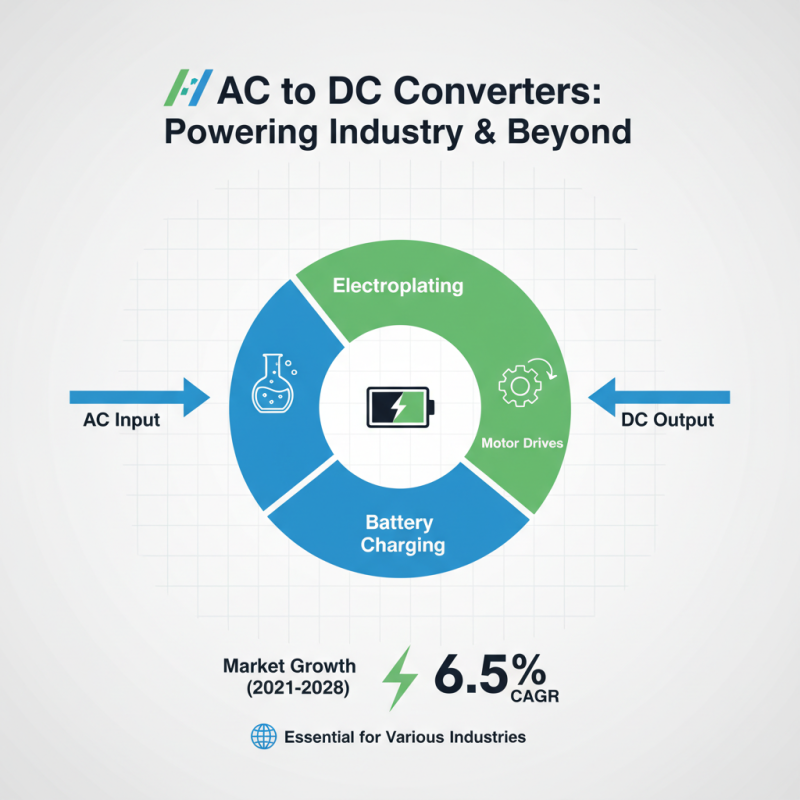
AC to DC converters play a crucial role in various industries and daily applications. They transform alternating current (AC) into direct current (DC), making them essential for powering devices that operate on DC electricity. In industry, these converters are commonly found in processes such as electroplating, battery charging, and driving motors. A recent industry report indicates that the market for AC to DC converters is expected to grow at a CAGR of 6.5% from 2021 to 2028. This highlights their increasing importance in industrial settings.
In daily life, AC to DC converters are present in numerous household devices. For instance, chargers for smartphones, laptops, and other electronics rely on these converters to function properly. The convenience they offer is undeniable; they allow devices to operate efficiently on a suitable power supply. However, one should be aware of the heat generated by these converters during operation. Excessive heat can lead to inefficiencies, potentially shortening the lifespan of devices.
**Tip:** Regularly check the power ratings of your devices. Ensure your AC to DC converter matches their specifications. This can prevent overheating and improve efficiency.
Another common application is in renewable energy systems. Solar panels often convert energy through inverters and require AC to DC converters to store energy in batteries. While these systems are beneficial, poor installation can lead to energy losses. It's crucial to consult a professional for optimal setup.
**Tip:** Monitor your solar energy system's performance. Keeping an eye on energy output can help maintain efficient operation.
Related Posts
-
Top AC to DC Converter Tips for Optimal Performance?
-
Unlocking Efficiency: How Switching Power Supplies Transform Modern Electronics
-
Why You Should Choose an AC to DC Converter for Your Electronic Applications
-

Top 10 High Voltage DC Power Supply Applications You Should Know?
-
What are the Best High Voltage DC DC Converters in 2026?
-
How to Choose the Right DC to AC Converter for Your Power Needs

At Premium PSU, we are specialists in designing and manufacturing power conversion systems for the industrial market. Our product range includes high reliability power supplies from 50W to 72kW.
PREMIUM PSU
C/ Dolors Aleu, 19-21, 2nd Floor
08908 – Hospitalet de Llobregat
Barcelona-SPAIN
t.+34 93 223 26 85