Top AC to DC Converter Tips for Optimal Performance?
The AC to DC converter industry plays a crucial role in various applications. According to Peter Thompson, a leading expert in power electronics, "The efficiency of an AC to DC converter can make or break a project." This highlights the importance of optimal performance in these devices.
When selecting an AC to DC converter, factors like voltage regulation and thermal management are essential. Many professionals overlook these elements, which can lead to inefficiencies and performance issues. An incorrectly sized converter may result in overheating or insufficient power delivery. Proper analysis and selection prevent future headaches and costly mistakes.
Furthermore, understanding the load requirements is vital. Each application has unique demands that must be met. Some users often underestimate these needs, leading to equipment failure. Evaluating the system thoroughly ensures that the right AC to DC converter is chosen for long-term reliability.
Understanding the Basics of AC to DC Conversion Technology
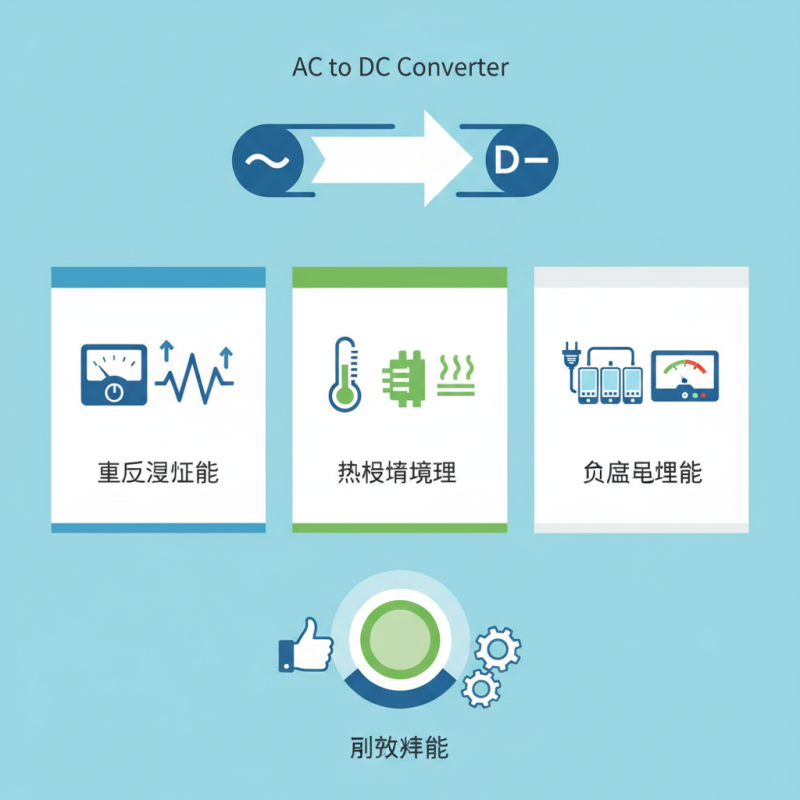
AC to DC conversion is integral to many electronic devices. Understanding its basics can enhance efficiency. Alternating current (AC) is prevalent in power grids, while direct current (DC) is what most appliances require. The conversion process involves rectification and filtering, which help to transform AC’s waveform into a smoother DC output. Recent reports by energy experts show that proper conversion can improve system efficiency by up to 30%.
Here are some tips for optimal performance. Ensure your converter is rated for your specific voltage requirements. Underestimating this can lead to overheating. Regularly inspect connections and components. Loose or corroded connections can cause inefficiencies. Additionally, consider the use of a quality capacitor. This simple component can greatly smooth voltage output, enhancing performance.
Be aware of your converter's limitations. An overworked converter can lead to failures. If your application demands high current, choose a converter that can handle the load. Monitoring performance regularly can identify potential issues before they escalate. Gathering data on your energy consumption can guide you towards better decision-making for AC to DC conversions.
Top AC to DC Converter Performance Data
This chart illustrates key performance metrics for AC to DC converters, showcasing efficiency, ripple voltage, load regulation and temperature coefficient. Analyzing these metrics can help in selecting the optimal converter for specific applications.
Key Factors Affecting Efficiency in AC to DC Converters
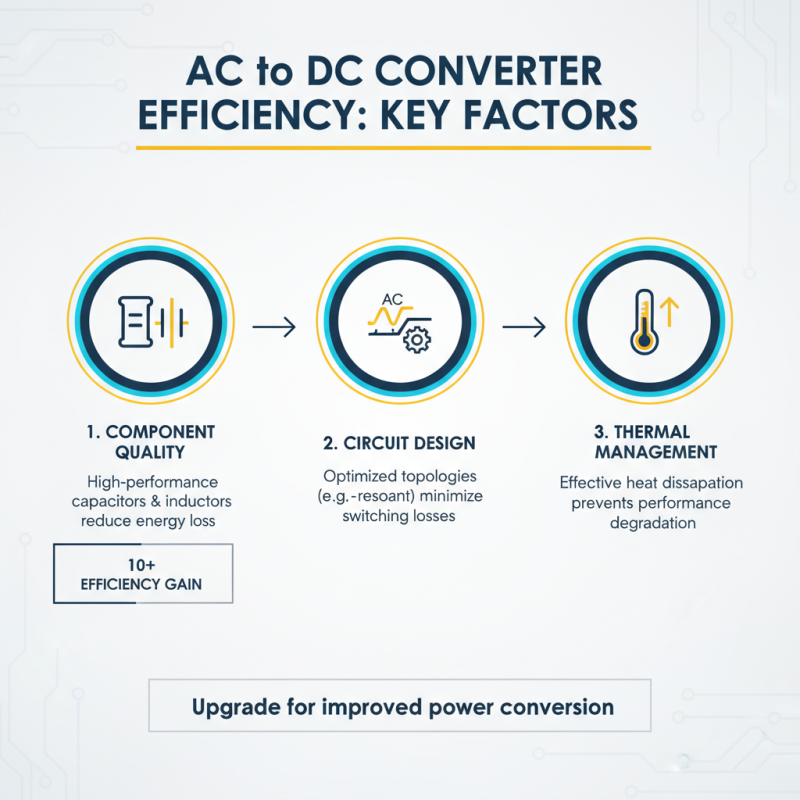
Efficiency in AC to DC converters is influenced by several key factors. One significant aspect is the quality of components used. For instance, capacitors and inductors with higher ratings can reduce energy losses during the conversion process. Reports indicate that upgrading to high-performance components can improve efficiency by 10% or more.
Another critical factor is the design topology of the converter. Common topologies like buck, boost, and buck-boost offer varying levels of efficiency. Studies show that synchronous rectification can enhance efficiency by up to 5% compared to conventional methods. However, the complexity of such designs can lead to potential reliability issues.
Thermal management also plays a role. High temperatures can degrade performance and longevity. Research suggests that maintaining a cooler environment can improve lifespan and efficiency by 15%. Yet, ensuring effective cooling can be challenging. Balancing these elements, while striving for optimal performance, requires careful consideration and ongoing reflection on design choices.
Top Components for Enhancing Converter Performance
Selecting the right components is crucial for enhancing the performance of your AC to DC converters. Capacitors play a significant role in this process. They help smooth out voltage variations. Opt for high-quality electrolytic capacitors, but be aware of their temperature ratings. If they exceed safe limits, performance can degrade.
Another key component is the diode. Schottky diodes are popular choices due to their low forward voltage drop. However, be cautious of their current ratings. Using a diode that can’t handle the load will lead to inefficiencies. It’s a common mistake that can easily be avoided with proper calculations.
Inductors also contribute greatly to converter performance. They help filter out noise and stabilize output current. Selecting the right inductor with proper inductance values can make or break your system. But sometimes, a larger inductor is chosen, leading to space and weight issues. Always balance performance with practicality.
Top AC to DC Converter Tips for Optimal Performance
| Component | Tip | Benefit | Recommended Rating |
|---|---|---|---|
| Capacitors | Use high-quality electrolytic capacitors | Improved ripple current handling | 1000µF, 50V |
| Diodes | Select Schottky diodes for rectification | Lower forward voltage drop | 3A, 40V |
| Inductors | Opt for low DCR inductors | Reduced losses and improved efficiency | 10µH, 5A |
| PCB Layout | Optimize component placement | Minimized parasitic effects | N/A |
| Heat Sinks | Use adequate heat sinks on power components | Enhanced thermal management | Medium profile |
Industry Standards and Regulations for AC to DC Converters
When dealing with AC to DC converters, industry standards play a crucial role. These standards ensure safety and performance. Devices must comply with regulations such as IEC and UL. These guidelines cover aspects like efficiency, thermal management, and electrical isolation. They help protect users and enhance performance, but meeting these standards can be challenging.
Choosing the right components is essential. Not all capacitors and transformers meet the stringent requirements. It's important to verify their specifications. Poor choices can lead to inefficiency and potential hazards. Testing is vital too. Many may skip this step, underestimating its importance. Regular testing ensures that the converter operates within the desired parameters.
Sometimes, cost-cutting measures can lead to oversight. A cheaper component might save money upfront but can cause issues later. It's a delicate balance between cost and quality. Being aware of this can help manufacturers avoid pitfalls. Adhering to industry standards is not just about compliance; it's about ensuring reliability and safety in every application.
Maintenance Practices for Long-Term Optimal Performance
Regular maintenance is crucial for ensuring long-term optimal performance of AC to DC converters. Dust accumulation can hinder efficiency. Regularly check for dust and debris in the unit. A quick clean can make a significant difference. Use a soft brush or compressed air to remove build-up.
Temperature management also plays a vital role. These converters generate heat during operation. High temperatures can lead to failure. Ensure the converter is placed in a well-ventilated area. Monitor the surrounding temperature regularly. Overheating can often go unnoticed until it’s too late.
Connections should not be overlooked. Loose or corroded terminals can cause performance issues. Inspect all connections periodically. Tighten any loose wires and clean corrosion with appropriate tools. This simple task can greatly improve reliability. It's easy to forget these aspects, yet they are key to efficiency.
Related Posts
-
Unlocking Efficiency: How Switching Power Supplies Transform Modern Electronics
-
Why You Should Choose an AC to DC Converter for Your Electronic Applications
-
Decoding Power Inverters: Understanding Efficiency Ratings and Their Impact on Your Energy Bills
-
Understanding DC Power Supply: Key Components and Their Impact on Modern Electronics
-
Maximizing Efficiency with Your UPS Power Supply for Home and Office Use
-
How to Choose the Right UPS Power System for Your Needs

At Premium PSU, we are specialists in designing and manufacturing power conversion systems for the industrial market. Our product range includes high reliability power supplies from 50W to 72kW.
PREMIUM PSU
C/ Dolors Aleu, 19-21, 2nd Floor
08908 – Hospitalet de Llobregat
Barcelona-SPAIN
t.+34 93 223 26 85