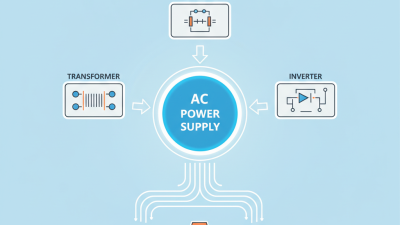
10 Best AC Power Supplies for Global Buyers?
Choosing the right AC power supply is rarely a simple matter of comparing wattage. Global buyers must consider input voltage, frequency, output stability, protection features, and regional compatibility. A unit designed for a 120 V market may not suit a facility using 230 V power. Small details matter, such as terminal spacing, cooling noise, cable quality, and display readability under workshop lighting.
This guide examines ten AC power supplies for international purchasing decisions. Each option is considered through practical criteria, including voltage accuracy, waveform quality, load response, thermal management, and operating convenience. Safety documentation also deserves careful attention. Buyers should verify applicable regional conformity marks, manufacturer test reports, warranty terms, and technical support before placing an order. These checks help reduce surprises during installation, shipping, and long-term maintenance.
The best AC power supply depends on its intended environment. A laboratory may need precise programmable control, while a repair bench may value compact size and fast adjustment. Industrial users often prioritize continuous operation, remote monitoring, and service access. No ranking is permanent. Product availability, regional certification, and supplier reliability can change. Even an impressive specification sheet may hide limitations under heavy loads. That is why this comparison balances published data with practical questions buyers should ask. It is a useful starting point, not a substitute for testing. Careful readers may still disagree with some selections, and that is reasonable. Power requirements are never identical.
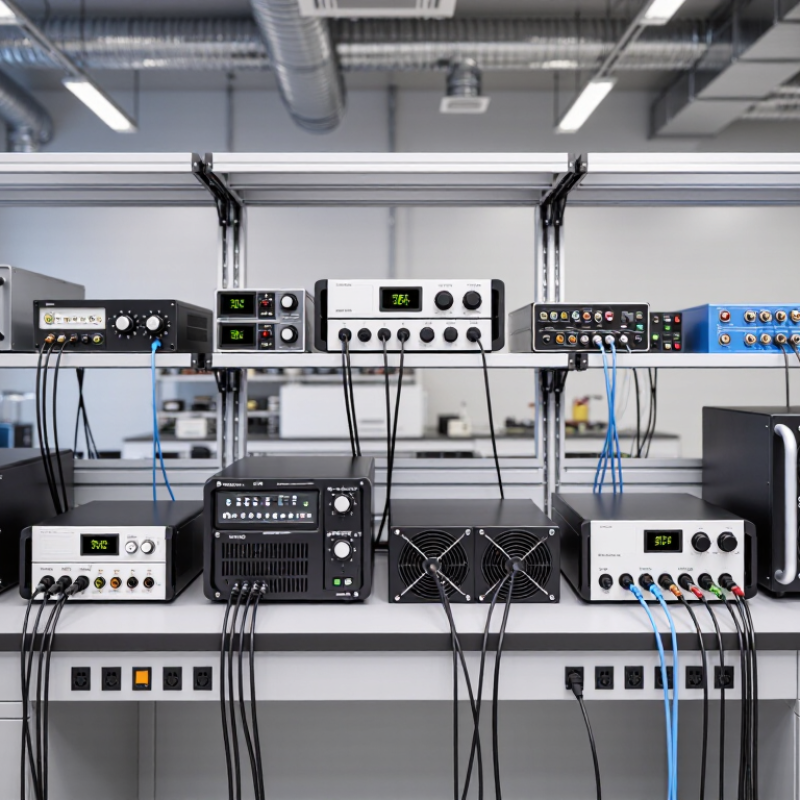
AC Power Supplies: Definition, Types, and Core Functions
AC power supplies deliver controlled alternating voltage and frequency to electrical equipment. They may transform, regulate, isolate, or generate AC power from an incoming source. In testing work, the output should remain stable when a device suddenly changes load. That is not always easy.
Common types include linear AC supplies, switching supplies, programmable AC sources, and variable transformers. Linear designs usually provide low electrical noise, but they can be heavy and less efficient. Switching designs are lighter and efficient, though their output may require careful filtering. Programmable sources let engineers adjust voltage, frequency, phase, and waveform through a control panel or software. Variable transformers offer simple voltage adjustment, but they may provide limited protection and no frequency control. Isolation models separate input and output circuits, which can support safer laboratory testing when used correctly.
Core functions include voltage regulation, frequency adjustment, current limiting, overload protection, short-circuit response, and output measurement. Some units simulate unstable grids, voltage dips, or frequency changes for equipment evaluation. Global buyers should check input voltage, plug compatibility, output ranges, safety certifications, cooling requirements, and local service support. A 50 Hz device may not behave correctly on a 60 Hz supply. Small details matter. In practical use, displayed readings can differ slightly from calibrated instruments, so independent verification remains worthwhile. Choosing only by maximum wattage is a common mistake; waveform quality, transient response, and continuous operating limits can matter more.
Key Specifications for Comparing AC Power Supplies
When comparing AC power supplies, start with the input specification. A global model should accept 100–240 VAC and 50/60 Hz without manual switching. Check output voltage accuracy, load regulation, ripple, and transient response. A laboratory supply may show excellent numbers at room temperature, yet drift inside a hot cabinet. That gap matters.
Efficiency is not just a marketing figure. The IEA’s Electricity 2024 report estimates data-center electricity use could exceed 1,000 TWh by 2026. Even small conversion losses become expensive at scale. Compare efficiency at 10%, 50%, and 100% load, not only at the headline rating. Review power factor, total harmonic distortion, inrush current, and standby consumption.
IEC 62368-1 also guides safety design for equipment used in professional environments. Verify protection against overvoltage, overcurrent, short circuits, and overheating. A 1,000-watt label alone proves little.
Tips: Ask for test conditions and independent reports. Confirm whether measurements use a 230-volt or 115-volt input. Check operating temperature, humidity limits, cooling method, connector fit, and service life. Uptime Institute’s 2024 Global Data Center Survey reported an average PUE of 1.56, showing why thermal losses deserve attention. I would also leave headroom, perhaps 20% to 30%, for startup surges and future loads. This is not universal. Motor loads can require more. Test the actual system before purchase.
Global Safety Standards, Voltage Ranges, and Compatibility
10 Best AC Power Supplies for Global Buyers?
For global buyers, voltage compatibility starts with the input label. Look for 100–240 V AC and 50/60 Hz support. This range covers many household grids, but not every installation. Some regions still require a suitable plug, fuse, or grounded connection. A travel adapter alone cannot correct unsafe voltage.
Safety evidence matters more than attractive specifications. Check applicable standards, such as IEC 62368-1 for information technology equipment. Industrial users may need IEC 61010-1 instead. EMC testing under the IEC 61000 series can reduce interference risks. Regional marks, including CE, UKCA, or RCM, should match the destination market. Certification documents should identify the exact model, not only a product family.
Output compatibility deserves equal attention. Confirm voltage, current capacity, frequency, waveform, connector size, and polarity where applicable. An adapter may fit physically yet damage sensitive equipment. In bench testing, I would measure output voltage under both light and rated loads. Heat also matters. A compact enclosure can become uncomfortably warm after several hours. I once focused too heavily on universal input range and overlooked cable strain relief. That was a useful mistake. Buyers should review leakage current, insulation, creepage distance, and overload protection. Ask suppliers for test reports, operating-temperature limits, and replacement cables. Specifications can look complete while leaving practical gaps.
10 Best AC Power Supplies for Global Buyers: Safety Standards, Voltage Ranges, and Compatibility
Global compatibility depends on accepting the local mains voltage and frequency. This chart compares common AC supply ranges across ten major markets; a universal input design typically supports 100–240 V AC at 50/60 Hz, while plug adapters and regional safety certification may still be required.
Selection baseline: Check the input label for voltage, frequency, overvoltage protection, insulation, grounding, and applicable safety requirements such as IEC 62368-1 or IEC 61558. Plug geometry and certification requirements are separate from electrical compatibility.
Ten Leading AC Power Supplies for International Buyers
Ten Leading AC Power Supplies for International Buyers deserve careful comparison, not quick ranking. A reliable unit should match the destination’s voltage, frequency, plug format, and expected load. Buyers should also inspect output stability, thermal protection, overload response, and noise levels. These details matter in laboratories, workshops, medical support areas, and automated production spaces.
During product evaluation, request complete technical sheets and independent safety documentation. Look for clear input ranges, tested efficiency, grounding information, and a realistic operating temperature. A strong warranty and accessible service contact can reduce downtime across borders. Shipping conditions also matter. A power supply may perform well indoors but suffer after long transport in heat or humidity. I once underestimated cable length during equipment planning. That small detail caused unnecessary installation changes. Rechecking physical dimensions is worthwhile.
Tips: Compare total ownership cost, not only purchase price. Confirm plug compatibility before ordering. Ask whether replacement cables are available locally. Test the unit under normal and peak loads when possible. Keep a small safety margin. Oversizing too much can reduce efficiency, while undersizing may cause unstable operation. Buyers should also verify regional compliance requirements with qualified professionals, because rules and documentation can differ by market. Be cautious with vague specifications. If a supplier cannot explain protection features clearly, keep researching.
10 Best AC Power Supplies for Global Buyers? - Ten Leading AC Power Supplies for International Buyers
A practical comparison of widely used AC power-supply configurations for international testing, manufacturing, laboratory, and commercial applications.
| No. | AC Power Supply Configuration | Typical Output Rating | Output Voltage Range | Output Frequency Range | Typical Voltage Accuracy | Typical Output Waveform | Common Protection Functions | International Buyer Applications | Relevant Standards and Features |
|---|---|---|---|---|---|---|---|---|---|
| 1 | Single-Phase Programmable AC Source | 500 VA to 1 kVA | 0 to 300 V AC line-to-neutral | 45 to 500 Hz | ±0.1% to ±0.2% of full scale | Low-distortion sine wave; programmable voltage and frequency | Overvoltage, overcurrent, overtemperature, short-circuit, and output-limit protection | Power-adapter testing, consumer electronics, laboratory verification, and small motor testing | Remote control through USB, RS-232, LAN, or analog I/O; commonly specified with IEC 61010-1 safety requirements |
| 2 | Single-Phase Linear AC Source | 1 to 3 kVA | 0 to 300 V AC line-to-neutral | 45 to 1,000 Hz | Typically ±0.1% | Very low-distortion sine wave with low output noise | Overload, thermal, current-limit, and output short-circuit protection | Audio equipment, precision instruments, medical-device development, and sensitive laboratory loads | Suitable where low electrical noise and fast transient response are more important than maximum efficiency |
| 3 | Single-Phase PWM AC Source | 2 to 6 kVA | 0 to 300 V AC line-to-neutral | 45 to 5,000 Hz, model dependent | Typically ±0.2% to ±0.5% | Synthesized sine wave with programmable distortion and transient profiles | Overvoltage, overcurrent, overtemperature, overload, and output-current limiting | Production-line testing, avionics subassemblies, lighting products, and frequency-converter testing | Higher power density and efficiency than linear designs; often includes programmable sequences and data logging |
| 4 | Three-Phase Programmable AC Source | 3 to 15 kVA | 0 to 300 V AC phase-to-neutral or up to 520 V phase-to-phase | 45 to 500 Hz | Typically ±0.2% to ±0.5% | Independent or synchronized three-phase sine-wave output | Phase-current limiting, overvoltage, overtemperature, overload, and phase-loss monitoring | Industrial drives, three-phase appliances, power converters, motors, and international compliance testing | Supports phase-angle control, voltage imbalance tests, phase-sequence tests, and programmable disturbances |
| 5 | Regenerative AC Power Source | 3 to 30 kVA | Typically 0 to 300 V phase-to-neutral or up to 520 V phase-to-phase | 45 to 500 Hz | Typically ±0.2% to ±0.5% | Bidirectional programmable sine wave | Overvoltage, overcurrent, thermal, grid-isolation, and reverse-power protection | Grid-tied inverters, electric-vehicle chargers, regenerative motor drives, and energy-storage equipment | Returns absorbed test energy to the utility supply, reducing heat generation and operating costs during high-power testing |
| 6 | High-Voltage AC Test Source | 5 to 50 kVA | Up to 1,000 V AC, configuration dependent | 45 to 400 Hz | Typically ±0.5% to ±1% | Controlled sine wave for dielectric and insulation testing | Arc detection, emergency stop, overcurrent, overvoltage, grounding interlock, and door interlock | Cables, transformers, switchgear, motors, generators, and high-voltage insulation systems | Often integrated with hipot, dielectric-strength, leakage-current, and insulation-resistance test systems |
| 7 | Variable-Frequency AC Source | 1 to 10 kVA | 0 to 300 V AC line-to-neutral | 1 to 2,000 Hz, model dependent | Typically ±0.2% to ±0.5% | Programmable sine wave with adjustable frequency and voltage | Overload, overcurrent, overtemperature, output-limit, and short-circuit protection | Aircraft equipment, frequency-sensitive motors, transformers, fans, pumps, and laboratory research | Useful for 50 Hz, 60 Hz, 400 Hz, and other region-specific operating conditions; may provide ramp and sweep functions |
| 8 | AC Grid Simulator | 5 to 45 kVA | 0 to 350 V AC phase-to-neutral or up to 600 V phase-to-phase | 10 to 2,000 Hz | Typically ±0.2% to ±0.5% | Programmable sine wave, harmonics, sags, swells, interruptions, and transients | Overcurrent, thermal, overload, output isolation, and emergency shutdown protection | Solar inverters, energy-storage systems, smart-grid devices, and distributed-energy-resource testing | Supports grid-code test sequences, harmonic injection, voltage disturbances, frequency changes, and automated reporting |
| 9 | Rack-Mount Modular AC Source | 1 to 12 kVA scalable output | 0 to 300 V AC line-to-neutral | 45 to 1,000 Hz | Typically ±0.2% to ±0.5% | Programmable sine wave with synchronized parallel modules | Module-level current sharing, overvoltage, overcurrent, overtemperature, and communication-fault protection | Automated test equipment, electronics manufacturing, research laboratories, and contract testing facilities | Offers high installation density, replaceable power modules, LAN or USB control, and easier capacity expansion |
| 10 | Portable Benchtop AC Source | 300 VA to 2 kVA | 0 to 300 V AC line-to-neutral | 45 to 500 Hz | Typically ±0.5% to ±1% | Basic or programmable sine wave | Overload, overtemperature, current limiting, and short-circuit protection | Field service, education, repair centers, incoming inspection, and small-scale product development | Compact design with front-panel operation; international versions may support 100, 120, 220, 230, or 240 V input systems |
Selection Criteria for Different Applications and Budgets
For global buyers, selecting an AC power supply starts with the application, not the catalogue price. Laboratory users need low ripple, stable voltage, and clear measurement data. Industrial teams usually prioritize continuous duty, overload protection, and simple maintenance. Medical environments require stricter leakage-current control and documented safety testing under IEC 60601-1. IEC 62368-1 remains important for many information and communication technology products. A cheaper unit may become expensive after calibration, cooling, or replacement costs.
Budget decisions should include efficiency and local power conditions. The European Commission’s Ecodesign Regulation 2019/1782 sets minimum efficiency and no-load requirements for external power supplies. These limits matter in fleets operating for thousands of hours. The IEA Electricity 2024 report also warns that data-centre electricity demand may more than double by 2026, increasing pressure to reduce conversion losses. For global deployment, check input ranges, 50/60 Hz compatibility, plug options, and regional certification records. Reports can look reassuring. Field service evidence matters more.
Tips: Match the supply’s rated output to real peak demand, not average demand. Leave thermal headroom. Confirm ripple specifications at the intended load. Ask for test conditions, because numbers without conditions can mislead. For sensitive equipment, verify remote sensing and transient response. For field projects, keep spare units available. This is not always the cheapest plan, but downtime is rarely cheap. A practical weakness remains: buyers often compare wattage while ignoring noise, repair access, and aging performance.
Related Posts
-
What is AC Power Supply and How Does It Work?
-
Why You Should Choose the Right Power Supply Unit for Your Computer
-
Best AC DC Adapter Options for Global Buyers in 2026?
-
2026 How to Choose the Right AC DC Adapter for Your Needs?
-

Best AC Power Supply Solutions for Global Buyers?
-

Why Is Power Supply Important for Global Buyers?

At Premium PSU, we are specialists in designing and manufacturing power conversion systems for the industrial market. Our product range includes high reliability power supplies from 50W to 72kW.
PREMIUM PSU
C/ Dolors Aleu, 19-21, 2nd Floor
08908 – Hospitalet de Llobregat
Barcelona-SPAIN
t.+34 93 223 26 85