2026 Best Rubber Wheels for Heavy Duty Carts?
Heavy-duty carts rarely fail in dramatic ways. More often, a wheel catches at a floor joint, chatters across concrete, or leaves an operator fighting a loaded turn. That small contact point affects effort, noise, floor wear, and control. Rubber Wheels can help absorb vibration and provide grip, but “rubber” alone does not guarantee the right fit. Compound, wheel diameter, tread shape, bearing type, load rating, and floor conditions all matter.
The U.S. Bureau of Labor Statistics reported 2.6 million nonfatal workplace injury and illness cases in private industry for 2023. That figure is not specific to carts, and it cannot prove that wheel choice prevents injuries. Still, it puts everyday material handling in a practical safety context. A cart carrying dense parts over cracked concrete needs different priorities from one moving quietly through a clean warehouse aisle. Check the combined load, including the cart itself, and leave capacity for uneven loading. Then consider push force, turning space, temperature, chemicals, and whether the wheels may mark the floor. Small details count.
This 2026 guide compares rubber wheel options for heavy-duty carts by load capacity, durability, rolling resistance, and surface protection. It also points out trade-offs that product charts often skip. A softer tread may ride smoothly, yet wear faster under heavy use. A harder compound may roll easily, but feel less forgiving on rough floors. There is no perfect wheel for every route. Real floors are rarely perfect, either.
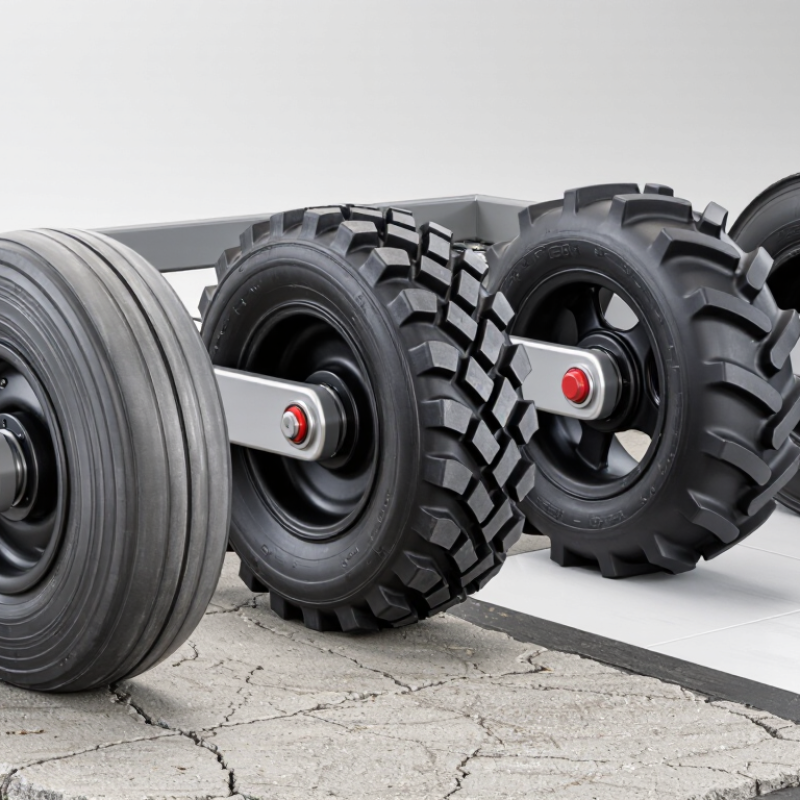
Rubber Wheel Types and Their Role in Heavy-Duty Carts
Rubber wheel types affect how a heavy-duty cart handles weight, bumps, and frequent turns. Solid rubber wheels resist punctures and need little maintenance. They suit warehouse floors, loading areas, and carts that carry dense boxes over short distances. Their firm tread rolls reliably, though it may transmit more vibration across cracked concrete.
Soft or molded rubber treads provide more cushioning. A cart carrying glass jars or sensitive instruments may benefit from that quieter, gentler ride. Pneumatic wheels absorb rough ground well, but their air-filled tires need pressure checks and can go flat. That trade-off is easy to overlook. For smooth indoor floors, the added cushioning may not justify the upkeep.
Wheel size and tread width matter, too. Larger wheels pass over floor joints more easily, while wider treads spread a load across a broader contact area. Check the rated capacity for each wheel, not just the cart’s total capacity; uneven loading can leave one wheel carrying much more weight. Swivel wheels help in tight aisles, but they can feel less steady under a tall, heavily loaded cart. There is no perfect tread for every site. Measure the actual load, inspect the floor, and consider how often the cart turns.
Load Capacity, Wheel Size, and Compatibility Requirements
Choosing rubber wheels for a heavy-duty cart in 2026 starts with the actual load, not the advertised maximum. Add the cart’s weight, cargo, and tools. Divide that total by the wheels supporting the cart, but do not assume the load spreads evenly. A floor joint or off-center box can place extra force on one wheel. Leave a safety margin. Check the manufacturer’s capacity rating and the conditions it covers.
Wheel diameter affects both rolling effort and clearance. Larger wheels usually cross door thresholds and floor seams more easily, but may not fit beneath a low cart. Measure the available space, including brakes and swivel movement. Small details matter. For soft or uneven floors, consider how tread width affects stability and turning. Rubber compounds also differ in grip, noise, and resistance to oils or heat, so match the material to the work area.
Tips: Before ordering, check the mounting plate or stem, bolt spacing, axle width, and overall height. Confirm whether you need fixed or swivel wheels, and whether the brake locks the wheel, swivel, or both. Measure twice. Compatibility is easy to overlook; I would recheck the old wheel’s dimensions, since worn parts can make measurements misleading.
Comparing Rubber Compounds, Tread Designs, and Wheel Cores
For heavy-duty carts, rubber compound, tread pattern, and wheel core work as a system. A softer compound can grip smooth floors and reduce vibration, but it may wear faster under heavy loads. Harder rubber often rolls efficiently across firm surfaces, though it can feel harsh on cracked concrete. Match the compound to the floor, load, and daily travel distance. Small details matter.
Tread affects traction and rolling resistance. A shallow, smooth tread suits clean indoor floors; a more textured profile can help on dusty or uneven routes. Tips: Check the wheel’s rated capacity against the cart’s total loaded weight, not its empty weight. Leave a safety margin.
The core supports the rubber and influences strength and ride quality. A metal core can handle demanding service, while a sturdy polymer core may resist corrosion and run more quietly. Inspect the hub, axle fit, and tread for cuts or uneven wear during routine checks. One caveat: a rugged tread does not automatically mean better performance. It may increase rolling effort, especially on long indoor routes. Test a representative load on the actual floor before selecting wheels for an entire fleet.
Choosing Wheels for Floors, Loads, and Operating Conditions
2026 Best Rubber Wheels for Heavy Duty Carts?
Choosing Wheels for Floors, Loads, and Operating Conditions
A wheel that works well on smooth concrete may struggle on tile joints or rough loading ramps. Start with the floor. Softer rubber often rolls quietly and helps protect finished surfaces, while harder compounds can reduce rolling resistance on firm, even floors. Check the actual route, not just the warehouse aisle. A short threshold can make a small wheel catch and jolt the load.
Estimate the cart’s total working weight, including the heaviest items it may carry. Divide that weight across the wheels, but allow for uneven loading and bumps; not every wheel shares the load equally at every moment. Compare the resulting demand with each wheel’s rated capacity. Bigger diameters usually cross cracks and debris more easily, though they need more clearance. I have seen carts chosen by capacity alone. They still handled poorly because their wheels were too small for the route.
Operating conditions matter, too. Consider moisture, grit, cleaning products, temperature, and how many hours the cart moves each day. Sealed bearings can help where dust or washdown is common, if they suit the environment. Check swivel movement and tread wear after installation. A wheel can look fine while its bearing feels rough. One detail is easy to miss: a quiet wheel is not automatically a safe wheel. Test the loaded cart through turns, stops, and the tightest doorway before regular use.
Installation, Inspection, and Maintenance for Long-Term Performance
Heavy-duty cart wheels last longer when they suit both the load and the floor. Check the cart’s total weight, including its heaviest expected cargo, before selecting wheels. Match wheel diameter, tread material, bearing type, and rated capacity to those conditions. Do not estimate. Loads rarely sit perfectly centered, so allow for uneven weight distribution and occasional impacts. A smooth concrete aisle and a rough loading area can wear the same tread differently.
During installation, support the cart securely and keep fingers clear of pinch points. Confirm each wheel sits flat against its mounting surface, then tighten fasteners to the equipment maker’s specifications. Over-tightening can restrict movement or damage mounting parts. After fitting, rotate every wheel by hand and check for wobble, scraping, or uneven contact. A small alignment error is easy to miss.
Inspect wheels regularly, especially after heavy use or a collision. Look for cracks, flat spots, loose hardware, packed fibers, and bearings that feel gritty or sound rough. Remove debris with a suitable brush; avoid forcing sharp tools into seals. Lubricate only where the wheel or bearing instructions permit, since excess lubricant can collect dust. Record recurring wear. I would not assume a wheel is safe just because it still rolls; replace it when damage, looseness, or reduced control appears.
Heavy-Duty Cart Rubber Wheels: Inspection & Maintenance Schedule
Suggested planning intervals for routine care. Increase inspection frequency for heavy loads, rough surfaces, or frequent use; follow the wheel and cart manufacturers’ instructions.
Installation tip: Confirm each wheel’s load rating is suitable for the cart’s load, secure the mounting hardware, and check that every wheel rotates freely. Replace wheels with cracks, excessive wear, or persistent flat spots.