
What Is the Best Street Outdoor Light in China?
Choosing the best Street Outdoor Light in China is not a matter of picking the brightest fixture. It means matching optics, output, durability, and controls to the road. A narrow residential lane needs a different distribution pattern from a broad arterial. Look for photometric test data, clear warranty terms, surge protection, and reliable thermal management. These details matter on wet nights, under summer heat, and after years of continuous operation.
The International Energy Agency reports that lighting uses roughly 15% of global electricity. That figure covers lighting broadly, not streetlights alone. U.S. Department of Energy evaluations also show that LED streetlight upgrades can reduce energy use substantially, though actual savings depend on the old system, fixture design, and controls. Lighting researcher Dr. Mark Rea’s work offers a useful principle: good visibility is not achieved by brightness alone; it depends on light, the viewing task, and the person seeing it. That distinction is easy to miss.
A careful comparison should therefore consider uniformity, glare, color quality, and maintenance access—not just watts or price. Ask suppliers for test reports and installation references, then compare equivalent designs. A neat “best” ranking is tempting. It can also mislead. The strongest choice for one Chinese city may be poorly suited to another, especially where road width, weather, and operating schedules differ.
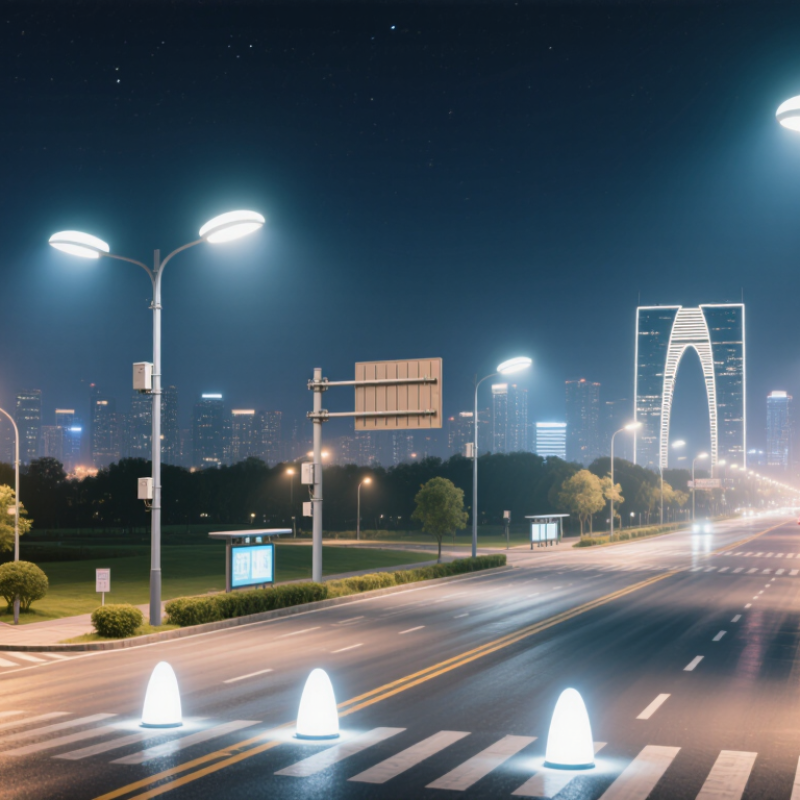
Defining the Best Street Outdoor Light for Chinese Conditions
What Is the Best Street Outdoor Light in China?
Defining the Best Street Outdoor Light for Chinese Conditions
The best street light for China is not simply the brightest or most powerful. It must deliver even illumination, limit glare, and withstand local weather. Rain changes everything. In humid coastal cities, sealed housings and corrosion-resistant finishes help protect electrical parts. In northern regions, fixtures must also cope with freezing temperatures and snow. Roadside trees matter, too: summer foliage can block light and create uneven patches on the pavement.
The World Bank’s World Development Indicators put China’s urban population at roughly 66% in 2023, meaning street lighting serves dense, varied environments, from busy junctions to quiet residential roads. China’s CJJ 45-2015 road-lighting standard provides a useful basis for matching lighting levels to road type and use. A practical assessment should also check uniformity and glare, not just average brightness. More light is not always safer.
Energy use deserves scrutiny. The U.S. Department of Energy’s 2017 Energy Savings Forecast for Solid-State Lighting estimated that wider LED adoption could significantly reduce lighting electricity demand. That is a broad forecast, not a guarantee for every street project. I would compare measured power, optical distribution, maintenance access, and performance after rain before choosing. One detail is easy to miss: a technically efficient fixture can still leave dark gaps if its optics do not suit the road.

What Is the Best Street Outdoor Light in China?
Defining the best street outdoor light for Chinese conditions starts with meeting the maintained lighting level required for each road class.
The chart shows selected maintained average illuminance values in lux from GB 50034-2013: 20 lx for expressways and urban expressways, 15 lx for main roads, 10 lx for secondary roads, and 8 lx for branch roads. These are design reference values, not a universal specification; the applicable level depends on the road and project conditions. A suitable luminaire should provide the required maintained lighting while also being selected for the local climate and installation environment.
Key Factors for Evaluating Street Light Performance
Choosing a street light in China starts with the road, not the product sheet. A narrow residential lane needs different optics from a wide arterial road. Check illuminance and uniformity together; bright patches beside deep shadows can still make a street difficult to navigate. Details matter. At night, observe whether the beam reaches the pavement edges without shining into nearby homes or drivers’ eyes. Color temperature also affects comfort and visibility, but the most suitable setting depends on the location and surrounding lighting.
Efficiency matters, yet watts alone do not show how much usable light reaches the road. Compare measured output, optical distribution, and energy use under consistent test conditions. Then consider heat management, enclosure sealing, and impact resistance, especially where summers are hot, rain is heavy, or dust is common. Controls such as dimming can reduce energy use during quieter hours, if they are configured and maintained well. A specification may look convincing and still leave practical questions unanswered. Check maintenance access, replacement procedures, and the availability of reliable performance data. Local road requirements should guide final design decisions.
Comparing LED, Solar, and Hybrid Street Lighting Systems
In China, the best street lighting system depends on the road, power supply, and local weather. LED describes the light source, while solar and hybrid describe how a fixture receives power. Grid-connected LED lights suit busy urban roads with reliable electricity. They provide steady illumination, and crews can inspect their drivers and wiring during routine maintenance.
Solar street lights can work well on village roads, parks, and sites where grid connections are costly. A panel charges a battery during daylight, then powers the lamp at night. Shading, dust, and several cloudy days can reduce available energy. That matters. Panel angle and battery capacity should match local sunlight and the required hours of operation, not just a product’s advertised output.
Hybrid systems combine solar power with a grid connection or another backup supply. They can keep lights running when battery charge falls, which is useful on key roads or through long, overcast periods. But added controls and wiring need careful installation and maintenance. Not always. I would compare measured road brightness, expected operating hours, battery replacement access, and total costs over several years. A brighter lamp is not automatically a safer or better-designed street light.
What Is the Best Street Outdoor Light in China? Comparing LED, Solar, and Hybrid Street Lighting Systems
| Comparison Factor | Grid-Powered LED Street Light | Standalone Solar Street Light | Hybrid Solar-Grid Street Light |
|---|---|---|---|
| Power source | Connected to the local electricity grid. | Solar panels charge an onboard battery; the battery powers the light after dark. | Uses solar energy and battery storage, with grid power available as a backup or supplementary source. |
| Lighting technology | LED luminaires are the standard efficient option; lighting performance depends on the luminaire, optics, and design. | Usually uses an LED luminaire. Its output may be controlled to conserve stored energy. | Usually uses an LED luminaire and can draw on solar, battery, or grid power according to the system design. |
| Energy efficiency | LEDs convert electricity into light efficiently. The complete system’s energy use also depends on lighting levels, controls, and operating hours. | Solar electricity is generated on site, but panel, battery, controller, and conversion losses affect the energy available to the light. | Can reduce grid electricity use when solar generation is sufficient; actual savings depend on solar contribution and control settings. |
| Dependence on sunlight | None for normal operation, although the light depends on grid availability. | High. Available sunlight varies with location, season, weather, panel orientation, and shading. | Solar contribution varies with sunlight; grid backup can help maintain operation when solar generation is insufficient. |
| Operation during prolonged cloudy weather | Normally unaffected if the grid remains available. | Depends on battery capacity, recent charging, load, and the system’s designed autonomy. Extended low-sun periods can reduce output or operating hours. | Can switch to or supplement with grid power if the system includes properly configured grid backup. |
| Typical installation work | Requires a suitable electrical supply, underground or overhead cabling, and safe connections. | Avoids a grid connection at each pole, but requires correct panel positioning, battery installation, and a suitable foundation. | Requires solar and battery equipment as well as a grid connection and the controls needed to coordinate the power sources. |
| Maintenance considerations | Inspect luminaires, drivers, wiring, poles, and electrical protection; grid faults may require local repair. | Inspect and clean panels as needed, check batteries and connections, and verify that shading or dirt has not reduced charging. | Includes checks for the luminaire, solar panels, battery, grid connection, and power-management controls. |
| Best suited to | Urban streets and other locations with reliable grid access and predictable lighting requirements. | Locations where grid extension is difficult or costly and the site receives adequate solar exposure. | Sites that can use solar energy but also need grid backup or more consistent operation through low-sun periods. |
| Main limitation | Requires grid infrastructure and remains exposed to electricity costs and grid interruptions. | Performance depends on site-specific sunlight and correctly sized panels and batteries; storage adds replacement and maintenance needs. | More equipment and controls are involved than in a simple grid-powered or standalone system; backup performance depends on the design. |
| Key design checks for China | Confirm local supply conditions, road-lighting requirements, pole spacing, illumination levels, and electrical safety provisions. | Assess local solar resources, seasonal weather, shading, battery autonomy, panel orientation, and required nighttime lighting hours. | Assess both local solar conditions and grid availability, and define when the system should use solar, battery, or grid power. |
| Overall choice | A practical choice where grid access is reliable and consistent lighting is the priority. | A practical choice where avoiding a grid connection is valuable and the site can support the required solar and battery capacity. | A practical choice where reducing grid consumption and retaining a backup supply are both important. |
Performance, operating costs, and equipment life vary with product design, installation quality, local climate, maintenance, and operating settings. A site-specific lighting and energy assessment is recommended before selecting a system.
Matching Light Specifications to Roads and Public Spaces
Choosing street lighting in China starts with road function, not wattage. CIE 115:2010 classifies motor-traffic roads from M1 to M6, with maintained average luminance values ranging from 2.0 to 0.3 cd/m². That range is not a shopping list. Traffic speed, junction activity, pedestrian presence, and ambient brightness affect the appropriate class. A wide arterial road needs controlled forward light and consistent coverage; a residential lane needs comfortable visibility without bright windows.
For public spaces, consider people as well as vehicles. Paths, plazas, and bus stops need clear faces, edges, and changes in level. Check uniformity, glare, colour rendering, and the beam pattern alongside lumen output. CIE’s road-lighting guidance distinguishes motor traffic from pedestrian and conflict areas, where crossing activity can change lighting needs. Small details matter: a tree canopy can block a path, while a poorly aimed fitting can send light into bedroom windows.
Specify maintained performance, not just new-installation figures. Dust, humidity, coastal salt, and long maintenance intervals can reduce real output. CJJ 45-2015 is a useful Chinese reference for urban road-lighting design; confirm applicable local requirements before finalising a project. I would still test a sample layout on site. Drawings rarely capture every tree, sign, or dark corner.
Installation, Controls, and Maintenance for Long-Term Reliability
What Is the Best Street Outdoor Light in China?
Long-term reliability starts before the pole is energized. Check the mounting surface, cable glands, and seals before installation. In coastal or humid areas, inspect for corrosion risks and keep electrical connections dry. Aim each luminaire carefully; poor alignment can create dark patches or glare. Record the aiming angle and driver settings for future maintenance.
Controls need real-world commissioning, not just a settings sheet. Test photocells at dusk, confirm dimming schedules, and verify that motion sensors respond to people and vehicles as intended. Keep a safe fallback level if a sensor or network connection fails. The U.S. Department of Energy’s 2017 Energy Savings Forecast projected 569 TWh of annual U.S. lighting-energy savings by 2035 from solid-state lighting adoption. That is a broad lighting forecast, not a streetlight guarantee; control savings depend on site conditions. Small details matter.
Build maintenance around inspection, not assumed lifetimes. Check for water ingress, loose fasteners, blocked vents, and declining output after storms. Log outages and repairs by pole number; patterns can reveal a failing component or poor installation. DOE lifetime guidance distinguishes lumen-maintenance projections from guaranteed failure-free operation. One honest limitation: a clean inspection cannot predict every driver failure. Recheck control settings after repairs, since replacement parts may not retain the original configuration.
Article Source:
At Premium PSU, we are specialists in designing and manufacturing power conversion systems for the industrial market. Our product range includes high reliability power supplies from 50W to 72kW.
PREMIUM PSU
C/ Dolors Aleu, 19-21, 2nd Floor
08908 – Hospitalet de Llobregat
Barcelona-SPAIN
t.+34 93 223 26 85