China Top 10 Material Handling Equipment Manufacturers
China’s manufacturing strength is reshaping the global Material Handling Equipment market.
Factories now demand faster movement, safer storage, and measurable energy efficiency.
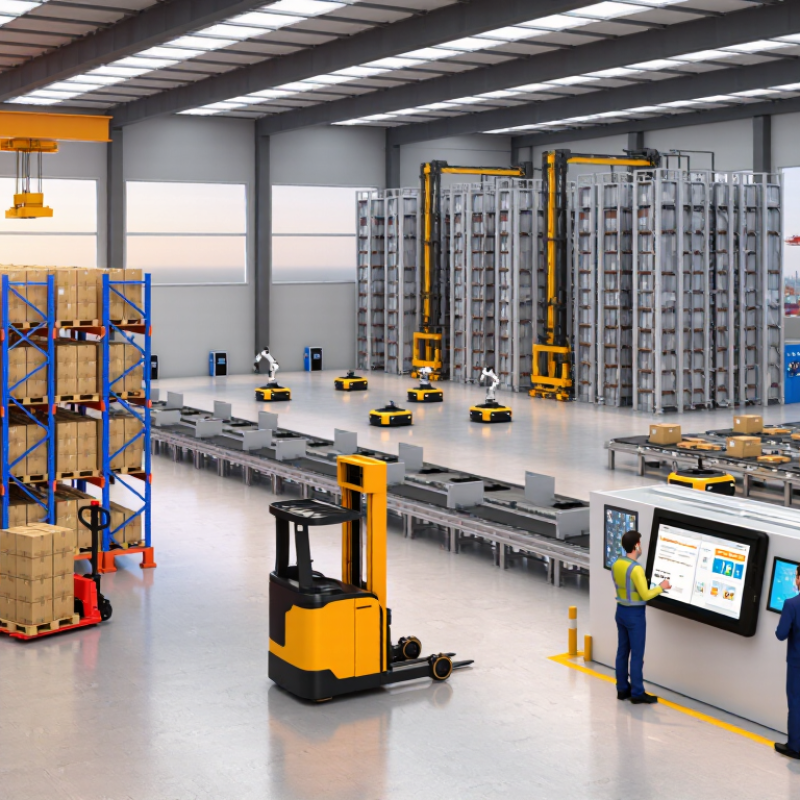
A modern warehouse may combine forklifts, pallet trucks, conveyors, automated storage, and warehouse software.
Small design choices matter.
A narrow aisle can change productivity.
The MHI 2024 Annual Industry Report highlights continuing investment in automation, robotics, analytics, and connected supply chains. Its findings show that labor pressure and service expectations are pushing companies toward smarter material flow systems. The International Federation of Robotics reported 276,288 industrial robots installed in China during 2023. This figure represented more than half of global installations that year. Although industrial robots are not identical to handling equipment, their growth reflects China’s expanding automation capability.
This article examines ten leading Chinese manufacturers through practical business criteria. These include product range, engineering experience, manufacturing capacity, international certifications, service networks, and application performance. The list considers established forklift producers and technology-focused suppliers. It also recognizes companies serving ports, factories, warehouses, construction sites, and cold-chain operations.
No ranking is flawless.
Public information varies.
Company scale does not always equal better field performance. A compact electric forklift may outperform a larger model in a crowded warehouse. Maintenance response, battery support, operator training, and spare-parts availability can matter more than advertising. Readers should verify current certifications, regional distributors, load ratings, and total ownership costs before purchasing. This approach makes the comparison more reliable, practical, and aligned with real operating conditions.
What Is Material Handling Equipment?
Material handling equipment includes the tools and systems used to move, store, protect, and control materials. It works across warehouses, factories, distribution centers, and construction sites. Common examples include forklifts, pallet trucks, conveyors, hoists, shelving, carts, and automated storage systems. Each option serves a different movement or storage problem.
A forklift may lift a pallet from floor level to a high rack. A conveyor can move cartons between packing and shipping areas. Shelving keeps smaller items visible and accessible, while hoists handle heavy loads in fixed work zones. In practice, equipment selection depends on load weight, product shape, travel distance, floor condition, storage height, and operating frequency. A damp floor, narrow aisle, or unstable pallet can change the safest choice.
Good planning requires more than comparing lifting capacity. Workers need clear sightlines, practical controls, service access, and enough room for turning or emergency movement. Equipment records should include inspections, maintenance dates, load limits, and operator training. A first layout may look efficient on paper but create delays beside a busy packing station. That mistake is common. Real observations during shifts often reveal blocked aisles, awkward reaches, or unnecessary travel. Measurements help, but they do not replace experience. Material handling equipment should support steady work without creating new risks.
Key Equipment Categories in China’s Material Handling Industry
Key Equipment Categories in China’s Material Handling Industry
China’s material handling industry covers several equipment categories for factories, warehouses, ports, and distribution centers. Forklifts remain common for moving palletized goods across concrete floors. Electric forklifts suit indoor operations because they produce fewer emissions and less noise. Pallet trucks and stackers handle shorter routes and lower storage levels. They are compact and practical.
Conveyors support steady movement between receiving, storage, and packing areas. Roller conveyors work well with cartons and pallets, while belt conveyors suit smaller packages. cranes and hoists lift heavy components in manufacturing facilities. Automated storage and retrieval systems improve space use through software-controlled movements. Automated guided vehicles and mobile robots can reduce walking time, but they need clear routes and reliable navigation. More automation is not always better.
Tips: Match equipment with load weight, aisle width, floor condition, and lifting height. Check battery charging space and ventilation before selecting electric units. Ask operators to test visibility and controls. Small details matter. Review maintenance records, safety training, and spare-parts support before purchase. A machine may meet its rated capacity, yet poor layout can still create delays. Trial operation is useful because specifications rarely show every warehouse problem. Teams should also revisit their assumptions after several weeks of actual use.
How to Evaluate Chinese Equipment Manufacturers
China Top 10 Material Handling Equipment Manufacturers
Evaluating Chinese equipment manufacturers requires more than comparing catalog prices. The International Federation of Robotics reported that China installed 276,288 industrial robots in 2023, representing about 51% of global installations. This scale shows strong production capability, but it does not guarantee reliable material handling equipment. Buyers should inspect factory capacity, welding quality, load testing, and control-system integration. A polished showroom can mislead.
Request verifiable evidence. Review test records, production photographs, maintenance logs, and customer references from similar industries. Check rated capacity, duty cycles, battery performance, stopping distance, and operation under uneven floors. The MHI 2024 Annual Industry Report found that 40% of supply chain professionals planned to increase automation investment. Therefore, compatibility with warehouse software and future expansion matters. Ask whether the manufacturer supports common communication protocols and provides documented interface testing.
Service deserves equal attention. Measure spare-parts availability, remote diagnostic capability, technician coverage, and written response times. Review warranty exclusions carefully. ISO 9001 certification can support process control, but certification alone proves little about field performance. Arrange a factory acceptance test before shipment, then repeat key checks after installation. My practical concern is often overlooked: a lower purchase price may hide training, downtime, or replacement costs. Some suppliers also provide excellent engineering but weak English documentation. That weakness becomes expensive during commissioning. Choose the manufacturer that can prove repeatable performance, not merely promise it.
China Top 10 Material Handling Equipment Manufacturers
How to Evaluate Chinese Equipment Manufacturers
This 100-point procurement scorecard highlights the main dimensions commonly used when evaluating material handling equipment manufacturers: safety and compliance, total cost of ownership, product performance, customization capability, after-sales support, delivery capacity, and international export experience. Buyers should adjust the weighting according to application, operating environment, and local regulations.
China’s Top 10 Material Handling Equipment Manufacturers
China’s Top 10 Material Handling Equipment Manufacturers reflect a market shaped by scale, automation, and export demand. China installed 276,288 industrial robots in 2023, equal to more than half of global installations, according to the International Federation of Robotics. This trend supports stronger demand for automated storage systems, conveyors, lifting equipment, and warehouse vehicles.
A credible top-ten assessment should examine production capacity, safety testing, service coverage, and spare-parts availability. Fortune Business Insights valued the global material handling equipment market at about USD 213.7 billion in 2023. China’s manufacturers compete strongly on cost and customization, but quality consistency still varies between factories. That matters on a busy warehouse floor. A low purchase price can become expensive when sensors fail, batteries age quickly, or technicians arrive late. Public product data also needs careful checking, because some market claims seem optimistic.
Tips: Compare load ratings, duty cycles, software compatibility, and local service response before choosing equipment. Request test records, maintenance schedules, and references from similar warehouses. Interact Analysis reports continued growth in warehouse automation, yet automation is not always the best answer. A smaller operation may need dependable manual equipment first. That is easy to overlook.