
2025 How to Choose the Best UPS Power Solution for Your Needs

In an era where digitalization drives business success, ensuring a reliable power supply has become more critical than ever. The increasing reliance on data centers and IT infrastructure has led to a surge in demand for Uninterruptible Power Supply (UPS) solutions. According to a recent report by MarketsandMarkets, the global UPS market is projected to grow from $8.3 billion in 2020 to $12.6 billion by 2025, reflecting a significant compound annual growth rate (CAGR) of 8.6%. This growth can be attributed to the heightened need for continuous power availability and the rising incidence of power disturbances.

Choosing the right UPS power solution is not merely a technical decision but a strategic one that can impact operational efficiency and business continuity. With various types and capacities available in the market, organizations must assess their specific needs, including load requirements and redundancy levels. Key considerations include the duration of backup time needed, the scalability of the UPS system, and additional features such as surge protection and management software. Given that the global data traffic is expected to quadruple by 2025, as reported by Cisco, implementing a robust UPS power strategy is essential for safeguarding critical operations against outages and ensuring seamless productivity.

2025 How to Choose the Best UPS Power Solution for Your Needs

Understanding Your Power Needs: Assessing Load and Runtime Requirements

2025 How to Choose the Best UPS Power Solution for Your Needs

When selecting the best Uninterruptible Power Supply (UPS) for your requirements in 2025, it is crucial to begin by understanding your unique power needs. Assessing load requirements involves calculating the total wattage of all devices that will be connected to the UPS. This includes not just computers and servers, but also peripherals, network equipment, and other critical devices. By identifying the cumulative load, you can ensure that the UPS you choose can handle the demands without being overloaded, which could lead to insufficient power during an outage.

Moreover, runtime requirements are equally essential in your decision-making process. Consider how long you need your devices to stay operational during a power interruption. This will depend on various factors, including the nature of your work, the importance of maintaining power longer, and whether you intend to run all devices simultaneously. With these considerations in mind, you can select a UPS that not only meets your wattage needs but also provides adequate battery runtime, ensuring your operations remain uninterrupted in the event of a power failure.
Exploring Different UPS Types: Standby, Line-Interactive, and Online Models

2025 How to Choose the Best UPS Power Solution for Your Needs

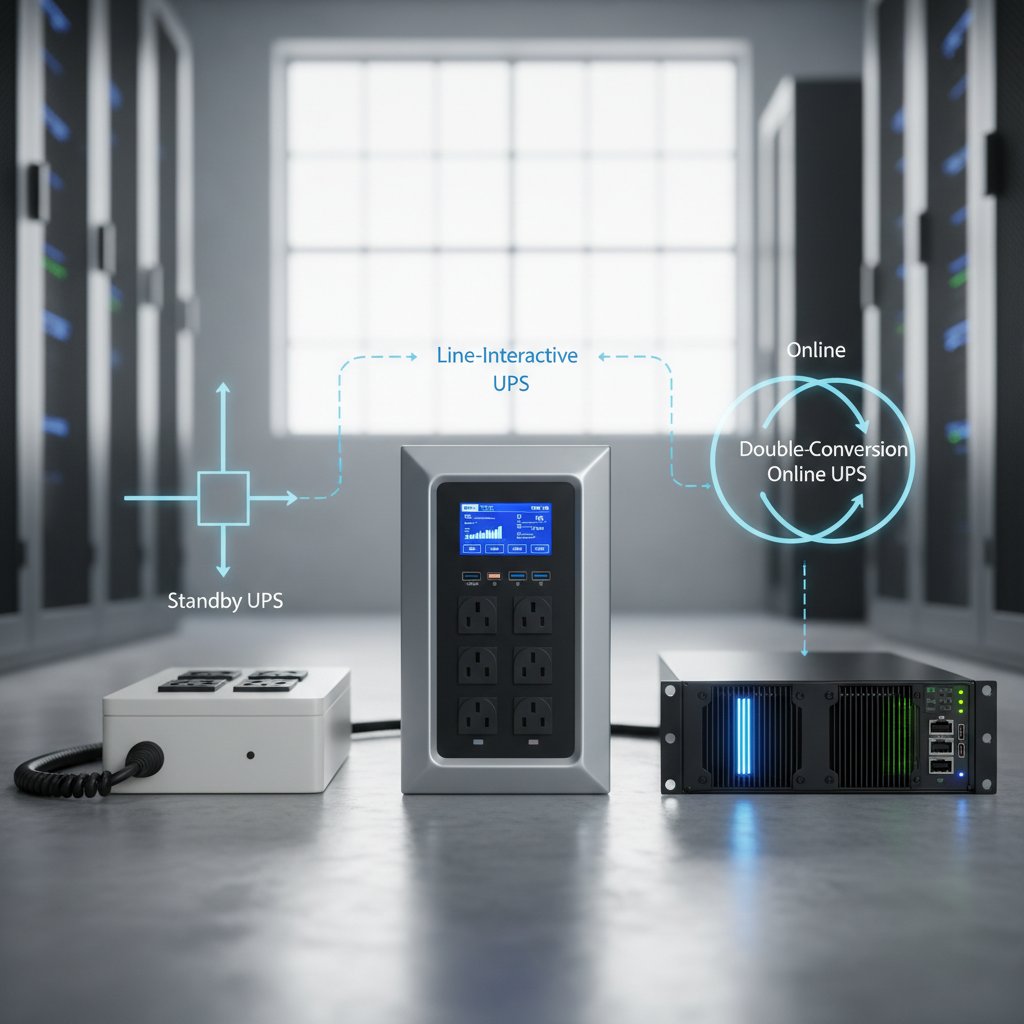
When selecting a UPS (Uninterruptible Power Supply) power solution, understanding the different types available is crucial to meet your specific needs. The three primary UPS types are standby, line-interactive, and online models, each offering unique features and benefits. Standby UPS systems are the most basic and economical option, providing battery backup during outages while relying on the utility power under normal conditions. They are ideal for less critical applications where short downtime isn't an issue.

In contrast, line-interactive UPS systems offer enhanced performance by regulating voltage fluctuations through an automatic voltage regulator (AVR). This feature is particularly useful in environments where brownouts or surges are common. Line-interactive models are well-suited for small to medium-sized businesses that require consistent power for essential equipment without needing the rigorous protection of an online UPS.

Online UPS systems represent the highest level of protection available. They continuously convert incoming AC power to DC and then back to AC, ensuring a clean and stable output regardless of utility power conditions. This makes online models essential for sensitive equipment that cannot tolerate any interruption or fluctuation in power supply, such as data centers or medical facilities. By understanding these options, users can make informed decisions tailored to their specific power needs.

Key Features to Consider: Battery Management, Inverter Design, and Output Protection

When selecting the best UPS power solution for your needs, understanding key features such as battery management, inverter design, and output protection is crucial. Battery management systems are vital for ensuring longevity and reliability. They monitor the health and charge levels of the batteries, preventing overcharging and deep discharging, which can significantly reduce battery life. A good UPS will include advanced battery management capabilities that extend runtime during outages and enhance safety through thermal protection.

Inverter design is another significant factor to consider. A high-quality inverter efficiently converts DC power from the batteries into the AC power needed for your devices. Look for units with pure sine wave output, as they provide clean power that is safe for sensitive electronics and equipment. Additionally, the inverter’s capacity should match or exceed the total power requirements of your connected devices to ensure uninterrupted performance during a power failure.

Lastly, output protection features are essential for shielding your equipment from surges and electrical anomalies. Surge protection components help safeguard your devices from unexpected spikes in voltage, while quality UPS systems also offer features like short-circuit protection and overload alarms. Together, these features not only enhance the reliability and stability of your power supply but also provide peace of mind knowing your valuable equipment is protected.

Evaluating UPS Capacity: Calculating VA Ratings and Battery Backup Time

When selecting the best UPS (Uninterruptible Power Supply) power solution, understanding the capacity is paramount. The first step in evaluating UPS capacity involves calculating the VA (Volt-Ampere) ratings needed to support your equipment. To do this, you need to ascertain the total power consumption of your devices, which can typically be found on their specification labels. By summing up the wattages and factoring in power factors, you can determine the necessary VA rating for your UPS. It's crucial to choose a UPS with a rating that exceeds your total consumption to ensure reliable performance and accommodate any potential future needs.

Additionally, considering battery backup time is essential for uninterrupted power supply during outages. This is determined by the battery capacity of the UPS and the total load being supported. A higher battery capacity will provide a longer backup duration, allowing you to safely save work and shut down equipment properly. It is advisable to calculate the desired runtime by dividing the total wattage of your connected devices by the UPS's battery output in watts. This will help you choose a UPS that not only meets your power needs but also offers sufficient backup time to manage your operations effectively during an outage.

Making the Right Choice: Budget Considerations and Warranty Options

When selecting the ideal UPS power solution, budget considerations and warranty options play crucial roles in ensuring you get the best value for your investment. According to a recent report by ResearchAndMarkets, the global uninterruptible power supply market is anticipated to grow at a CAGR of 6.8% from 2021 to 2027, emphasizing the increasing demand for reliable power backup solutions. As you evaluate your choices, it's essential to set a budget that aligns with both your immediate needs and potential future upgrades. A well-planned budget not only encompasses the initial purchase price but also considers ongoing operating costs, such as maintenance and battery replacements.

In addition to budgetary factors, warranty options should not be overlooked when choosing a UPS system. Many manufacturers offer warranties ranging from one to five years, covering parts and labor. A report by Allied Market Research highlights that 20% of UPS failures occur within the first year of operation, making a robust warranty critical for protecting your investment. Select a UPS provider that offers comprehensive warranty coverage, as this will provide peace of mind and safeguard against early equipment failures, ensuring that your operations remain uninterrupted.