Why Choose a Portable Milk Frother for Your Business?
A Portable Milk Frother can give cafés, hotels, offices, and catering teams a simple way to prepare milk drinks beyond the main counter. It fits in a drawer or service kit, then whips milk in a cup within moments. That can help during a busy breakfast, a small event, or a pop-up service with limited equipment. Small tool. Real convenience.
For businesses, the value is not only speed. A handheld frother can support varied menus, from cappuccinos and matcha drinks to cold foam, without requiring a full espresso station. Staff can use it for one drink at a time, which may reduce unnecessary setup in low-volume settings. Results still depend on the milk, cup shape, and technique. A small whisk will not produce the same texture or volume as a professional steam wand, and that distinction matters when setting customer expectations.
Before choosing a model, consider battery life, charging options, cleaning instructions, and the manufacturer’s warranty. Check whether the whisk head detaches and whether replacement parts are available. These details are easy to overlook. They also affect daily reliability. A frother that is awkward to clean may sit unused, despite its low cost. The practical choice is the one that suits the menu, staff routine, and expected drink volume—not simply the most powerful model. A little testing helps. Results can surprise you.
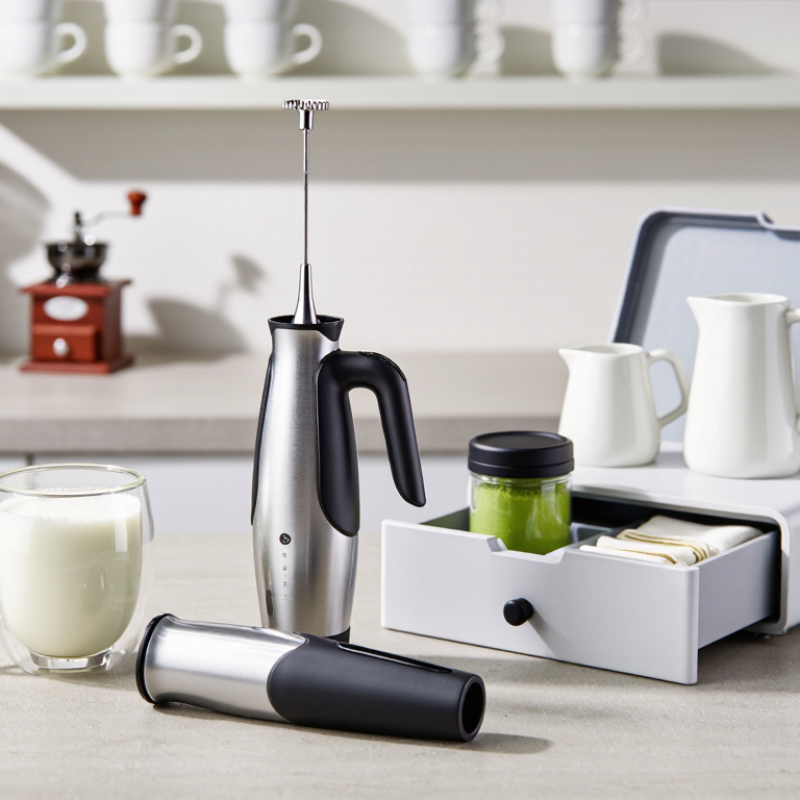
What a Portable Milk Frother Is and How It Works
A portable milk frother is a small, handheld device that mixes air into milk to create foam. Most models use a battery-powered motor and a thin metal whisk at the end of a stem. When switched on, the whisk spins quickly, drawing air into the milk. Tiny bubbles form, making the liquid lighter and thicker. Simple mechanism. It can work with dairy or many milk alternatives, though the foam’s texture depends on the drink’s protein and fat content.
To use one, pour cold milk into a cup or narrow jug, leaving room for the foam to rise. Keep the whisk just below the surface at first, then lower it as the milk expands. A few seconds may be enough; over-frothing can create large bubbles and a dry texture. Results vary, and a portable frother will not heat milk or produce steam like a commercial machine. For a small café or mobile service, it can help prepare individual drinks without taking up much counter space, but frequent use means regular cleaning and battery checks.
Tips: Rinse the whisk soon after use, then run it briefly in clean water. Dry the stem before storing it. Test a small amount of your usual milk first; the foam may be less stable than expected.
How Portability Fits Different Business Settings
A portable milk frother can serve businesses that prepare drinks in more than one place. A café cart may move between a counter and an event space, while a hotel team might serve coffee in a lounge or meeting room. A compact frother is easier to carry than a fixed station. It can help staff make a smooth finish beside the espresso machine, rather than sending each drink across a busy workspace.
Different settings bring different needs. At a market stall, counter space is tight, and power outlets may be limited, so check the frother’s charging method and expected run time before relying on it. In an office pantry, easy cleaning matters when several people share equipment. For catering, a spare whisk and a secure storage case can prevent small delays. From practical use, one overlooked issue is noise: a quiet room can make even a brief frothing sound noticeable. Portability helps, but it does not replace a workable cleaning routine or enough preparation time.
Tips: Test the frother with your usual milk before service. Keep it upright during transport, and clean the whisk promptly after use. Check the battery before leaving.
Operational Benefits for Beverage Service
Portable milk frothers make beverage stations more flexible without taking up much counter space. Staff can foam milk beside an espresso machine, at a catering table, or near a self-service counter. This can reduce trips between work areas during busy periods. Small tools matter.
For cafés and mobile beverage teams, the main benefit is on-demand preparation. Staff can froth one drink at a time, helping limit leftover foam and milk waste. Most handheld models are quick to rinse, but the whisk and shaft still need thorough cleaning between uses. This step is easy to rush. A clear cleaning routine helps maintain drink quality and consistent service. Battery checks matter, too; a slowing frother can disrupt the line. Check it daily. Keep a charged spare or schedule charging before opening. Choose a model that feels comfortable during repeated use and is easy to disassemble for cleaning. It may not replace a commercial steam wand for every menu or service volume. Still, it can handle simple foam drinks, seasonal specials, and backup service when other equipment is occupied. Test it with your usual milk and cup sizes before relying on it for a full shift.
Why Choose a Portable Milk Frother for Your Business?
Illustrative drink-preparation scenario: estimated hands-on frothing time per serving
In this example, a portable frother takes 20 seconds of hands-on time per serving, compared with 45 seconds for a steam-wand workflow. These are planning assumptions, not industry benchmarks; time your own process to estimate staffing and service benefits.
Common Business Uses Across Food and Hospitality
In cafés, a portable milk frother can help staff prepare cappuccinos, matcha drinks, and hot chocolate without occupying a full counter station. During a morning rush, it offers a quick way to aerate a small jug of milk while the espresso machine handles other orders. It is especially useful at market stalls, pop-up cafés, and catering events where counter space and power outlets are limited. It is not magic. Staff still need to measure milk consistently and check the texture before serving.
Hotels can keep a frother near breakfast service for made-to-order drinks, while office kitchens may use one for a more polished coffee break. In smaller guesthouses, it can support a compact beverage setup without requiring a dedicated steam wand. Food businesses should consider cleaning routines, battery charging, and how many drinks the device can handle before service slows. A quick rinse may not remove milk residue from the whisk, so thorough washing matters. Results can also vary with milk type and temperature. Test the device during a quiet shift, not during a full breakfast rush.
Factors to Consider When Choosing a Frother
Why Choose a Portable Milk Frother for Your Business?
Factors to Consider When Choosing a Frother
Choosing a portable frother starts with your service routine. A small café preparing drinks continuously needs different equipment from a market stall serving occasional orders. Check battery life against your busiest shift, not just the advertised runtime. A frother that slows down halfway through a morning rush is no bargain. Quiet operation matters too when customers are ordering nearby.
Consider how the whisk handles the milk you actually serve. Whole milk, oat drinks, and other alternatives can foam differently, so test your usual options before buying several units. Look for a whisk that detaches easily; dried milk around the shaft takes time to remove. It happens. A smooth, sealed handle is usually easier to wipe between tasks, while a charging port that collects splashes may become an irritation.
Also check grip comfort, replacement whisk availability, and storage space. A compact model may fit neatly beside the espresso machine, but a very small whisk can take longer to texture a full cup. There is no perfect choice for every counter. Trial one during a normal service, and note cleaning time, foam consistency, and how often it needs recharging.