
How to Choose the Best Forklift Collision Detection System?
Choosing the right Forklift Collision Detection System is crucial for enhancing safety in warehouses. John Smith, an industry expert with over 20 years of experience, emphasizes, “A sound detection system can save lives and reduce costs significantly.” In the fast-paced world of material handling, the potential for collisions is always present. Understanding how to select the best system becomes vital for business operations.
Many factors influence the effectiveness of a Forklift Collision Detection System. Each warehouse has unique layouts and workflows. For instance, tight aisles may require advanced sensors while larger spaces can utilize simpler systems. It's essential to assess specific needs and potential hazards in your environment. Brands often claim to provide top-notch solutions, but real-world performance varies.
Investing in a collision detection system should include careful research. This can involve reviews, comparisons, and speaking with other users. Not all systems are equal, and some may fit better with your equipment than others. Balancing cost and reliability is key. Remember, a poorly chosen system can lead to tragic accidents rather than preventing them.
Understanding the Importance of Forklift Collision Detection Systems
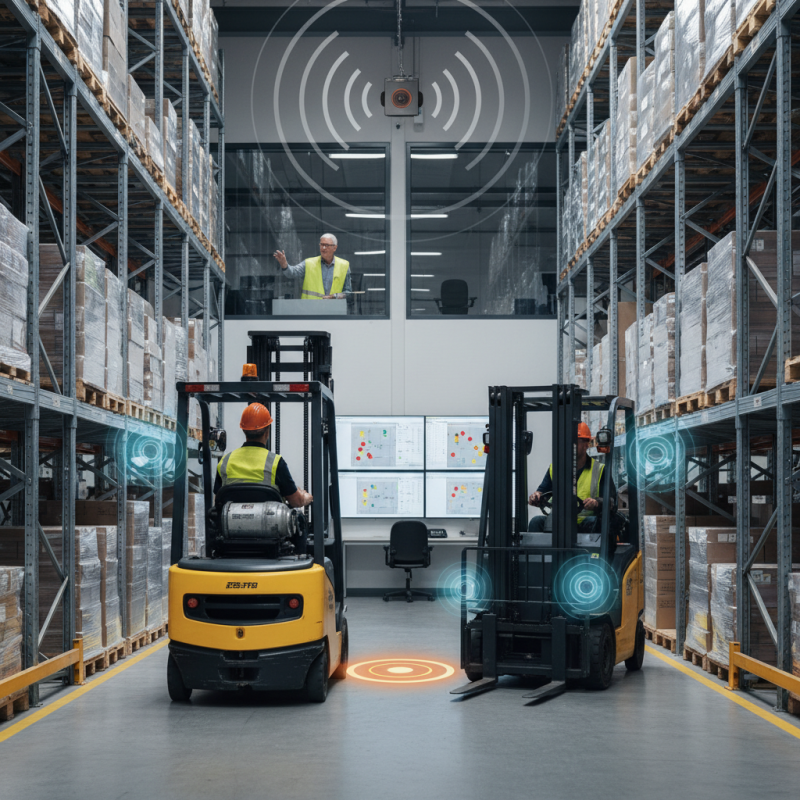
Forklift collision detection systems play a vital role in enhancing workplace safety. These systems help prevent accidents by alerting drivers and nearby personnel. They utilize sensors and cameras to monitor the environment around the forklift. Such technology is crucial in busy warehouses where visibility might be compromised. This proactive approach not only protects employees but also minimizes property damage.
Understanding these systems' importance means recognizing their effectiveness in reducing injuries. Statistics show that inadequate safety measures lead to numerous workplace accidents. Forklifts contribute to a significant percentage of these incidents. Implementing a robust collision detection system can drastically lower risks. Feedback from operators often highlights blind spots, underscoring the need for better systems. Even the most experienced drivers may face challenges in crowded areas.
These systems are not flawless. Their reliance on technology can lead to misconceptions about their capabilities. Some users may believe the system provides complete safety. It is essential to remember that human awareness remains crucial. Continuous training and reinforcement of safety protocols are necessary, even with advanced systems in place. As workplaces evolve, so must our approach to safety.

Key Features to Look for in a Collision Detection System
When selecting a collision detection system for forklifts, consider key features critical for safety and efficiency. Advanced sensors are essential. They must accurately detect obstacles, providing real-time data to operators. Surveys indicate that 85% of warehouse accidents are caused by pedestrian-forklift collisions. Systems that utilize LiDAR or cameras detect nearby objects, allowing forklifts to respond promptly.
Another important feature is integration with existing warehouse management systems. A study from the National Safety Council found that effective data integration can reduce accidents by 30%. Systems that sync with inventory tracking can enhance both safety and operational flow. Regular updates and maintenance of these systems are crucial, yet often overlooked. Ineffective systems can lead to false readings or failures, ultimately compromising safety.
Lastly, user training cannot be ignored. Even the best technology can falter if not properly understood. Consider how training protocols impact workforce safety. Up to 50% of forklift operators do not receive adequate training on new systems. Addressing these factors ensures a comprehensive collision detection approach, significantly reducing risks while maximizing productivity on the warehouse floor.
Forklift Collision Detection System Features Comparison
Comparing Different Types of Forklift Collision Detection Technologies
Choosing the best forklift collision detection system requires understanding the technology options available. There are mainly three types: proximity sensors, laser-based systems, and camera systems. Each type has unique advantages and challenges.
Proximity sensors are the most common. They can detect nearby obstacles and alert operators through alarms. According to a report by the Occupational Safety and Health Administration (OSHA), using such systems can reduce accident rates by up to 30%. However, their effectiveness can vary based on the environment. For example, they might struggle in cluttered spaces.
Laser-based systems provide a more precise detection. These systems create a virtual safety perimeter around the forklift, stopping it if something intrudes. A study from the National Institute for Occupational Safety and Health (NIOSH) indicated that laser systems could decrease injury rates even further, by as much as 40%. Still, they require regular calibration and maintenance, which can be overlooked.
Camera systems, often combined with software that uses AI, enable operators to have a 360-degree view. While they offer detailed visuals, the reliance on technology can backfire if the systems fail or misinterpret data. Hence, testing and regular reviews are crucial to maintain reliability. Understanding these technologies assists in making an informed choice tailored to specific operational needs.
Evaluating the Cost-Effectiveness of Collision Detection Systems
When evaluating the cost-effectiveness of forklift collision detection systems, it's crucial to consider various factors. An initial investment can seem daunting, but the long-term benefits often outweigh those costs. These systems can significantly reduce the incidence of accidents and injuries in warehouses. Lowering downtime and minimizing repairs also contribute to overall savings.
It's important to analyze the specific needs of your operation. A one-size-fits-all approach may not be ideal. Understanding your unique environment helps in selecting features that provide maximum efficiency. Training costs should also be factored in. Employees may require time and resources to adapt to new systems. This transition period can reveal shortcomings in technology or training methods.
Incorporating feedback from operators is key. They can provide insights into usability and effectiveness. Sometimes, these systems may come with complex interfaces that hinder fast adoption. Take note of any challenges faced during implementation. Reflecting on these experiences can guide future decisions. Ultimately, ensuring safety while maintaining productivity is a delicate balance. Prioritizing cost-effectiveness allows for both improved safety measures and better operational efficiency.
Best Practices for Implementing Forklift Collision Prevention Solutions
When implementing forklift collision prevention solutions, consider several best practices to ensure effectiveness. Establish clear communication between operators and pedestrians. Training programs should include information on the importance of awareness in preventing collisions. Operators must be able to recognize hazards and react quickly.
Tips for success: Regularly inspect and maintain your collision detection systems. Faulty equipment can lead to dangerous situations and may render your investments ineffective. Make usage data visible to all staff to promote responsibility for safe operation.
Another key aspect is choosing the right technology that fits your operational needs. Not all facilities operate in the same way. Some may benefit from radar-based systems, while others might find camera solutions more effective. Assessing the specific layout and flow of your workspace is crucial.
It's easy to overlook the subtle signs of impending collisions. Operators should develop instincts for recognizing patterns that lead to incidents. Encourage a culture of continuous improvement. Reflecting on past near-misses helps enhance safety measures over time.
At Premium PSU, we are specialists in designing and manufacturing power conversion systems for the industrial market. Our product range includes high reliability power supplies from 50W to 72kW.
PREMIUM PSU
C/ Dolors Aleu, 19-21, 2nd Floor
08908 – Hospitalet de Llobregat
Barcelona-SPAIN
t.+34 93 223 26 85