
How to Choose the Best High Voltage Power Supply for Your Needs?
Selecting the right high voltage power supply is crucial for various applications. The global high voltage power supply market is expected to reach $3 billion by 2025, according to a report by MarketsandMarkets. This growth underscores the importance of understanding your specific needs when choosing a power supply.
Dr. Emily Carter, a leading expert in electrical engineering, emphasizes, “A well-chosen high voltage power supply can enhance efficiency and ensure safety in complex systems.” This highlights that not all high voltage power supplies are created equal. Different applications may require distinct features, such as output stability, efficiency, or size.
Choosing the best supply involves evaluating these parameters. Consider your system's demands and the environment. It’s essential to weigh the potential pitfalls of selecting the wrong equipment, which may lead to inefficiencies or even system failures. Balancing technical specifications with practical use cases will refine your decision-making process in this specialized field.
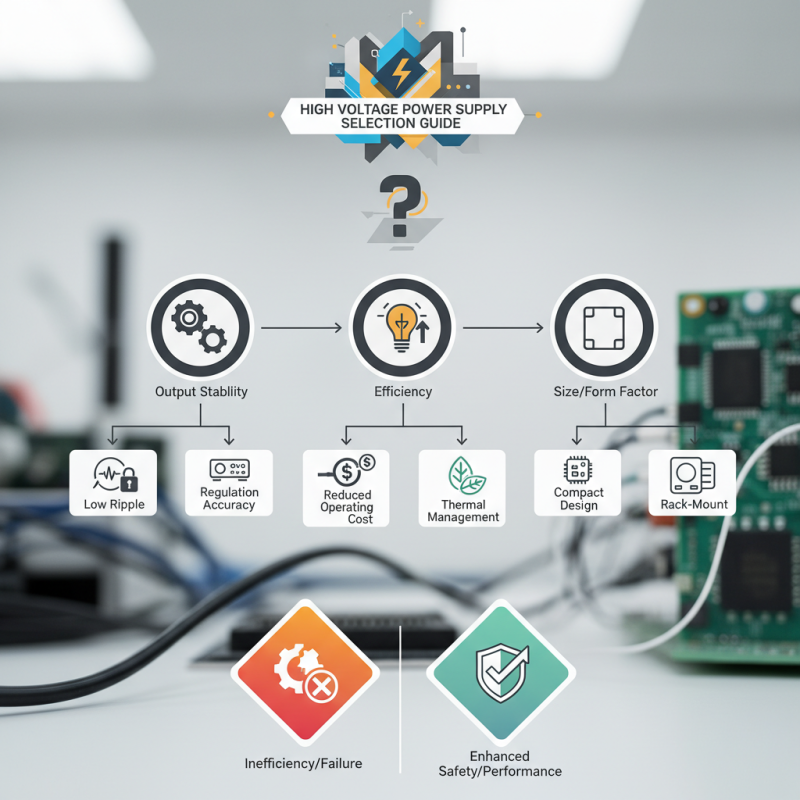
Understanding High Voltage Power Supply Specifications and Ratings
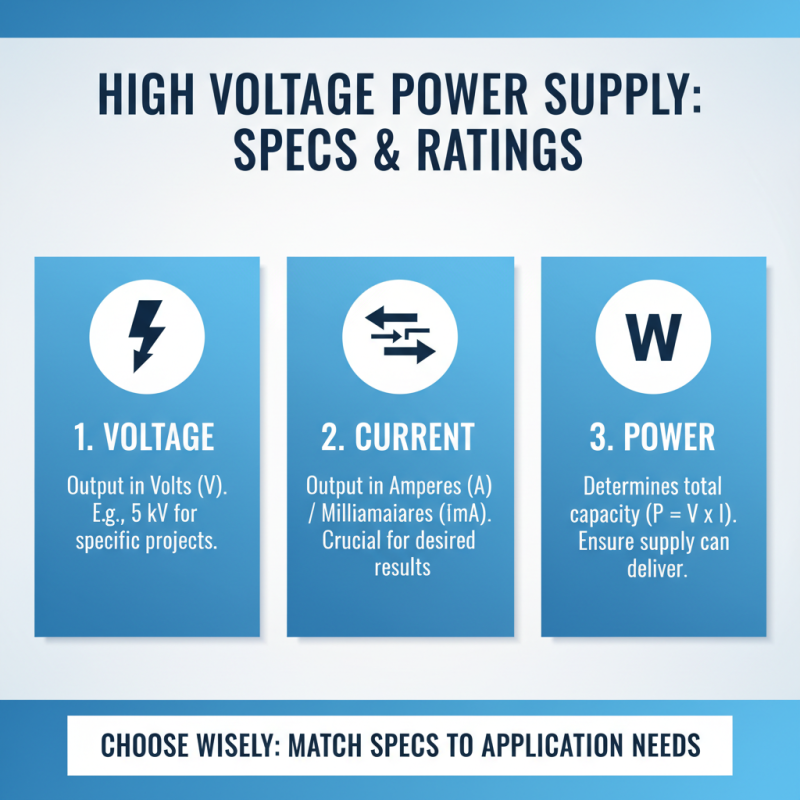
When selecting a high voltage power supply, understanding specifications is crucial. Voltage, current, and power ratings determine the appropriate supply for your application. For instance, if you're working on a project that requires 5 kV output, ensure the supply can consistently deliver that voltage. It is also essential to consider the current rating. Many applications might need a supply that can provide several milliamperes to achieve desired results.
Load regulation indicates how well a power supply can maintain a constant voltage under varying load conditions. A report from the Electrical Engineering Institute indicates that excellent load regulation is typically less than 1%. This is vital for sensitive equipment. Efficiency ratings also play an essential role; supplies greater than 80% efficiency can save energy costs over time.
Safety and reliability should not be overlooked. Devices should comply with safety standards such as IEC 61010. Many power supplies struggle with overheating issues. An inadequate cooling system can lead to malfunctions. Regularly assessing thermal performance helps. Be aware of the total cost of ownership, including maintenance and potential replacements. Balancing these specifications ensures a reliable high voltage power supply that meets specific needs.
Evaluating Load Requirements: Current, Voltage, and Power Factors
Choosing the right high voltage power supply involves careful consideration of your load requirements. Understanding current, voltage, and power factors is crucial. Start by assessing the current needs of your application. Determine the amperage required for optimal performance. This can influence the choice of power supply, ensuring it meets your system’s demands without being under or overpowered.
Voltage is another vital factor. Ensure your selected power supply can deliver the voltage required by your devices. Mismatched voltage can lead to damage or ineffective operation. Power factor plays a significant role too. It's the ratio of real power flowing to the load, and an ideal power factor signifies maximum efficiency. A low power factor means wasted energy and can affect overall system performance.
Tips: Always conduct a thorough evaluation of your existing systems. Take measurements and document the specifics. If possible, consult with experts to validate your findings. Familiarize yourself with the different types of power supplies available. It's wise to factor in future needs as well. Having a bit more capacity can prove beneficial down the line. Consider how often you may need to adjust voltage or current based on changing requirements. Taking these variables into account can lead to better decisions.
Assessing Safety Features and Compliance Standards in Power Supply
When choosing a high voltage power supply, safety features are paramount. Compliance with international safety standards can help ensure reliable performance. Look for suppliers that provide certifications like UL, CE, or IEC. These documents show the products meet stringent safety criteria.
Tips: Always ask for the test results. A reputable manufacturer should provide evidence of compliance with safety standards.
Consider the design features that enhance safety. Overvoltage protection, short-circuit protection, and temperature safeguards are crucial. Each of these features provides a layer of security. However, not all power supplies include them. It’s essential to verify their presence and effectiveness.
Tips: Review user manuals to understand the included safety features. Research online forums for real-life experiences shared by other users.
Reflecting on safety requirements is also vital. High voltage systems can present hazards if improperly used. Evaluate your specific needs and environments. Misjudging requirements can lead to serious risks. Aim for a power supply that matches your operational context and safety demands closely.
How to Choose the Best High Voltage Power Supply for Your Needs? - Assessing Safety Features and Compliance Standards in Power Supply
| Parameter | Description | Safety Features | Compliance Standards | Recommended Applications |
|---|---|---|---|---|
| Output Voltage | Range from 0 to 30 kV | Overvoltage Protection, Thermal Shutdown | IEC 61010, UL 61010 | Laboratory Testing, Industrial Equipment |
| Output Current | Up to 100 mA | Current Limiting, Short Circuit Protection | EN 60950-1 | Research and Development, High Voltage Testing |
| Efficiency | > 85% | Active Power Factor Correction | ISO 9001 | Renewable Energy Applications |
| Form Factor | Rack Mountable, Bench Top | Fused Inputs, Fire-Resistant Housing | RoHS Compliance | Test Labs, Educational Institutions |
| Control Interface | Analog and Digital Interfaces | Remote Operation Safety | CE Marking | Automated Testing Systems |
Cost-Benefit Analysis: Balancing Quality and Budget in Selection
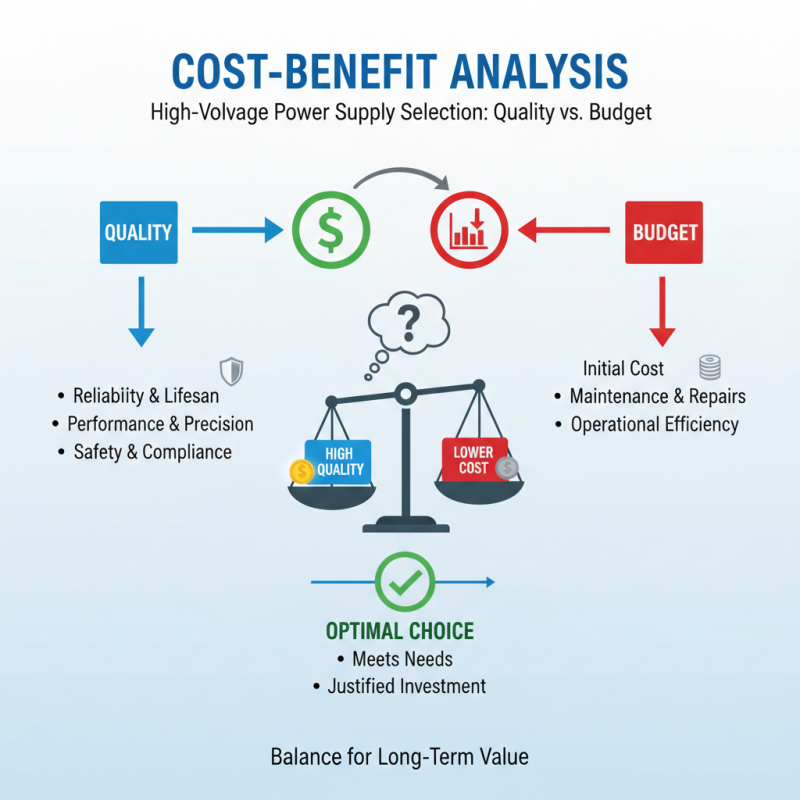
Choosing a high voltage power supply requires careful consideration. A cost-benefit analysis is crucial in this process. You need to balance quality with budget constraints. Sometimes, higher quality comes with a steeper price. You may wonder if that investment is worth it.
Evaluate the specific needs of your project. Can you compromise on certain features? Perhaps, using a more affordable option can still meet your requirements. Analyze the long-term benefits. A reliable power supply can lead to reduced maintenance costs. Often, cheaper alternatives may fail sooner, costing more in the end.
Be aware of potential hidden costs. Installation and operational expenses are important. Sometimes, what looks like a good deal up front can end up being pricier overall. Reflecting on past purchases can provide valuable insight. Aim for a balanced decision that supports your goals. Gathering expert opinions can also enhance your evaluation process.
Exploring Applications: Choosing Supplies for Industrial vs. Laboratory Needs
When selecting a high voltage power supply, consider the specific needs of industrial versus laboratory applications. Industrial settings often require robust and durable supplies. The National Electrical Manufacturers Association reports that about 70% of unexpected failures in industrial equipment stem from inadequate power supply. Careful selection can minimize downtime and enhance productivity.
Laboratory environments have different priorities. Precision and stability are crucial here. Recent studies show that power fluctuations can lead to erroneous experimental results. Testing often demands highly regulated outputs and noise-free operation. Power supplies designed for labs typically offer fine gradations and superior load regulation.
In both cases, understanding the load requirements is essential. For industrial applications, high surge capacity might be necessary. In contrast, lab settings may prioritize low ripple and noise performance. Inadequate specifications can lead to efficiencies. Always consult industry standards to ensure reliability and safety in your operations. Making informed choices can significantly impact overall success.
Related Posts
-
Why High Voltage Power Supply is Essential for Modern Electrical Systems
-

Top 10 High Voltage DC Power Supply Applications You Should Know?
-
Why Choose a High Voltage DC DC Converter for Your Application?
-

Top 10 High Voltage Power Supply Types and Their Applications?
-
What is an AC DC Power Supply and How Does it Work?
-
How to Select the Best Buck Converter for Efficient Power Management in Your Application

At Premium PSU, we are specialists in designing and manufacturing power conversion systems for the industrial market. Our product range includes high reliability power supplies from 50W to 72kW.
PREMIUM PSU
C/ Dolors Aleu, 19-21, 2nd Floor
08908 – Hospitalet de Llobregat
Barcelona-SPAIN
t.+34 93 223 26 85