
How to Choose the Best MCB Lock Off Kit in 2026
Choosing the right Mcb Lock Off Kit in 2026 is not just a matter of buying the most popular pack. A device must fit the breaker securely, resist accidental removal, and remain clear to everyone working nearby. A loose clamp on a narrow breaker can look reassuring, yet fail the simplest test: does it stay firmly in place? Small details matter.
Electrical educator Mike Holt is known for practical, safety-focused training. Rather than attribute an unverified quotation to him, this guide states the selection principle in its own words: “A lockout is only useful when it fits securely and makes the isolated circuit unmistakable.” That idea guides the choices ahead. We’ll compare breaker compatibility, body materials, locking methods, visibility, and kit contents. Check the manufacturer’s compatibility information against the exact breaker model; similar-looking devices may have different dimensions.
Think of a real panel: limited space, gloved hands, labels that are hard to read, and several devices crowded together. The best Mcb Lock Off Kit should be easy to install without force and simple to identify during a handover. No kit replaces safe isolation procedures, verification, or applicable workplace requirements. Still, product descriptions rarely answer every practical question. That deserves a second look. A careful choice reduces confusion, but it cannot guarantee safety on its own.
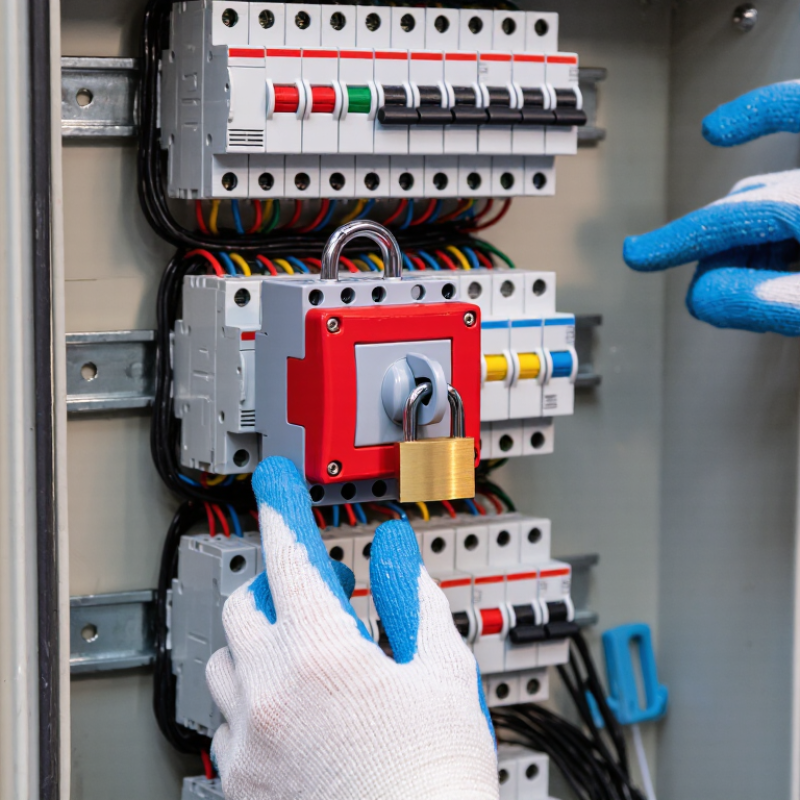
Identify the MCB Type and Lockout Requirements
Before choosing an MCB lock off kit, identify the exact breaker, not just its panel label. Record its pole count, toggle width, handle shape, and ON/OFF direction. Photograph the visible handle without removing the panel cover. Miniature breakers may have narrow toggles, while larger breakers often need different fittings. Check whether the device clamps, pins, or screws onto the handle. Then test it on the actual breaker. Small differences matter.
Confirm the kit holds the handle in the OFF position and accepts a suitable personal lock. Check clearance beside neighboring breakers; a lock may fit the handle but block the cabinet door. OSHA’s lockout/tagout guidance estimates that compliance prevents about 120 deaths and 50,000 injuries each year. That estimate shows why a loose fit is not a minor inconvenience. Follow the equipment instructions and site procedure, then verify isolation with an appropriate tester. A locked toggle alone does not prove the circuit is de-energized. Compatibility charts help, but handles can be worn, bent, or unusually spaced. That detail is easy to miss.

Check Compatibility with Breaker Sizes and Configurations
A reliable MCB lock-off kit should fit the breaker you actually have, not just the size listed on a package. Check the breaker’s width, toggle shape, and number of poles against the kit’s stated range. A narrow single-pole breaker and a wider multi-pole unit may need different clamps. Fit matters. Also look at the space around the switch: a neighboring breaker, raised label, or enclosure edge can stop a locking device from seating fully.
Compare the kit’s fixing method with the breaker’s configuration, including whether the toggle has a hole or a projecting handle. If possible, check the manufacturer’s compatibility chart and test the fit only on properly isolated equipment, following site procedures. The device should sit squarely and resist movement without forcing the toggle. A kit that appears universal may still wobble on one breaker style; online photos rarely show that small clearance problem. I would recheck dimensions before ordering, because even careful measurements can miss a lip or unusual handle profile. When compatibility remains uncertain, ask a qualified electrician to confirm the match. Keep the breaker model and a clear photo of its front handy.
Verify Safety Ratings, Materials, and Compliance
A strong MCB lock-off kit should fit the exact breaker toggle and panel space, not just “most” miniature circuit breakers. Check the stated voltage and temperature limits, and ask for test documentation supporting any insulation or dielectric claims. Fit matters. A loose clamp can shift under pressure; a brittle body may crack when tightened. Inspect the locking point, fastener, and label for clear identification and durable construction.
Compliance needs evidence, not a logo alone. Confirm the kit’s compatibility with the breaker model and the electrical isolation procedure used at your site. Where applicable, check workplace requirements such as OSHA’s lockout/tagout rule, 29 CFR 1910.147, and relevant equipment standards, including IEC 60947-2 for circuit breakers. These standards do not automatically certify a lock-off accessory. OSHA’s Control of Hazardous Energy guidance estimates that effective lockout/tagout can prevent about 120 deaths and 50,000 injuries each year. Paper claims aren’t proof.
Tips: Before purchase, test-fit the device on a de-energized sample breaker. Ask for material specifications, inspection guidance, and traceable test reports. Keep a record of the breaker type and kit fit. One detail is easy to miss: a kit that fits in the workshop may be awkward inside a crowded distribution board. Recheck access with gloves on.
Compare Kit Contents, Ease of Use, and Portability
A useful MCB lock-off kit should match the breakers on site, not just look complete in its case. Check the included lockouts, padlocks, hasps, and warning tags against the breaker toggle shape and available space. Some kits cover several breaker styles; others leave gaps. Fit matters. A lockout that sits loosely can frustrate safe, consistent use.
Ease of use shows up in small details. Can a worker identify the right device quickly? Does it attach without awkward positioning or extra tools? OSHA estimates that effective lockout/tagout practices prevent about 120 deaths and 50,000 injuries each year (OSHA, Control of Hazardous Energy). That estimate concerns energy-control practices overall, not any particular kit. Still, it underlines why clear labels and dependable fit deserve more attention than a large accessory count.
Portability matters when equipment is spread across rooms or service areas. A compact pouch keeps small parts together, while a bulky case may be left behind. Check the kit’s weight and whether its contents remain organized after repeated use. A tidy case can hide an awkward tool. Compare the items you will actually carry with the breakers you need to secure; a few missing adapters can make an otherwise convenient kit less useful.
How to Choose the Best MCB Lock Off Kit in 2026 - Compare Kit Contents, Ease of Use, and Portability
| Kit Type | Typical Kit Contents | Breaker Compatibility | Ease of Use | Portability | Best Suited For | What to Check Before Buying |
|---|---|---|---|---|---|---|
| Compact single-device kit | One MCB lockout device, one safety padlock, and one warning tag; exact contents vary. | Usually intended for a particular breaker toggle or a limited range of breaker designs. | Simple when the device is a confirmed fit; may require a screwdriver or other tool, depending on its design. | High; few components fit easily in a small tool pouch. | Occasional work on a known panel or a single breaker type. | Confirm the breaker manufacturer and model, toggle dimensions, installation method, and whether the padlock is included. |
| Multi-fit clamp-on kit | Several clamp-on lockout sizes or styles, plus padlocks and tags in some kits. | Can cover more than one toggle style, but compatibility is not universal and depends on the included devices. | Moderate; choose the correct device and follow its fitting instructions. Tool requirements differ by model. | Medium; more adaptable than a single-device kit, but additional pieces take up space. | Electricians or maintenance teams working across panels with varied MCB designs. | Check the documented breaker range, toggle clearance, device fit, and whether the case keeps parts organized. |
| Pin-out or pin-in style kit | One or more pin-style breaker lockouts; a padlock and tag may be supplied separately or included. | Designed for compatible breakers with suitable holes or openings in the toggle; not appropriate for every MCB. | Can be quick to fit on a compatible breaker, but alignment and access to the toggle matter. | High to medium; the device itself is compact, while a multi-size set is bulkier. | Panels where the breaker design is specifically confirmed to accept a pin-style lockout. | Verify the breaker has the required openings and that the device instructions list the exact compatible design. |
| Maintenance or team kit | A selection of lockout devices, multiple padlocks, tags, and often a storage pouch or case; contents vary by kit. | Potentially broad coverage when multiple device types are included; each device still has specific compatibility limits. | More choice supports varied tasks, but users need to identify the right device and keep components organized. | Low to medium; the case is convenient for storage but heavier and larger to carry. | Facilities teams, planned maintenance, and work involving several breaker types or workers. | Count the devices and padlocks, check keying arrangements, inspect the compatibility list, and confirm spare parts are available. |
Selection and safety note: MCB lockout kits are not universally interchangeable. Confirm fit against the exact breaker and follow the device instructions and your site’s lockout/tagout procedure. A lockout device does not replace isolation, verification that the circuit is de-energized, or other required electrical safety steps.
Assess Durability, Storage, and Long-Term Value
For an MCB lock off kit, durability starts with a reliable fit. Check that the device grips the breaker securely without slipping or forcing the toggle. A firm locking point and smooth-moving parts matter more than a large accessory count. Inspect the body for cracks, rough edges, and weak hinges. Small details matter. If product information does not clearly state compatible breaker types, ask the supplier before purchasing.
Storage affects how long a kit stays usable. A compact case keeps small devices and padlocks together, while a clear label makes selection quicker during maintenance. Check whether the case closes securely and protects parts from dust, damp tool bags, and knocks. Avoid assuming that a sturdy-looking box guarantees protection; inspect the fastenings and interior. It can be easy to overlook this until pieces go missing.
Long-term value depends on repeat use, replacement options, and sensible upkeep. A kit with durable components may cost more initially, but frequent replacement can make a cheaper set less economical. Compare the warranty, spare-part availability, and storage design—not just the purchase price. Keep an inventory and check devices for wear before use. One imperfect detail may remain: a case can be durable yet awkward to carry. Consider how it fits your actual workspace, and follow the equipment maker’s instructions for safe use.
Article Source:
At Premium PSU, we are specialists in designing and manufacturing power conversion systems for the industrial market. Our product range includes high reliability power supplies from 50W to 72kW.
PREMIUM PSU
C/ Dolors Aleu, 19-21, 2nd Floor
08908 – Hospitalet de Llobregat
Barcelona-SPAIN
t.+34 93 223 26 85