How to Choose the Best Residential Passenger Lift
A Residential Passenger Lift can make everyday movement easier, especially for older adults, people with mobility challenges, or families carrying laundry between floors. Yet choosing one is not simply a matter of picking a model from a brochure. The right option depends on the home’s layout, the people who will use it, and the space available for installation. Space matters.
Start by considering the number of floors, likely passenger load, doorway width, and whether a wheelchair needs to fit inside. Measure the proposed location carefully, including nearby walls, stairs, and access routes. A compact lift may suit a tight retrofit, while a larger cabin can offer more comfortable entry and room for another passenger. Power requirements, backup arrangements, noise, and expected travel frequency also deserve attention. Details matter.
Safety features and ongoing service are just as important as appearance. Ask suppliers to explain emergency communication, door sensors, maintenance intervals, warranty terms, and how faults are handled. Request a site assessment before comparing final prices; a quote based only on rough dimensions may miss building work or access constraints. Check that the installer can demonstrate relevant experience and provide clear documentation. There may be trade-offs: a quieter or more spacious design can require more room or a higher budget. This guide explores the questions that help homeowners compare options with care, while recognizing that no single lift is ideal for every home. A little doubt is useful. It can prompt better questions before a long-term purchase.
Assess Household Needs, Users, and Lift Purpose
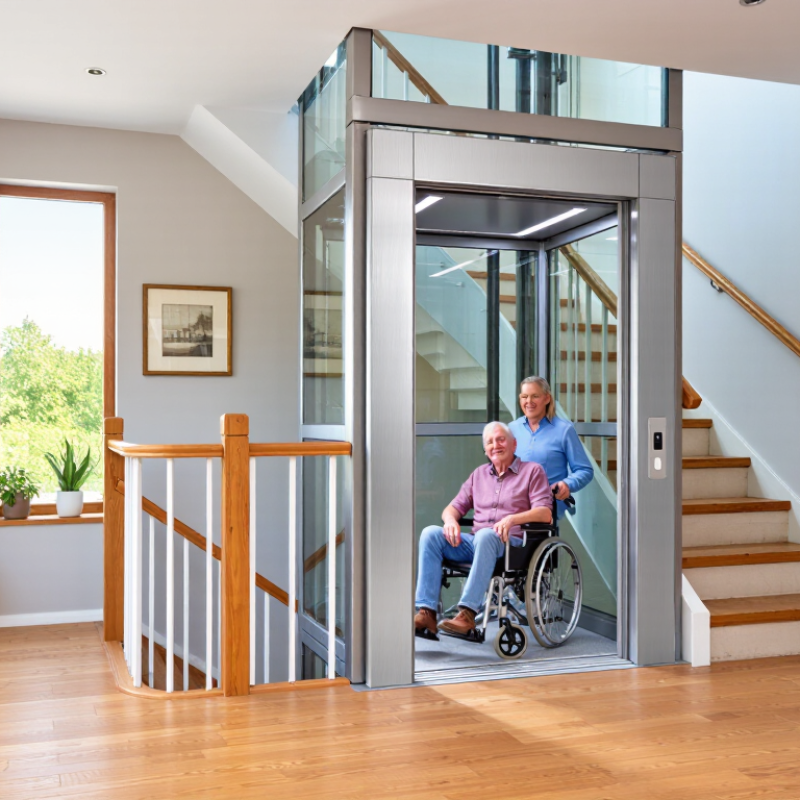
Choosing the best residential passenger lift starts with the people who will use it. Count regular users, including children, older adults, and anyone who may use a walking frame or wheelchair. A lift that feels roomy today may become awkward when someone carries groceries or a laundry basket. Measure doorways, stair landings, and available floor space before comparing layouts. A qualified site assessment can reveal constraints that a simple sketch misses.
Think about the lift’s daily purpose. Is it mainly for occasional trips between floors, or will someone rely on it several times a day? Note the floors it must serve, typical passenger numbers, and whether bulky items need to fit inside. These details help determine cabin size, door position, and suitable operating features. Noise matters, too. A lift beside a bedroom may need quieter operation. Even a careful estimate can be wrong, so verify measurements on site.
Tips: Walk the route with a tape measure and note narrow turns. List who will ride and what they will carry. Ask a lift professional to check access, structure, and installation requirements before choosing a model. Don’t plan only for today; household needs can change. Short notes help.
Compare Residential Lift Types and Drive Systems
A cabin lift suits frequent trips between floors, especially when a wheelchair or shopping bags need room. A platform lift can fit tighter spaces, but its standing area and travel range may limit daily use. Through-floor models avoid a conventional shaft, though openings affect room layout. Measure the route. Check clear door width, floor levels, and headroom before comparing quotes.
Drive systems change comfort and upkeep. Hydraulic lifts use a pump and cylinder; they can suit shorter travel, but the equipment needs a planned service area. Traction lifts use a motor and counterweight, often making them a practical option for repeated trips. Screw or chain drives can simplify some installations, yet may feel slower or noisier. Noise matters. Ask to hear a comparable unit under load, not just an empty showroom model.
Energy figures need context. The IEA’s Tracking Buildings 2023 estimates that building operations used about 30% of global final energy in 2022. That is not a lift-specific figure, so compare the lift’s measured running and standby use instead. ISO 25745-2 provides a method for assessing lift energy performance across operating and standby modes. Ask suppliers to state assumptions, including daily trips and load. I would not choose from drive type alone; door placement, maintenance access, and the household’s mobility needs can outweigh a small efficiency difference.
Check Space, Structural, and Accessibility Requirements
Before choosing a residential passenger lift, measure the route, not just the proposed shaft. Record the available footprint, floor-to-floor height, headroom, pit depth, and landing-door swing. Check whether walls and floors can support the lift’s loads; a structural engineer should review the proposed location. Moving a pipe or opening a ceiling can change the budget quickly. Measure twice.
Access needs deserve equal attention. Consider who will use the lift now and later, including wheelchair users or anyone needing assistance. Check the cabin’s usable dimensions, doorway clearance, control height, and approach space on each floor. AARP’s 2021 Home and Community Preferences Survey found that 77% of adults aged 50 and older want to remain in their homes long-term. That preference makes usable access a practical planning issue, not an optional extra.
Ask a qualified lift professional to compare site measurements with the equipment specifications, then verify applicable local building and safety requirements. The U.S. Census Bureau’s 2022 American Community Survey estimated that about 42.5 million people in the United States had a disability, underscoring the need to plan for varied mobility needs. A drawing may look generous, yet a door swing can block a wheelchair approach. Small details matter. Recheck the plan after finishes, handrails, and nearby furniture are included.
How to Choose the Best Residential Passenger Lift
Check space, structural, and accessibility requirements before selecting a lift capacity.
Common rated-capacity options are shown with approximate passenger counts, estimated at 75 kg per person. These are planning examples, not a substitute for checking the lift’s actual cabin and shaft dimensions, building structure, and local accessibility and safety requirements.
Evaluate Safety Features, Capacity, and Energy Use
How to Choose the Best Residential Passenger Lift
Safety, capacity, and energy use should guide your choice. Ask for the lift’s rated load, emergency-lowering method, door interlocks, and backup communication system. Check that installation and inspection follow the safety code applicable in your area; requirements can differ. A practical capacity check is to measure the largest mobility aid, then allow room for its user and a companion. A lift that fits on paper may feel cramped in daily use.
Energy figures need context. The European Commission’s E4 project report, Energy-Efficient Elevators and Escalators, estimated that lifts and escalators use roughly 3–5% of electricity in European buildings. That broad estimate is not a prediction for one home. Ask for expected standby and travel consumption, and compare models using the same usage assumptions. Efficient lighting and low standby demand can matter when the lift waits between trips. I would also ask how the lift behaves during a power cut; this detail is easy to overlook.
Tips: Bring a tape measure, note who will ride together, and request written energy and safety specifications. Check the details twice. A little uncertainty is normal, but vague answers deserve follow-up.
How to Choose the Best Residential Passenger Lift - Evaluate Safety Features, Capacity, and Energy Use
| Evaluation factor | Hydraulic lift | Traction lift | Screw-driven lift |
| Typical residential capacity | Often around 300–500 kg, depending on car size and design. | Often around 250–450 kg for compact residential models. | Often around 250–400 kg for compact residential models. |
| Typical speed | Generally low to moderate; suitable for short residential travel. | Low to moderate in residential configurations; varies by system. | Usually low; intended for short-rise home installations. |
| Key safety features to verify | Door interlocks, emergency lowering, overload protection, alarm or communication system, and protection against unintended movement. | Door interlocks, overspeed governor and safety gear where applicable, emergency rescue operation, overload protection, and alarm or communication system. | Door interlocks, emergency lowering or rescue procedure, obstruction protection, overload protection, and alarm or communication system. |
| Energy use | Typically moderate to high for upward travel because a pump raises the car; actual use depends on load, travel height, and system design. | Typically low to moderate; counterweighting can reduce motor demand, and some systems can recover energy during operation. | Typically moderate; consumption depends on the drive design, load, travel height, and standby settings. |
| Space and installation considerations | May require space for a hydraulic unit and suitable installation provisions; pit and headroom requirements vary. | May need an overhead machine space or a machine-room-less arrangement; confirm pit and headroom requirements. | Can suit some compact, low-rise layouts; confirm structural support, pit, and headroom needs with the installer. |
| Best suited to | Homes where smooth low-rise travel and a relatively high load capacity are priorities. | Homes where energy efficiency, frequent use, or a broader range of travel heights is important. | Homes needing a compact solution for a small number of floors and modest travel distances. |
| Questions to ask before purchase | What emergency-lowering method is provided? What maintenance is needed for the hydraulic system? | Is energy regeneration included? What rescue procedure applies during a power failure? | What is the rated duty cycle? How are entrapment risks and emergency descent handled? |
Planning note: Figures and comparisons are indicative, not product specifications. Capacity, speed, energy consumption, safety equipment, and space requirements vary by model and local regulations. Confirm certified safety provisions, installation requirements, and expected energy use with a qualified lift professional.
Compare Installation Costs, Maintenance, and Supplier Support
A residential passenger lift quote is useful only when it separates equipment, building work, electrical changes, and finishing. Ask whether the price includes a pit, shaft, landing doors, permits, and removal of existing materials. A narrow hallway or low ceiling can change the design and cost. Request an itemized quote and a written schedule; otherwise, “installation included” may hide important exclusions.
Maintenance affects the long-term cost. Compare service-call hours, response times, parts availability, and the recommended inspection schedule. The European Lift Association’s 2023 market statistics estimate about 6.5 million lifts in service across Europe, illustrating the scale of equipment that needs ongoing upkeep. For a home lift, ask who handles faults after installation and whether support is available locally. I would not assume the lowest quote is poor; it may simply cover less. But vague answers about callouts deserve a second look.
Tips: Get two or three itemized quotes. Ask suppliers to show annual service costs and explain what happens if a key part needs replacing. Have the proposed route measured at your home, not just discussed from a floor plan. A clear support plan matters when the lift stops with groceries waiting upstairs.