How to Choose the Right DC Converter for Your Needs?

Choosing the right DC converter can be challenging. Many factors play a role in this decision. According to industry expert Dr. Emily Carter, “Selecting the proper DC converter is crucial for efficiency and reliability.”

DC converters come in various types and sizes. Each serves different purposes. Understanding your specific needs is vital. Consider voltage requirements, power ratings, and form factors. A wrong choice may lead to inefficiencies or even damage to your devices.

Many users overlook the importance of quality in a DC converter. Not all products are created equal. Some may promise high efficiency but fall short in real-world applications. Reflecting on your requirements is essential for making the best decision. This can save both time and money in the long run.

How to Choose the Right DC Converter for Your Needs?

Understanding the Basics of DC Converters

DC converters play a crucial role in various applications, from consumer electronics to renewable energy systems. Understanding their basics is essential. At its core, a DC converter changes a direct current (DC) voltage level. This can involve stepping up or stepping down voltage to suit different components. For example, in solar applications, converters maximize the efficiency of energy conversion. Reports indicate that the global DC-DC converter market is expected to reach $40 billion by 2025, underscoring the growing demand.

When selecting a DC converter, consider factors such as input voltage range, output voltage, load requirements, and efficiency. A mismatch can lead to energy loss. Efficient systems can exceed 90% efficiency, but many products fall short of this benchmark. The right choice can prevent overheating and reduce energy costs. However, not all converters are built the same. Many models lack detailed specifications, making comparisons tricky. Users must review technical sheets carefully to ensure compliance with their needs.

Additionally, size and thermal management are vital. Heat can impact performance and lifespan. Some converters may operate well initially but suffer from thermal issues later. Keeping a close eye on these factors adds complexity to the decision-making process. In the end, choosing a DC converter is not just about numbers; it's about fitting a solution to a problem. Be prepared for a bit of trial and error to find the best match.
Types of DC Converters and Their Applications

DC converters play a crucial role in various applications. They transform direct current (DC) from one voltage level to another. Understanding the types of DC converters available is essential for making an informed choice.

There are several main types of DC converters. Buck converters step down voltage. They are efficient, often over 90%, making them ideal for battery-operated devices. Boost converters, on the other hand, increase voltage. They are commonly used in renewable energy systems, especially solar panels, where higher voltage outputs are needed. Buck-boost converters can both step up and step down voltage, offering versatility in applications like automotive systems.

Tips: Always evaluate the efficiency rating before making a purchase. Look for converters that meet your specific voltage and current requirements. Remember that quality matters; a cheap converter might end up costing you more in the long run.
In industrial sectors, isolated DC-DC converters provide safe voltage transformation. They prevent electrical noise and protect sensitive equipment. These converters are often utilized in telecommunications and medical devices. Poor quality converters can lead to inefficiency and increased electromagnetic interference. It's crucial to invest in reliable options to mitigate these risks.

Key Factors to Consider When Selecting a DC Converter

How to Choose the Right DC Converter for Your Needs?

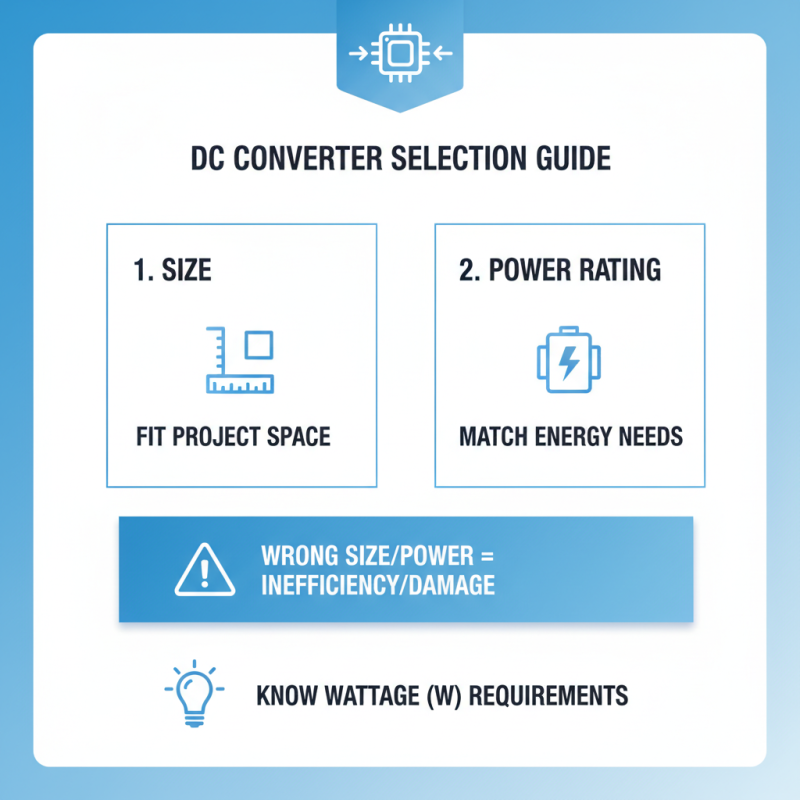
When selecting a DC converter, size and power rating are crucial. The converter must fit your project space. Think about your device's energy needs. A poorly sized converter can lead to inefficiency or damage. Understanding wattage requirements helps in this decision.

Efficiency also plays a key role. Low-efficiency converters waste energy. This means more heat generated and power lost. Analyze the thermal management aspect of your setup. Some systems may require additional cooling if a converter runs hot. Don't overlook this detail.

Lastly, consider the input-output voltage range. If the voltage is mismatched, it could harm your device. Some converters support wide ranges, which can add flexibility. A converter with limited voltage compatibility can become a bottleneck in your design. Always double-check these specifications before finalizing your choice.

Evaluating Efficiency and Performance Metrics

How to Choose the Right DC Converter for Your Needs?

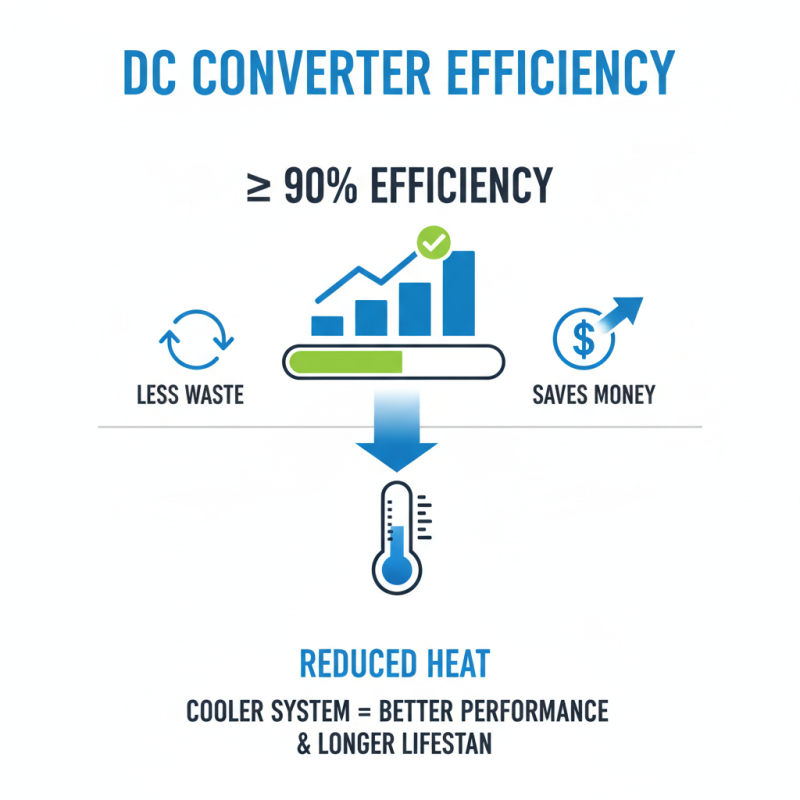
When selecting a DC converter, efficiency stands out as a key metric. Higher efficiency means less wasted energy, which ultimately saves money over time. Look for converters with at least a 90% efficiency rating. This can significantly reduce heat generation. A cooler system often translates into better performance and longer lifespan.

Performance metrics also include output voltage stability and load response time. Ensure the converter maintains stable output with varying loads. Fast load response is crucial for applications that demand quick adjustments. Some converters may struggle during sudden demand spikes. It can lead to voltage dips that affect connected devices.

You may find that certain converters fall short of their claims. Testing in real-world scenarios is essential. Don’t just rely on performance graphs. Observing how the converter behaves in your specific application can reveal unexpected weaknesses. Prioritize these evaluations to ensure that your chosen DC converter meets your actual needs.

Common Mistakes to Avoid When Choosing a DC Converter

Choosing the right DC converter is crucial, yet many make common mistakes. One frequent error is not assessing the load requirements accurately. People often underestimate the current draw of their devices. This oversight can lead to selecting a converter that can't supply sufficient power, causing malfunction or damage.

Another mistake is ignoring thermal management. Many converters may overheat if not placed in an adequate environment. Users sometimes forget to consider ambient temperature. Without proper ventilation, even an appropriately rated converter can fail. It's essential to pay attention to cooling methods, like heat sinks or fans.

Lastly, those choosing a converter often overlook the importance of efficiency ratings. A less efficient converter wastes power and generates heat. People might focus solely on initial costs without considering long-term implications. Evaluating energy consumption helps in making a wiser choice. It is vital to think beyond the purchase and consider the lifespan of the converter.

Common Mistakes to Avoid When Choosing a DC Converter