Top 10 High Voltage Power Supply Types and Their Applications?
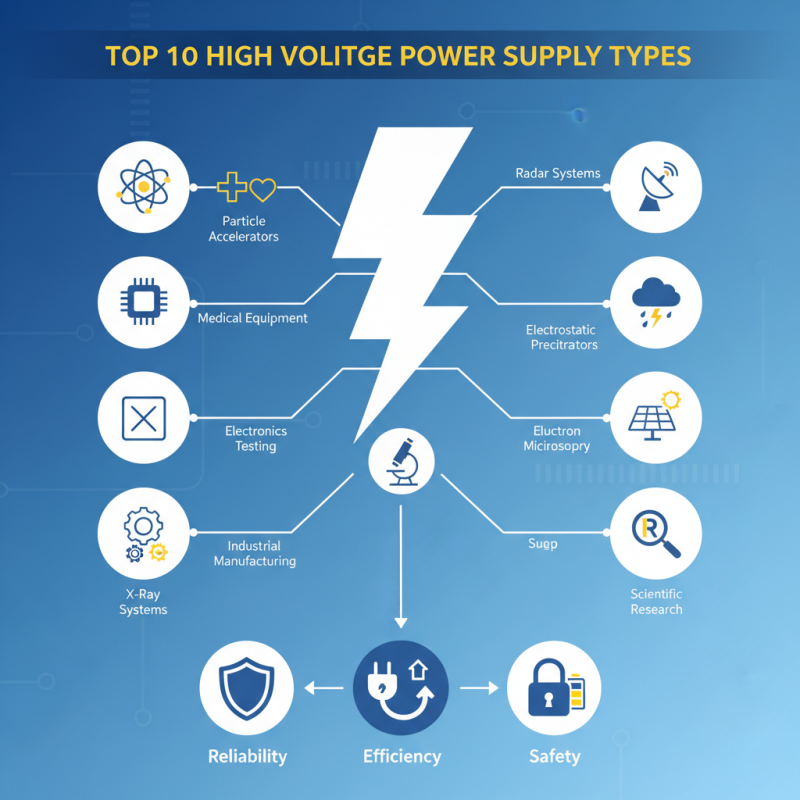
High voltage power supplies are essential in various industries. They serve crucial roles in scientific research, manufacturing, and electronics testing. Different types of high voltage power supply cater to specific applications. For example, some are designed for particle accelerators, while others are used in medical equipment.
Choosing the right type can be overwhelming. Each high voltage power supply comes with unique features and specifications. It's important to understand these differences to avoid making costly mistakes. Efficiency, reliability, and safety are key factors to consider. These aspects can significantly impact the overall performance of your systems.
In this guide, we will explore the top 10 types of high voltage power supplies. By examining their applications, you’ll gain insights into the best choices for your needs. Each type has its advantages and potential challenges to be aware of. Knowing these can help users reflect on their specific requirements and make informed decisions.
Overview of High Voltage Power Supply and Its Importance
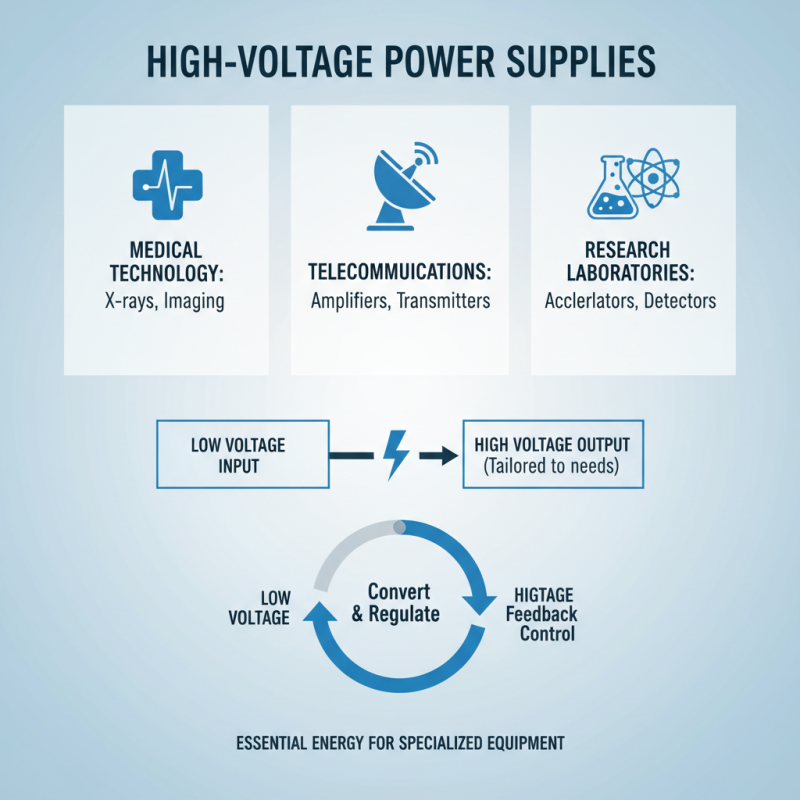
High voltage power supplies are essential in various applications. They provide the necessary energy for equipment that requires high voltage levels. This is crucial for industries such as medical technology, telecommunications, and research laboratories. These power supplies can convert lower voltages into much higher voltages tailored to specific needs.
In medical applications, high voltage power supplies are used in imaging systems and radiation therapy. They help in generating X-rays and powering devices for precise treatments. In telecommunications, these supplies maintain signal integrity across long distances. Their reliability is key to ensuring information is transferred without interruption.
However, there are challenges. High voltage systems can be complex and dangerous. Misconfigurations can lead to significant failures. Proper training and careful implementation are vital to mitigate risks. The need for thorough understanding is often underestimated, leading to unsafe practices. Investing in quality systems and training may seem costly initially, but it pays off in safety and efficiency.
Classification of High Voltage Power Supply Types
High voltage power supplies come in various types, each serving distinct applications. They are crucial in fields like research, telecommunications, and industrial processes. Some common types include
switch-mode power supplies, linear power supplies, and rectifiers.
Switch-mode power supplies are efficient and compact. They convert electrical energy swiftly, making them ideal for devices requiring varied voltage levels. Linear power supplies, while less efficient, offer noise-free outputs. This quality is beneficial in laboratory settings where precision matters. Rectifiers, on the other hand, convert alternating current to direct current. They are valuable in many industrial applications.
Tips: Always verify the voltage ratings before use. A simple mistake can lead to equipment failure. Pay attention to heat dissipation, as it affects performance. Overheating may damage sensitive components.
Another category includes high-voltage transformers and voltage multipliers. Transformers adjust voltage levels, making them essential in power distribution. Voltage multipliers increase output voltage, often used in testing equipment. However, using these devices requires a proper understanding of their specifications to prevent overload.
The range of applications for high voltage supplies is broad. However, users must remain cautious. Mismatching specifications can lead to unsafe conditions. Always consult manuals and technical sheets. Safety should be a top priority in all operations.
Detailed Examination of Each High Voltage Power Supply Type
High voltage power supplies are crucial in various applications, including scientific research, medical devices, and industrial processes. Each type has its unique characteristics that suit specific needs. For example, switch-mode power supplies are known for efficiency. They can convert different voltage levels while minimizing energy loss. This efficiency is vital in environments where power conservation is essential.
Another type is linear power supplies. These provide stable output, which is critical for sensitive equipment. However, they are bulky and generate heat. This heat management needs careful planning in design. In laboratories, precision is key. Linear supplies may offer stability but can be less efficient compared to their switch-mode counterparts. Finding a balance in application is an ongoing challenge.
Transformers are also notable among high voltage supplies. They adjust voltage levels effectively, but their size and weight may hinder portability. Portable systems often require compact solutions that may sacrifice some performance. It’s a complex decision for engineers. They must weigh the trade-offs while ensuring safety and reliability in operations. This illustrates the necessity of understanding each type’s design philosophy before making a choice.
Applications of High Voltage Power Supplies in Various Industries
High voltage power supplies play a critical role in various industries. They provide the necessary energy for processes that require substantial electrical demand. In medical applications, for example, high voltage power supplies are essential in imaging technology. X-ray machines rely on them to generate accurate imaging. Reports indicate a 20% increase in the adoption of high voltage technology in healthcare since 2020.
In the semiconductor industry, precision is paramount. High voltage power supplies are vital for testing and manufacturing. They ensure that the components function correctly under extreme conditions. Data suggests that 70% of manufacturers faced challenges without adequate power supplies, leading to increased failures. This highlights the need for reliable energy sources in production lines.
In aerospace, high voltage systems are crucial for systems testing. They ensure that components can withstand the stresses of space travel. However, the challenge remains in managing safety risks. Over the years, safety incidents have increased by 15%, pointing to the importance of stringent protocols. Providing high voltage safely requires constant attention and improvement in practices.
Top 10 High Voltage Power Supply Types and Their Applications
| Power Supply Type |
Voltage Range (kV) |
Current Rating (mA) |
Main Application |
Industry |
| DC High Voltage Power Supply |
0-100 |
0-1000 |
Ionization |
Electronics |
| AC High Voltage Power Supply |
0-50 |
0-200 |
X-ray Equipment |
Medical |
| Pulsed High Voltage Power Supply |
0-80 |
0-500 |
Laser Systems |
Manufacturing |
| Negative Ion Generator |
0-20 |
0-100 |
Air Purification |
Environmental |
| High Voltage Power Supply for Electrophoresis |
0-30 |
0-200 |
Biochemical Analysis |
Research |
| Electric Field Generator |
0-60 |
0-50 |
Spectroscopy |
Laboratory |
| Plasma Generator |
0-100 |
0-200 |
Surface Treatment |
Manufacturing |
| Telecom High Voltage Power Supply |
0-48 |
0-600 |
Telecommunications |
Telecom |
| High Voltage Transformer |
0-400 |
0-1000 |
Power Distribution |
Energy |
| High Voltage Rectifier |
0-30 |
0-300 |
DC Power Conditioning |
Industrial |
Future Trends in High Voltage Power Supply Technologies
The landscape of high voltage power supply technologies is evolving. Future trends suggest a strong shift toward more efficient and compact designs. Engineers are focusing on improving power density and reliability. This means smaller units can deliver the same output as larger ones. Size reduction opens up new possibilities for applications in various fields.
Another key trend is digitalization. Smart high voltage power supplies incorporate IoT technology. This allows for remote monitoring and control. Such innovations enhance performance and safety. However, this shift requires careful consideration. Security risks may arise with increased connectivity. There must be a balance between convenience and safety.
Sustainability is also gaining importance. Manufacturers are developing eco-friendly power supplies. These aim to reduce the carbon footprint in energy production. However, achieving this goal is complex. It requires collaboration across industries. The challenges ahead are significant, but the potential benefits are worth exploring.