
How to Choose Smart Door Locks With Handle?
Choosing smart door locks with handle is not simply a design decision. It affects entry security, daily comfort, privacy, and emergency access. A polished touchscreen means little if the lock does not fit your door thickness or existing mortise. The handle must also feel natural when carrying groceries, children’s bags, or a laptop.
Andrew Bud, founder of i‑am, a respected access-technology company, captures the wider shift clearly: “The future of access is about identity, not keys.” This principle helps frame the buying process. A dependable smart door locks with handle system should support secure credentials, controlled user permissions, activity records, and reliable mechanical operation. Fingerprint recognition may be convenient, but it should not replace a strong backup method. A mobile app can be useful, yet it should not become the only way to enter your home.
Look closely at battery life, low-power warnings, weather resistance, and connection stability. Test the handle height and turning force before installation. Small details matter.
Compatibility is often underestimated.
A lock may suit a photograph but fail on an older door. Wi-Fi models offer remote control, while Bluetooth versions may reduce network dependence. Neither option is perfect. Privacy settings, software updates, encryption practices, and warranty support deserve equal attention. This guide explains how to compare these features with practical judgment, while recognizing an uncomfortable truth: convenience can sometimes introduce new points of failure. The best choice balances modern access with a reliable physical fallback.
What Is a Smart Door Lock With Handle?
How to Choose Smart Door Locks With Handle?
What Is a Smart Door Lock With Handle?
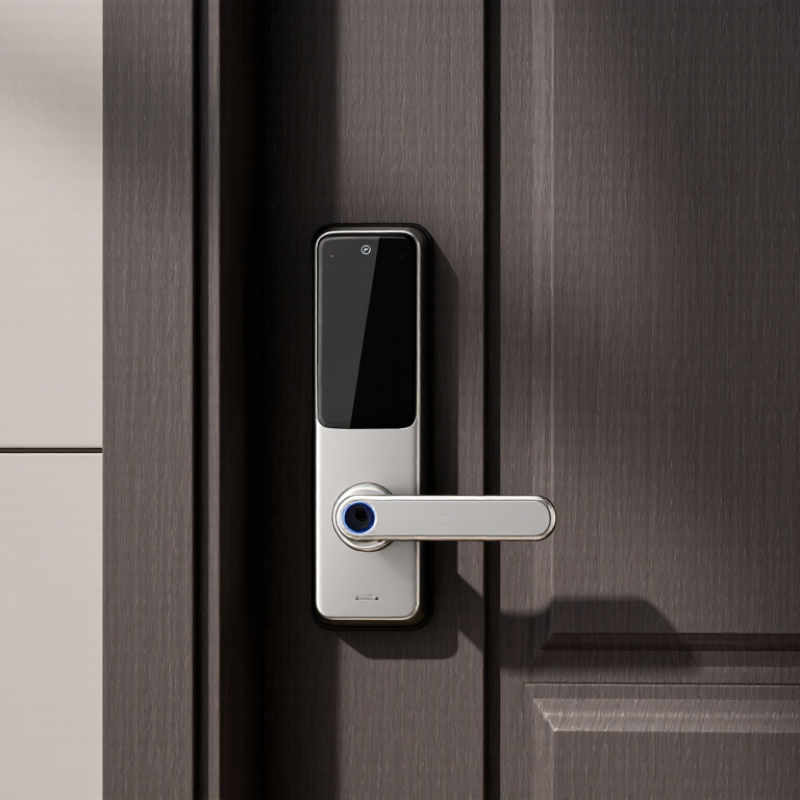
A smart door lock with handle combines the lock body, lever, and electronic access system in one unit. It can replace a traditional knob and deadbolt, depending on the door structure. Users may unlock it with a code, fingerprint, mobile device, or physical key. Some models also support temporary access codes for guests or service workers.
The handle matters more than many buyers expect. Check its handing, backset, door thickness, and swing direction before ordering. A mismatched handle can rub against the frame or fail to retract the latch fully. Battery access is also practical. The compartment should open from the interior side, not require removing the entire lock. Small detail. Big difference.
Market reports show growing demand for connected access. Grand View Research valued the global smart lock market at about USD 2.8 billion in 2022 and projected strong growth through 2030. Fortune Business Insights also forecasts rapid expansion, although its estimates differ by research method. Growth does not automatically mean better security. Look for encrypted communication, failed-entry limits, low-battery alerts, and a mechanical override. ANSI/BHMA performance grades can provide useful durability guidance. However, ratings do not replace checking the door frame and installation quality. A careful fit still matters most.
How to Choose Smart Door Locks With Handle? - What Is a Smart Door Lock With Handle?
| Selection Dimension | What It Means | Typical or Recommended Options | Why It Matters | What to Check Before Buying |
|---|---|---|---|---|
| Definition | A smart door lock with handle combines an electronic locking mechanism with an integrated lever or knob. It can replace a conventional lockset and may support keyless entry, remote control, and access management. | Lock + Handle in One Unit | The integrated design can simplify installation and provide a consistent appearance. | Confirm whether the product replaces the complete lockset or only the interior or exterior part of an existing lock. |
| Door Compatibility | Compatibility depends on door thickness, backset, edge bore, faceplate dimensions, handing, and the existing latch or mortise configuration. | Common residential door thicknesses are approximately 35–45 mm. Common backsets include 60 mm and 70 mm, but measurements vary by region and lock type. | A lock with the wrong dimensions may not fit securely or may require additional door modification. | Measure the door thickness, backset, bore diameter, edge preparation, and distance from the lock edge to nearby trim. |
| Handle Style | The handle may be a lever handle, pull-down lever, or knob. Lever handles are generally easier to operate than round knobs. | LeverKnobReversible Handle | Handle shape affects accessibility, appearance, door handing, and ease of use when hands are full. | Check left/right handing, handle clearance, return-to-door position, and whether the handle is reversible during installation. |
| Unlocking Methods | Smart locks can support one or more electronic and mechanical entry methods. | PIN CodeFingerprintMobile AppKeyKey Card | Multiple methods provide convenience while preserving backup access if one method is unavailable. | Verify the number of stored users, temporary-code support, fingerprint capacity, mechanical key override, and offline access behavior. |
| Connectivity | The lock may communicate directly with a phone or connect to a home network or smart-home hub. | BluetoothWi-FiZigbeeZ-WaveMatter | Connectivity determines remote access, notifications, battery consumption, and smart-home compatibility. | Check whether a separate bridge or hub is required and whether the chosen protocol works with the intended smart-home system. |
| Remote Operation | Remote locking, unlocking, activity notifications, and user management usually require an internet-connected gateway or built-in Wi-Fi. | Use remote features only when the lock, gateway, phone application, and home network are compatible. | Remote functions are useful for family members, guests, deliveries, and rental-property access. | Check whether remote unlocking can be disabled, whether notifications are configurable, and how access works during an internet outage. |
| Power Source | Most smart locks use replaceable batteries, while a smaller number use rechargeable batteries or wired power. | Common options include alkaline or lithium primary cells and rechargeable battery packs. Actual battery life depends on usage, radio type, temperature, and door alignment. | Reliable power is essential because a depleted battery can prevent electronic entry. | Look for a low-battery warning, exterior emergency power contact, accessible battery compartment, and a physical key or other backup method. |
| Mechanical Security | Electronic features do not replace the need for a strong latch, deadbolt or mortise case, strike plate, screws, and correctly aligned door hardware. | Prefer products with documented residential or commercial lock testing, reinforced mounting hardware, and a robust metal locking mechanism. | Forced-entry resistance depends heavily on the complete door assembly rather than the electronic module alone. | Review applicable test certifications, bolt throw, strike reinforcement, mounting screws, and compatibility with the existing frame. |
| ANSI/BHMA Grade | Where applicable, ANSI/BHMA grading indicates performance and durability testing for certain lock hardware categories. | Grade 1 Higher commercial-duty performance Grade 2 General residential and light commercial use Grade 3 Basic residential use | A grade can help compare tested durability and security performance, but it does not describe every electronic or cybersecurity feature. | Confirm that the grade applies to the complete lockset and that the certification is relevant to the product configuration. |
| Weather Resistance | Exterior locks are exposed to rain, dust, humidity, temperature changes, and direct sunlight. | For exposed entrances, choose a product with a clearly stated environmental or ingress-protection rating suitable for the installation location. | Weather exposure can affect sensors, batteries, electronics, and surface finishes. | Check the stated operating temperature, water and dust resistance, outdoor installation instructions, and whether the keypad is protected from direct exposure. |
| Handle and Latch Operation | The handle should retract the latch smoothly, while the electronic mechanism should control locking without binding. | A properly aligned door should open and close smoothly without excessive force or lifting. | Misalignment increases motor load, noise, battery consumption, and the risk of lockout. | Test the door with the door closed and open. Confirm that the latch enters the strike cleanly and that the handle does not rub the frame. |
| Access Management | Access management controls who can enter and when. Features may include permanent users, temporary codes, scheduled access, and activity logs. | Permanent AccessTemporary CodesSchedulesAudit Log | These controls are useful for homes, offices, guest rooms, service providers, and rental properties. | Check the maximum number of users, code expiration rules, log retention, administrator permissions, and deletion process for former users. |
| Privacy and Cybersecurity | Connected locks process authentication data and may transmit activity information through a mobile application or cloud service. | Prefer encrypted communication, secure account authentication, regular firmware updates, and clear data-retention controls. | Good cybersecurity reduces the risk of unauthorized account access or misuse of entry records. | Look for multi-factor authentication, encrypted communications, update support, account recovery controls, and a way to remove access remotely. |
| Installation | Installation difficulty depends on whether the lock replaces a standard cylindrical lockset, a mortise lock, or a non-standard fitting. | DIY installation is more practical when the new lock matches the existing door preparation and includes clear templates and hardware. | Incorrect installation can reduce security, damage the door, or cause unreliable locking. | Check the installation guide before purchase and determine whether drilling, a new strike, wiring, or professional installation is required. |
| Emergency Access | Emergency access is the method used when batteries are depleted, a phone is unavailable, or connectivity fails. | Mechanical KeyExternal Battery ContactBackup PIN | A backup method helps prevent lockouts and is especially important for exterior doors and emergency exits. | Confirm that the backup method is accessible from outside, does not expose sensitive information, and can be tested after installation. |
| Best Use Case | The most suitable lock depends on the property, users, door location, and required level of control. | HomesApartmentsHome OfficesGuest RoomsRental Properties | A simple Bluetooth lock may suit a private home, while scheduled codes and remote management may be more useful for shared or rental spaces. | Define the required users, entry methods, remote functions, weather exposure, installation limits, and backup-access plan before selecting a model. |