
7 POY Spinning and Winding Tips for Buyers?
POY Spinning And Winding decisions affect yarn consistency, line efficiency, and the quality of downstream texturing. Buyers must compare more than a machine’s rated speed. Package dimensions, filament count, denier range, control systems, and service support all shape performance on the factory floor.
The market context is substantial. Textile Exchange’s Materials Market Report 2024 estimates that global fiber production reached 124 million tonnes in 2023, with polyester accounting for about 57 percent. This figure describes the wider fiber market, not POY demand alone. Still, it shows why reliable polyester production equipment matters to many manufacturers. The report is useful context, but it cannot determine whether a specific machine suits a specific plant.
This guide presents seven practical tips for evaluating POY spinning and winding equipment. It looks at process stability, winding package quality, energy use, automation, maintenance access, supplier documentation, and trial-run evidence. Ask to inspect actual packages, not just polished brochures. Check whether tension remains steady across positions and whether operators can reach critical components without awkward workarounds. Small details matter.
A higher output claim can look attractive. Yet real results depend on polymer conditions, operating practices, and product specifications. No checklist replaces a factory trial. Buyers should request comparable test data, clarify what the supplier guarantees, and record unresolved questions before purchase. A careful review may take longer, but it can prevent expensive surprises after installation.
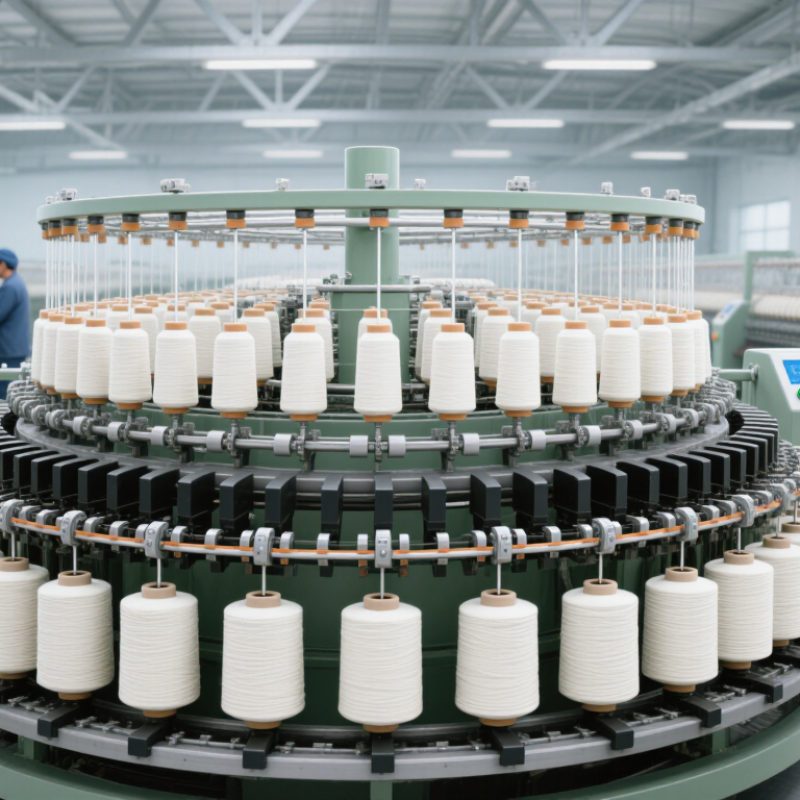
Understanding POY Spinning and Winding in the Production Process
POY, or partially oriented yarn, leaves spinning with some molecular alignment but remains suitable for later drawing. Polymer chips are melted, filtered, and pushed through a spinneret to form continuous filaments. Cooling air solidifies them. Small changes in melt temperature, filtration, or airflow can affect filament uniformity. Details matter.
After quenching, POY passes over godets, where controlled speeds help establish orientation before winding. The yarn is not fully drawn at this stage. A winding unit lays it onto a package using regulated tension and traverse. Excessive tension can make a package too compact; insufficient tension may create loose edges or unstable unwinding. A neat package does not guarantee consistent yarn. That is worth checking.
Buyers can compare denier variation, tenacity, elongation, and package build across several samples. Ask how production lots are monitored, and check packages from different positions in a shipment. Observe whether yarn unwinds smoothly, especially near the package edges. One sample can mislead. It is easy to focus on output speed and overlook winding consistency, yet downstream drawing may reveal problems that were not obvious at inspection.

Choosing Polymer and Spinning Parameters for Consistent POY Quality
7 POY Spinning and Winding Tips for Buyers?
Choosing Polymer and Spinning Parameters for Consistent POY Quality
Polymer selection sets the process window. For polyester POY, compare intrinsic viscosity, moisture limits, and melt-filter requirements against the spinning line’s capabilities. Textile Exchange’s Materials Market Report 2024 estimates that polyester made up 57% of global fiber production in 2023. That scale makes consistent resin quality essential, but it does not guarantee consistent yarn. Ask suppliers for batch-level data, not just a specification sheet.
Dry chips to the resin supplier’s stated moisture limit, then verify the result before extrusion. Moisture can contribute to hydrolytic degradation and unstable spinning. Keep melt temperature and throughput steady, and watch filter pressure for gradual rises. Quench airflow needs even distribution across filaments; a cold spot can leave uneven orientation. There is no universal setting. Small line differences matter.
Winding tension should build a firm package without flattening its edges or making unwinding erratic. Check package shape and yarn breaks across several positions, not only one spindle. Averages can hide trouble. For measurable comparisons, use ISO 2060 for yarn linear density and ASTM D2256 for single-strand tensile properties. These tests help, but they cannot replace observing draw performance on the buyer’s actual equipment. I would also record settings that seem “normal”; that assumption often deserves a second look.
Evaluating Winding Speed, Tension, and Package Formation
7 POY Spinning and Winding Tips for Buyers?
Evaluating Winding Speed, Tension, and Package Formation
Winding speed affects output, but the highest setting is not automatically the best choice. Ask suppliers to demonstrate the intended POY specification at a realistic production speed. Watch for broken filaments, uneven yarn lay, and frequent stops. Small defects matter.
Tension needs to stay consistent from the feed rollers to the package. Too much tension can stretch the yarn or create hard edges; too little may cause loose, unstable winding. Check tension readings during a full run, not just during setup. A brief trial can reveal changes as the package grows. It is not perfect evidence, but it is more useful than a speed figure alone.
Inspect package formation across several bobbins. Look for firm, even edges and a smooth surface without ridges, sloughing, or soft spots. Ask how package density and shape are measured, and compare samples from the beginning and end of a run. Also verify that the package unwinds steadily on your downstream equipment. A neat-looking package can still behave poorly. Record speed, tension, package weight, and any visible defects, then repeat the trial if conditions differ from your plant.
Checking POY Quality, Defects, and Test Reports Before Purchase
POY quality checks should begin with the test report, then move to the packages themselves. Textile Exchange’s Materials Market Report 2024 estimates global fiber production reached 124 million tonnes in 2023, with polyester accounting for 57%. That scale makes consistent incoming checks valuable. Ask for lot-specific results, not only a general product sheet. Compare measured linear density and variation with the purchase specification. ISO 2060 describes yarn linear-density testing; ISO 2062 covers single-end breaking force and elongation. Small differences matter.
Inspect several packages under good light. Look for broken filaments, fuzz, flattened edges, loose tails, oil spots, and uneven winding. Check package labels against the report’s lot number and production date. Review tenacity, elongation, interlace, oil pickup, and moisture where these are specified. Confirm the report states the test method, sampling basis, units, and acceptance limits. A neat certificate is not proof that every package is uniform. Sampling can miss defects, and report figures may not explain spinning or winding behavior on your equipment.
Tip: Check seven things before approval: lot traceability, linear-density variation, tenacity, elongation, interlace, oil pickup, and visible package defects. Request a retained sample for a trial unwind. Record tension changes, end breaks, and fly during the run. It is tempting to accept a clean-looking lot quickly; that judgment can be wrong. Compare the supplier’s results with your own trial data before releasing repeat orders.
7 POY Spinning and Winding Tips for Buyers: Checking Quality, Defects, and Test Reports Before Purchase
Buyer checklist with illustrative sample readings. POY specifications and acceptance limits vary by polymer, denier, application, and contract; confirm the agreed specification before approval.
| No. | Buyer Tip | What to Check | Illustrative Sample Reading | Review Point | Test or Inspection |
|---|---|---|---|---|---|
| 1 | Verify denier and lot consistency | Linear density and variation among packages | 150D nominal; sample mean 150.8D; package results 149.6–151.9D | Compare mean and package-to-package spread with the purchase specification; do not rely on nominal denier alone. | Condition and weigh a known yarn length using an agreed method, such as ISO 2060. |
| 2 | Check tensile properties | Breaking force, tenacity, and elongation at break | Example: tenacity 2.6 cN/dtex; elongation 125% | These are illustrative POY readings, not universal limits. Confirm the required ranges and test conditions for the intended process. | Review a tensile test report; use an agreed method such as ISO 2062 or ASTM D2256. |
| 3 | Inspect package build and winding quality | Package shape, winding density, edges, and unwinding behavior | Sample package: 10.0 kg; firm, even build; no collapsed edges observed | Look for soft or hard spots, bulging, ribboning, telescoping, crushed edges, and loose tails. | Visually inspect packages and run an unwinding trial at the buyer’s intended speed and tension. |
| 4 | Screen for filament and surface defects | Broken filaments, fuzz, slubs, loops, and contamination | Sample inspection: no visible contamination; occasional short fuzz noted on one package | Record defect type, frequency, and package location; assess whether defects could cause end breaks or fabric streaks. | Inspect yarn under consistent lighting and unwind a defined length from several packages. |
| 5 | Review evenness and interlace | Mass variation, thick or thin places, and interlace behavior where specified | Example report: U% 0.85; interlace count 14 knots/m | Interpret results against the agreed test method and product requirement; interlace targets depend on end use. | Check the evenness report and, if required, verify interlace using the specified method and settings. |
| 6 | Check finish oil and cleanliness | Spin-finish level, package staining, and oily or dry feel | Example finish-oil result: 0.55% by mass | Confirm the specified range and test procedure. Excess or insufficient finish can affect friction, static, and downstream processing. | Review the finish-oil test result and inspect the yarn and package for uneven application or visible stains. |
| 7 | Validate traceability and the test report | Lot identification, sampling date, methods, units, and test conditions | Example report fields: lot code, 5-package sample, test date, method, results, and specification limits | Ensure the report matches the delivered lot and states methods, sample size, conditioning, units, and acceptance limits. | Cross-check package labels against the report; retain sealed samples and agree on a retest procedure before shipment. |
Assessing Supplier Capability, Specifications, and Delivery Requirements
When assessing a POY supplier, ask about spinning capacity, winding equipment, and routine process controls. Request recent records for denier variation, breaks, and package weight—not just a polished capability sheet. Ask for evidence. A trial lot can reveal whether packages unwind smoothly at your line speed. Small differences matter.
Confirm denier, filament count, lustre, oil pickup, package dimensions, and acceptable variation in writing. Clarify test methods, sampling frequency, and how defects are handled. A neat specification sheet cannot show every adjustment made during a real production run. Buyers sometimes focus on price and overlook winding tension; that can mean uneven packages and avoidable downtime.
Check available monthly volume, production lead time, minimum order quantity, and whether repeat lots can match the approved sample. Ask how the supplier manages raw-material changes and reports delays. Confirm packaging, pallet details, shipment dates, and a realistic buffer for transport. I have seen delivery plans look solid on paper, then slip because approval samples took longer than expected. Build that review time into the schedule.
Article Source:
At Premium PSU, we are specialists in designing and manufacturing power conversion systems for the industrial market. Our product range includes high reliability power supplies from 50W to 72kW.
PREMIUM PSU
C/ Dolors Aleu, 19-21, 2nd Floor
08908 – Hospitalet de Llobregat
Barcelona-SPAIN
t.+34 93 223 26 85