Ultimate Tips for Choosing the Right Buck Converter?
In the rapidly evolving world of electronics, selecting the right buck converter is essential. Buck converters have become a staple in modern power management. They efficiently reduce voltage while maximizing energy conservation. According to a recent industry report by Market Research Future, the global buck converter market is expected to grow by 10% annually until 2025.
“When choosing a buck converter, efficiency and thermal management are crucial,” emphasizes Dr. Alice Chen, a leading expert in power electronics. As devices get smaller and more powerful, the need for compact and efficient converters grows. Many engineers overlook the significance of load variations in their applications. Ignoring these aspects can lead to inefficiencies and increased costs.
It is clear that the landscape of buck converters can be complex. While many specifications exist, the choice boils down to application needs. Factors such as size, efficiency, and thermal performance must be carefully weighed. A perfect choice may not exist, but informed decisions can lead to better results.
Understanding Buck Converters: Basics and Applications
Buck converters are essential components in modern electronics. They are efficient devices used to step down voltage levels. Understanding how they work is critical for many applications, from powering smartphone devices to industrial machines. A buck converter saves energy by switching the input voltage down, making it ideal for various power management tasks.
When choosing a buck converter, consider the voltage requirements. Discrepancies can lead to inefficient operation. You want to match the output voltage to your load’s needs. Also, pay attention to the current rating. Using a converter with insufficient current capacity can cause overheating or failure.
Efficiency matters too. Review efficiency ratings carefully. Some converters may underperform at certain loads. It’s worth reflecting on your application’s specific requirements. Lastly, check the size and design. A compact converter may fit better in various projects. But, ensure it doesn’t sacrifice performance for size. A balance between dimensions and efficiency is key to success.
Efficiency of Different Buck Converter Types
Key Specifications to Consider When Choosing a Buck Converter
When choosing a buck converter, several key specifications must be considered to ensure optimal performance. Efficiency is paramount. Most high-quality buck converters achieve efficiencies over 90%. However, operational efficiency can vary significantly under different loads. Selecting a model that maintains high efficiency across a broad range of operating conditions is crucial.
The output voltage and current ratings are also essential. Most applications require specific voltage levels. Ensure the converter can deliver the necessary current without overheating. Look for converters rated for at least 20% more current than your maximum requirement. This extra headroom can prevent thermal issues and extend life.
Consider the switching frequency as well. A higher switching frequency allows for smaller inductors and capacitors, creating a more compact design. However, high frequency can also lead to increased switching losses. It’s a balancing act.
Tip: Always check thermal management features. A good buck converter should have built-in protections against overheating. Also, investigate the PCB layout guidelines provided by the manufacturer. A poorly designed layout can negate performance benefits.
Remember, not all specifications are equal. It’s vital to dive deeper into each parameter. A converter may look great on paper but perform poorly in real-world applications. Keep an open mind and compare different models thoroughly.
Ultimate Tips for Choosing the Right Buck Converter
| Specification | Description | Importance |
|---|---|---|
| Input Voltage Range | The range of input voltages the converter can handle. | Determines compatibility with your power supply. |
| Output Voltage | The voltage level that the converter outputs to the load. | Critical for ensuring device functionality. |
| Output Current | The maximum output current the converter can provide. | Need to match the load requirements. |
| Efficiency | The ratio of output power to input power, expressed as a percentage. | Higher efficiency reduces heat generation and power waste. |
| Switching Frequency | The frequency at which the converter switches on and off. | Affects size, cost, and transient response. |
| Thermal Performance | Ability to dissipate heat effectively under load. | Critical for reliable operation in high-load scenarios. |
| Protection Features | Inbuilt protections such as overcurrent, overvoltage, and thermal shutdown. | Essential for safeguarding both converter and connected devices. |
Efficiency Ratings: Why They Matter in Buck Converter Selection
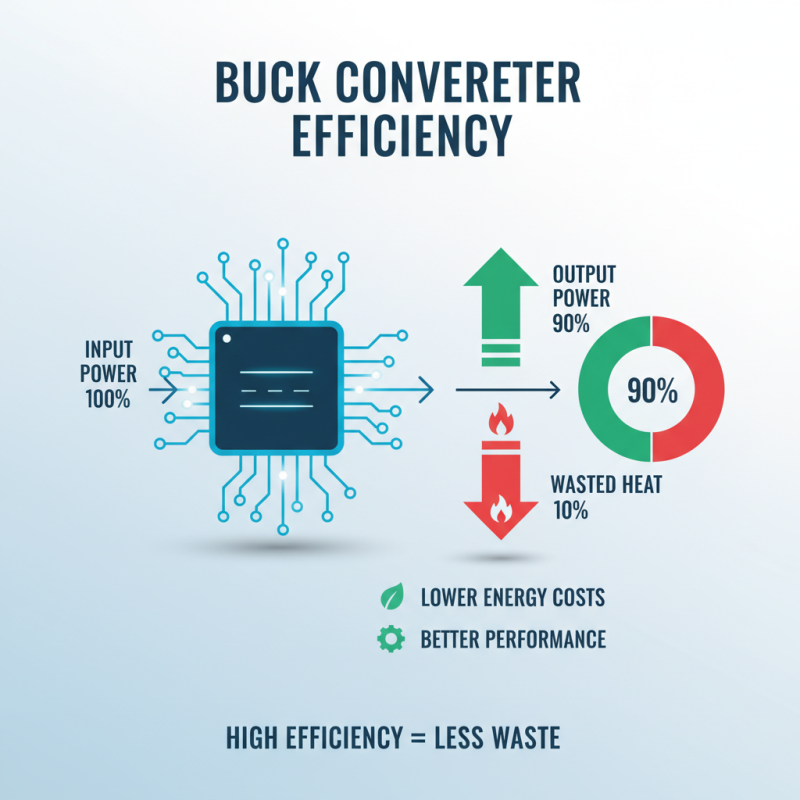
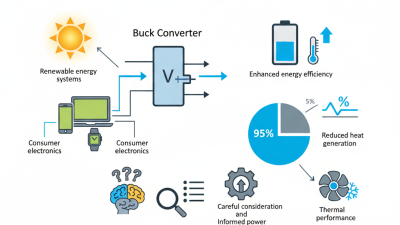
When selecting a buck converter, efficiency ratings are crucial. Efficiency directly affects how much power loss occurs during conversion. A converter with high efficiency means less energy wasted as heat. For example, a converter rated at 90% efficiency will waste only 10% of input power. This can lead to lower energy costs and better overall performance.
It's essential to evaluate the efficiency under different load conditions. Many converters perform well at high loads but struggle at low loads. Real-world applications often experience varying loads. Therefore, choosing a buck converter with a consistent efficiency curve across loads can save you headaches.
Don't overlook thermal performance either. A highly efficient converter may still generate heat. If it overheats, components can fail. Always consider the thermal environment and use heat sinks if necessary. Sometimes, balancing efficiency with cost and size can be tricky. It's a common reflection point for many designers. Finding the perfect match isn’t always straightforward, but close examination of these factors is vital.
Load Current Requirements: Matching Your Needs with the Right Converter
When selecting a buck converter, load current requirements are crucial. You need to know how much current your application demands. Misjudging this can lead to issues. If your converter cannot handle the load, it may overheat or fail. Too much current can also cause inefficiencies, resulting in lost energy and extra costs.
Consider your device's power needs carefully. Are you powering a microcontroller? Or maybe a motor? Each has unique specifications. Measure the current draw at different operating conditions. This helps in identifying the peak load. You might be tempted to choose a converter rated slightly above the load. While this could work, it’s not always optimal. Checking the converter's efficiency at various loads is essential.
Sometimes, manufacturers provide only a range of output current. This can be confusing. If you choose a converter at the edge of this range, you might face instability. Additionally, understanding thermal performance is vital. A converter that meets your load may not perform well in warmer environments. It’s better to research and consider all factors. Balancing these aspects ensures long-term reliability and performance.
Thermal Management: Ensuring Reliability in Buck Converter Usage
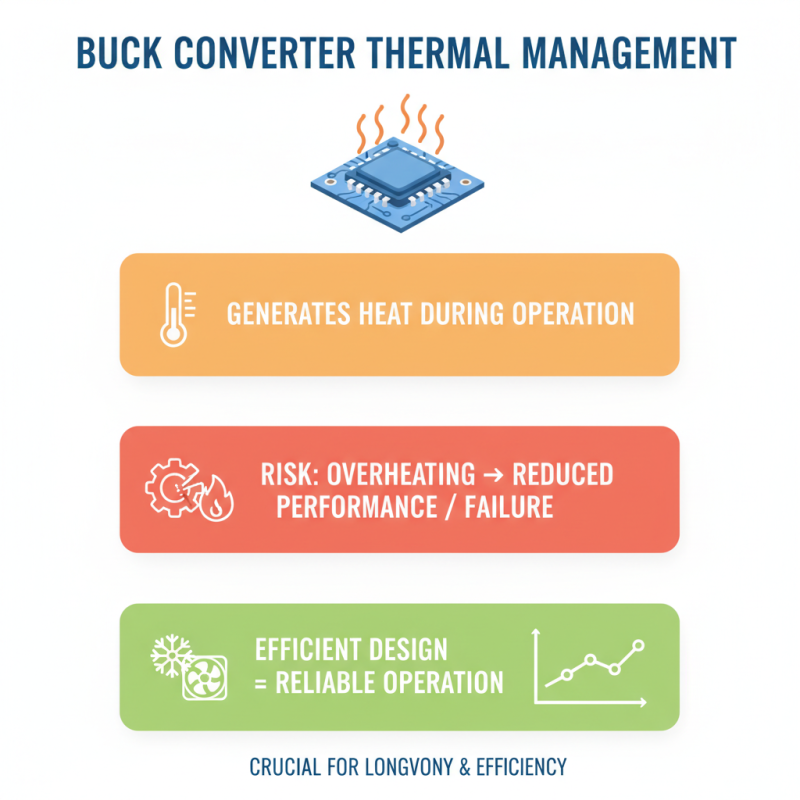
Thermal management is crucial in using buck converters. These devices can generate significant heat during operation. Without proper management, they risk overheating. This leads to reduced performance or even failure. Efficient thermal design helps maintain reliable operation.
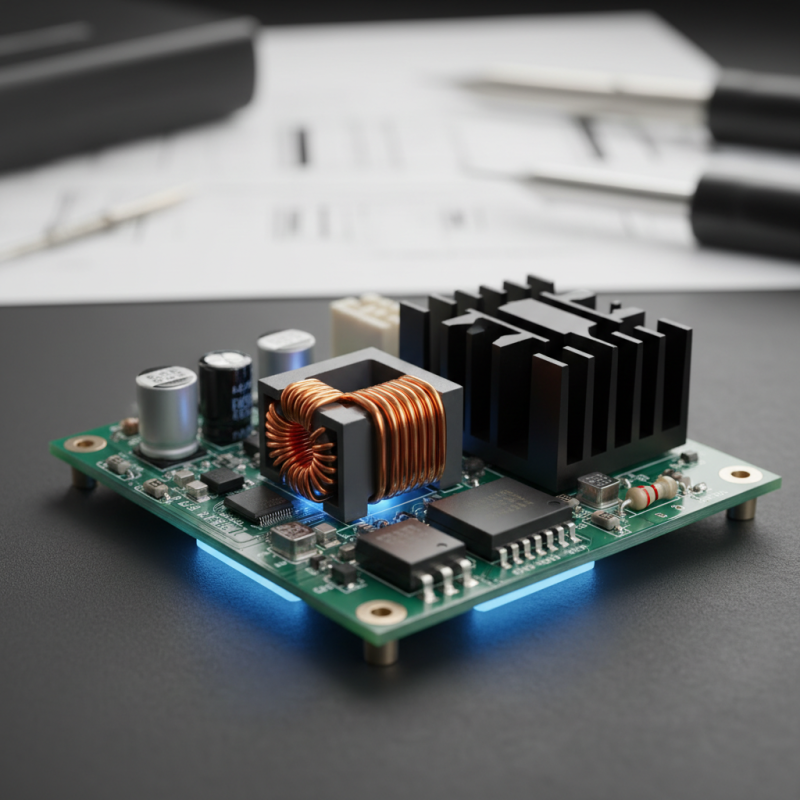
One effective method is using heat sinks. They dissipate heat away from the converter. Selecting the right size is essential. A too-small heat sink may not cool adequately. In contrast, an oversized heat sink can be bulky and impractical. Additionally, airflow around the converter is vital. Poor airflow traps heat, worsening the situation.
Insulation also plays a role. Properly insulating the components can improve efficiency. However, it's easy to overlook insulation materials. Some may not withstand high temperatures, leading to issues. Regular thermal evaluations help identify potential problems. Not doing so can lead to costly failures. Maintaining a balance between cooling and sizes is a continuous challenge.
Related Posts
-
How to Select the Best Buck Converter for Efficient Power Management in Your Application
-

Exploring the Future of Buck Converters at China's 138th Canton Fair 2025: Industry Insights and Innovations
-

10 Essential Tips for Understanding and Using Buck Converters Effectively
-
2026 Best Buck Converter Reviews and Buying Guide?
-
10 Digital Best Practices for Enhancing Your Buck Converter Efficiency
-

How to Select the Right AC to DC Converter for Your Specific Needs

At Premium PSU, we are specialists in designing and manufacturing power conversion systems for the industrial market. Our product range includes high reliability power supplies from 50W to 72kW.
PREMIUM PSU
C/ Dolors Aleu, 19-21, 2nd Floor
08908 – Hospitalet de Llobregat
Barcelona-SPAIN
t.+34 93 223 26 85