
7 Tips for Choosing the Best EV Power Station
Choosing an Ev Power Station is less about buying the biggest battery and more about matching equipment to your vehicle and routine. A unit that works well for occasional top-ups may not suit daily charging or long journeys. Start with your car’s charging limits, connector, and recommended charging method. Then compare the station’s usable capacity and output, not just its headline figures. Small details matter.
This guide looks at seven practical factors, including compatibility, charging speed, portability, safety features, weather resistance, warranty, and total cost. Think about where the station will be used: beside a garage wall, in a driveway, or packed into a vehicle for travel. A heavy unit may offer useful capacity but become awkward to move. Likewise, a higher output rating does not guarantee faster charging if your vehicle cannot accept it. Check product documentation and confirm important specifications with the manufacturer or a qualified installer when needed.
Real-world convenience can be harder to judge than a product page suggests. Cable reach, controls in bright sunlight, and storage space can all affect everyday use. No single model fits everyone. The best choice depends on your vehicle, electrical setup, budget, and charging habits. Some product claims are easy to overlook, so compare specifications carefully and leave room to reconsider. These tips will help you make a more informed decision without treating one feature as the whole story.
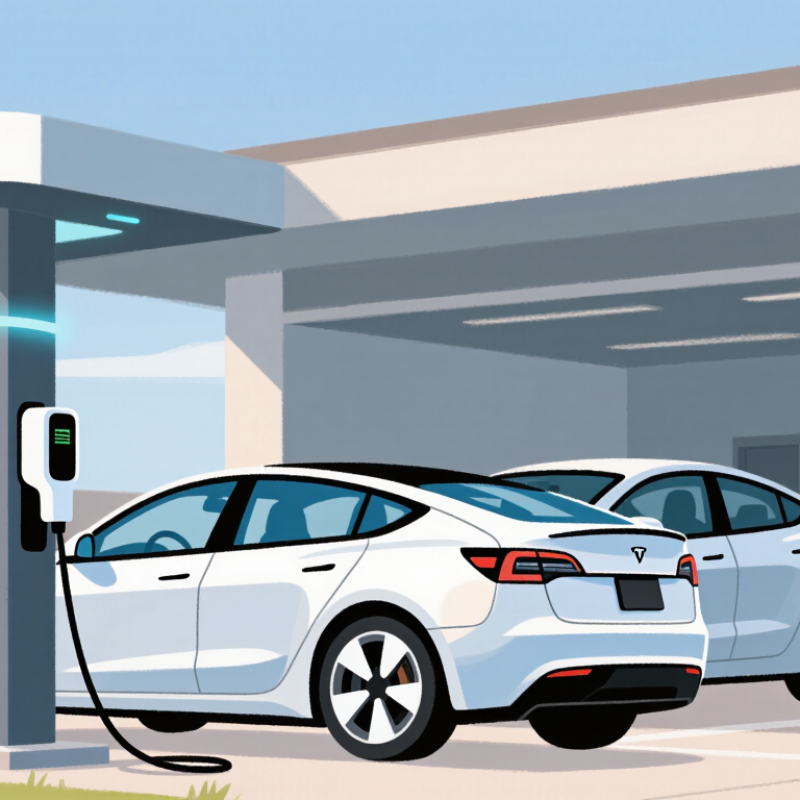
Understand What an EV Power Station Can Do
An EV power station supplies electricity to a vehicle, but charging speed depends on the charger, vehicle, and available electrical capacity. The U.S. Department of Energy’s Alternative Fuels Data Center estimates Level 2 charging adds roughly 10–30 miles of range per hour; DC fast charging can add about 100–200 miles in 30 minutes. These are estimates, not promises. Cold weather, battery condition, and charging limits can reduce the actual rate. That detail matters.
Some stations also schedule charging for quieter hours or share power across several parking bays. A compatible vehicle and bidirectional setup may send electricity back to a home or grid, but ordinary chargers do not automatically provide that feature. The International Energy Agency’s Global EV Outlook 2024 reported that public charging points grew by 40% worldwide in 2023, with fast chargers growing by 55%. More access helps, yet a busy site can still mean waiting. I would check connector fit, electrical supply, and charging controls before comparing headline power ratings. Higher numbers look impressive; they do not always mean a faster charge for your car.
7 Tips for Choosing the Best EV Power Station - Understand What an EV Power Station Can Do
| Tip | What to Check | What an EV Power Station Can Do | Practical Guidance |
|---|---|---|---|
| 1 | Clarify the charging level you need | AC charging supplies power to the vehicle’s onboard charger. In the United States, Level 1 commonly uses a 120-volt outlet, while Level 2 uses a 208- or 240-volt supply. | For regular home charging, compare Level 2 options with your daily driving needs and available electrical supply. A standard household outlet is generally much slower. |
| 2 | Match the station’s output to your vehicle | A station’s rated power sets its maximum potential output, but the vehicle’s onboard charger or DC charging limit may be lower. | Check both the vehicle specifications and station rating. A higher-rated unit does not necessarily make a vehicle charge faster. |
| 3 | Confirm connector and regional compatibility | The connector determines whether the charging cable can connect to the vehicle. Connector types and standards vary by region and vehicle. | Verify the connector listed for your vehicle and the station, including any adapter requirements and whether an adapter is approved for the intended use. |
| 4 | Choose between AC and DC charging | AC stations are commonly used at homes and workplaces. DC fast-charging stations convert power within the station and can deliver high power directly to a compatible vehicle. | DC fast charging is generally intended for public or travel charging and requires compatible vehicle hardware and suitable site infrastructure. Actual charging speed varies during a session. |
| 5 | Assess installation and electrical capacity | A home station can provide a convenient charging point, but it must be supported by the building’s wiring, circuit, and electrical service. | Have a qualified electrician assess the proposed installation, circuit capacity, cable route, and local code requirements before purchasing or installing equipment. |
| 6 | Look for useful controls and load management | Depending on the model, controls may include scheduled charging, energy monitoring, access management, or load balancing with other electrical demands. | Choose features that solve a real need. Load management can help coordinate charging with a site’s available capacity, but it does not increase the site’s total electrical supply. |
| 7 | Check environmental rating, safety, and support | A station provides a connection and charging control; it does not generate electricity or guarantee a specific driving range. Charging results depend on the vehicle, power supply, temperature, and other conditions. | Review applicable safety certification, indoor or outdoor suitability, cable reach, warranty, and service availability. Use the station according to its installation and operating instructions. |

Match Power Capacity to Your Vehicle and Charging Needs
Match the station’s output to your vehicle’s onboard charger, not simply the largest number on a product label. Power, measured in kilowatts (kW), affects charging speed; energy, measured in kilowatt-hours (kWh), indicates how much electricity is available. The U.S. Department of Energy’s Alternative Fuels Data Center estimates that Level 1 charging adds about 2–5 miles of range per hour, compared with roughly 10–20 miles for Level 2. These are estimates, not guarantees. Temperature, vehicle efficiency, and charging limits can all change the result. Small details matter.
Start with your daily routine. If you need 40 miles of range overnight, those Level 2 estimates suggest about 2–4 hours of charging. A 7.2-kW station cannot make a car accept 11 kW; the vehicle’s onboard charger sets a ceiling. For a battery-based power station, compare usable kWh after conversion losses with the energy your trip requires. Don’t rely on peak output alone. The International Energy Agency’s Global EV Outlook 2024 reported that public charging points grew by more than 40% in 2023, but access varies by location. Leave a margin for cold mornings or an unexpectedly longer drive. Specs help, but your actual parking window matters too.
Check Charging Speed, Ports, and Vehicle Compatibility
Charging speed is more than the number printed on a station’s label. For AC charging, your vehicle’s onboard charger and the available electrical supply can limit the actual rate. A 7 kW station, for example, may charge more slowly if the car accepts less power or the circuit cannot provide enough. Check both ratings. Small details matter. Think about when you usually charge: overnight charging may not need the highest output, while frequent short stops make speed more important. A spec sheet can look reassuring, but real charging conditions are less tidy.
Check the port type and charging method your vehicle supports. AC and DC charging are not interchangeable, and connector shapes can vary by vehicle and region. Confirm compatibility in the vehicle manual, then check whether the station’s cable reaches your parking spot without tension. Also look at the number of ports: two outlets can be useful for shared parking, but power may be divided when both are in use. Not always obvious. If an adapter is required, verify that it is intended for that vehicle and charging setup; don’t assume every adapter preserves the station’s full speed. A quick comparison of the vehicle’s maximum input, connector, and station output can prevent an expensive mismatch.
Compare Portability, Safety Features, and Weather Resistance
Portability matters when an EV needs a top-up away from home. Check the power station’s weight, handle design, and packed size, not just its capacity. A unit that looks manageable online may feel awkward beside a roadside charging spot. Weight matters. Also check whether its continuous output and connectors match your vehicle’s charging requirements. A large battery is not useful if the station cannot deliver the needed power.
Safety features deserve close attention. Look for clearly documented overload, over-temperature, and short-circuit protection. Read the operating instructions before connecting a vehicle, especially if the setup requires a specific grounding arrangement. Check the rating. A screen showing output and remaining charge can help you spot unusual power draw, but it cannot replace proper supervision. It is tempting to choose the highest output; in practice, compatibility and clear safety guidance may matter more.
Weather resistance is easy to misread. An IP rating describes tested protection against dust or water, but it does not mean every outlet or cable connection is safe in rain. Check the manual for limits on outdoor use, temperature, and storage. Keep the unit off wet ground, protect exposed connections, and leave ventilation space around it. A light drizzle can change the situation quickly. The awkward part is that weather can shift faster than your charging plan.
7 Tips for Choosing an EV Power Station
Compare charging compatibility, usable capacity, portability, safety protections, and weather resistance before you buy.
How to read this chart: The number is the water-protection code digit, not a linear performance score. IPX4 covers splashing water; IPX5 water jets; IPX6 powerful water jets; and IPX7 temporary immersion in water up to 1 metre deep for 30 minutes. IPX7 alone does not indicate protection against water jets.
Quick buying checklist
- Confirm the station’s AC output and connector work with your EV’s charging equipment.
- Compare usable capacity in watt-hours with the energy you expect to need.
- Check weight, dimensions, handles, and whether the unit is practical to move.
- Look for appropriate electrical safety certifications for your market.
- Check for protections such as overcurrent, overvoltage, overheating, and short-circuit protection.
- Choose an IP rating suited to where you will use and store the station.
- Review the operating-temperature range, warranty, and care instructions.
Review Total Cost, Warranty, and Long-Term Support
An EV power station’s sticker price rarely shows what ownership will actually cost. Compare the full setup, including compatible cables, electrical upgrades, delivery, and any required installation. A lower-priced unit may need extra equipment to work with your vehicle. That is an easy mistake. Check the charging output and connector compatibility against your car’s manual, rather than assuming every advertised feature suits your setup. Also consider how often you will use the station. A costly unit may not make sense for occasional home charging.
Read the warranty before comparing offers. Look for its duration, battery-capacity limits, and exclusions for parts, labor, shipping, or regular wear. Ask what happens if the battery loses capacity sooner than expected. The fine print matters. Long-term support deserves equal attention: confirm whether replacement parts are available, how firmware updates are delivered, and how support handles faults after the initial purchase. Keep a copy of the warranty and your receipt, and note the support contact details. Response times can be hard to judge from a product page, so seek clear service terms. Some details remain uncertain until a problem occurs; that is worth factoring into your decision.
Article Source:
At Premium PSU, we are specialists in designing and manufacturing power conversion systems for the industrial market. Our product range includes high reliability power supplies from 50W to 72kW.
PREMIUM PSU
C/ Dolors Aleu, 19-21, 2nd Floor
08908 – Hospitalet de Llobregat
Barcelona-SPAIN
t.+34 93 223 26 85