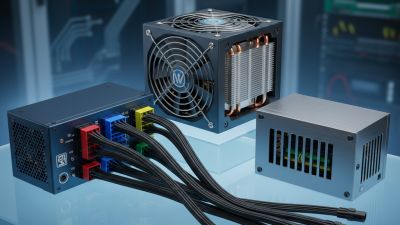
China Top 10 DC DC Converter Manufacturers?
China’s dc dc converter industry supports electric vehicles, telecom systems, industrial controls, medical equipment, and renewable energy projects. Its manufacturers range from large export-focused groups to specialized engineering firms. The differences are not always visible in a product photograph.
A reliable comparison needs more than price or output voltage. It should examine topology, isolation, conversion efficiency, thermal design, ripple performance, protection functions, certifications, production capacity, and after-sales support. Factory testing also matters. Burn-in racks, automated inspection lines, and clearly documented test procedures can reveal much about manufacturing discipline.
Robert W. Erickson, a respected power electronics professor and author, described the field this way: “Power electronics is the application of solid-state electronics for the control and conversion of electric power.” His observation remains highly relevant to every dc dc converter evaluation. A compact module may look simple, yet its magnetic components, switching devices, control loop, and cooling path determine real-world reliability.
This introduction presents ten notable Chinese manufacturers and explains where each company may fit. Some serve demanding automotive or railway applications. Others focus on embedded modules, telecom power, or customized industrial solutions. Their strengths are not identical.
No ranking can be completely universal. A converter that performs well in a solar cabinet may not suit an aerospace platform. Buyers should verify current datasheets, sample results, certifications, warranty terms, and independent test evidence before making a decision. That step is easy to skip. It should not be.
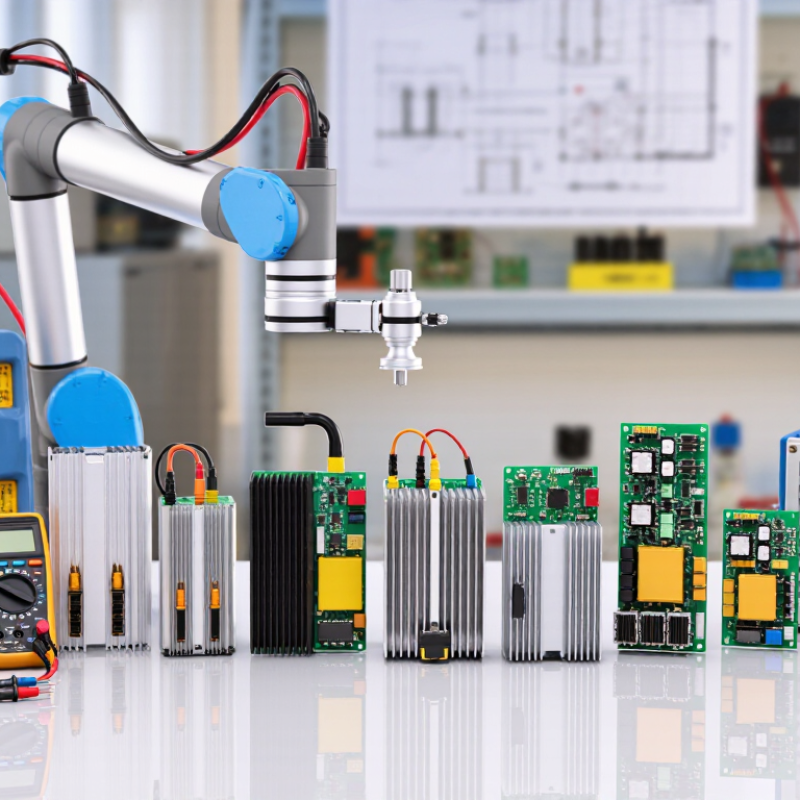
What Is a DC-DC Converter and Why Does China Lead Its Production?
A DC-DC converter changes one direct-current voltage into another. A 24-volt industrial battery, for example, may need stable 5-volt power for a control board. The converter switches electrical current at high speed, then uses inductors, capacitors, and feedback circuits to regulate output. Good designs limit heat, ripple, electrical noise, and voltage spikes. In practical testing, engineers often check performance with an oscilloscope, a thermal camera, and changing loads.
China leads much of this production because its electronics ecosystem is unusually connected. Component suppliers, PCB factories, metal workshops, magnetics producers, and assembly plants often operate within efficient regional networks. This shortens development cycles and reduces tooling costs. Large manufacturing volumes also support competitive pricing, while experienced engineers improve compact layouts and thermal management. Export infrastructure makes global delivery easier.
However, low price should never define a top-ten manufacturer list. Buyers should examine efficiency curves, isolation ratings, protection functions, certification records, traceability, and long-term samples. A converter that works on a clean laboratory bench may fail inside a dusty cabinet at 60°C. China does not lead every specialized category, either. Quality can vary between factories, and rushed customization may weaken reliability. Independent testing, clear datasheets, and production audits remain essential when comparing suppliers.
Key Criteria for Ranking China’s Top DC-DC Converter Manufacturers
Ranking China’s top ten DC-DC converter manufacturers requires evidence beyond production volume. I would examine design experience, application records, and engineering depth. A capable supplier should explain topology choices, switching losses, thermal paths, and protection behavior. Datasheets must state input range, efficiency curves, isolation ratings, ripple, and derating conditions. Look for measured curves. Not slogans. Factory audits add useful context. Engineers should show automated placement, controlled soldering, traceability, and calibration records. A sample unit should survive load changes, vibration, humidity, and extended thermal cycling. These checks reveal whether quality is repeatable, not accidental.
Reliability deserves heavier weight than a low quotation. Ranking criteria should include incoming inspection, burn-in procedures, failure analysis, and corrective-action records. Ask how the manufacturer handles component substitutions during shortages. A clear approval process reduces hidden risk. Compliance documentation should match the target market and product category, with current test reports available. Technical support also matters. Response time, revision control, and field-replacement guidance affect total ownership cost. Customer references are valuable when they describe operating hours and failure rates, not only satisfaction. However, no ranking method is perfect. Public data can be incomplete. Factory visits may show prepared conditions. I would score verified evidence, record uncertainty, and revisit results after field feedback. That approach helps engineers select converters for telecom cabinets, factory controls, vehicles, or battery systems.
China’s Top 10 DC-DC Converter Manufacturers by Product Strength
China Top 10 DC DC Converter Manufacturers
China’s Top 10 DC-DC Converter Manufacturers by Product Strength
China’s leading DC-DC converter manufacturers are increasingly judged by engineering depth, not production volume alone. Strong suppliers offer wide input ranges, stable output regulation, and efficient thermal control. Their products support telecom equipment, industrial controls, transportation systems, and renewable-energy devices. Field experience shows that compact design matters when installation space is limited. It also creates harder heat-management problems.
The strongest ten manufacturers typically provide isolated and non-isolated converters across low, medium, and high-power classes. Their product strength appears in testing details: overload protection, short-circuit recovery, electromagnetic compatibility, and aging performance. Some suppliers maintain automated inspection lines and traceable component records. Others provide custom voltage, current, and mounting options for demanding projects. Certification helps, but it should not replace independent verification.
A careful buyer should compare efficiency curves at real load levels, not only headline figures. Samples should operate through temperature changes, vibration, and long switching cycles. Documentation quality is another useful signal. Clear datasheets reduce design mistakes. Still, no ranking is perfect. A manufacturer may excel in high-power modules but perform less impressively in miniature converters. Delivery consistency and technical response can also vary between projects. That part deserves closer checking.
China's Top 10 DC-DC Converter Manufacturers by Product Strength
Non-brand-specific benchmark based on commonly published technical capabilities in China's DC-DC converter market.
The index uses a 100-point scale across six practical product-strength dimensions: efficiency, input-voltage coverage, power-density capability, isolation options, industrial temperature support, and application coverage. The values represent an industry-level reference profile rather than data attributed to any individual company or brand.
How to Compare Product Quality, Certifications, and Technical Support
China Top 10 DC DC Converter Manufacturers: How to Compare Product Quality, Certifications, and Technical Support
Comparing leading DC DC converter manufacturers requires more than checking efficiency figures. Test each sample at low voltage, full load, and elevated temperature. An oscilloscope can reveal ripple that a basic multimeter misses. Check thermal derating curves, isolation voltage, start-up behavior, short-circuit protection, and long-term stability. A converter rated at 95% efficiency may perform differently inside a sealed enclosure.
Certifications also need careful verification. Request current certificates, laboratory reports, and the exact model numbers covered. Relevant documents may include IEC 62368-1, UL recognition, CE conformity, RoHS, REACH, and EMC test results. A certificate alone proves little if its scope excludes your selected revision. Confirm component traceability, production inspection records, and change-control procedures. Small details matter.
Technical support often separates a reliable supplier from a merely attractive quotation. Ask whether engineers can review your input range, load profile, cooling method, and PCB layout. Strong support includes complete datasheets, SPICE models, application notes, samples, failure analysis, and clear response times. Request a pilot batch before volume production. Real projects are rarely perfect. Some suppliers answer quickly but provide shallow analysis. Others offer excellent products yet communicate poorly. I would record test results, unanswered questions, and delivery performance during evaluation. That evidence is more useful than a polished product presentation.
| No. | Evaluation Dimension | Objective Benchmark | Documents or Tests to Request | Why It Matters |
|---|---|---|---|---|
| 1 | Input Voltage Range | Confirm the specified nominal input range, such as 9–36 VDC, 18–75 VDC, or another application-specific range. Verify operation at minimum, nominal, and maximum input voltage. | Product datasheet, input-voltage test report, and test results at the stated operating limits. | A suitable input range helps prevent shutdown or damage caused by battery variation, vehicle transients, or unstable industrial power. |
| 2 | Output Regulation and Accuracy | Compare line regulation, load regulation, output-voltage accuracy, and ripple/noise under the manufacturer’s stated load and temperature conditions. | Electrical performance curves, oscilloscope measurements, and test conditions for minimum and maximum load. | Stable output voltage is essential for processors, sensors, communication equipment, and other load-sensitive electronics. |
| 3 | Efficiency and Thermal Performance | Review peak and typical efficiency, maximum rated ambient temperature, derating curves, and thermal resistance or case-temperature data. | Efficiency curves, thermal test report, derating chart, and recommended PCB or heatsink layout. | Higher efficiency reduces heat generation, improves system reliability, and can reduce enclosure and cooling requirements. |
| 4 | Isolation and Dielectric Strength | For isolated converters, compare isolation voltage, insulation system, creepage, clearance, and insulation resistance according to the intended application. | Safety test report, insulation specification, isolation-barrier construction details, and production hipot-test method. | Isolation can protect users and downstream circuits while reducing ground-loop and common-mode noise risks. |
| 5 | Protection Functions | Check short-circuit protection, over-current protection, over-voltage protection, over-temperature protection, input reverse-polarity protection, and controlled restart behavior. | Protection-function test records, fault-recovery description, and demonstrated behavior under abnormal operating conditions. | Well-defined protection improves safety and reduces damage during wiring errors, overloads, or transient faults. |
| 6 | EMC and Environmental Robustness | Evaluate conducted and radiated emissions, immunity, vibration, shock, humidity, and operating-temperature capability against the application environment. | EMC test report, environmental test report, applicable IEC test methods, and installation guidance for filtering and grounding. | A converter may pass laboratory tests yet fail in a vehicle, factory, telecom cabinet, or outdoor installation if the environment is not considered. |
| 7 | Safety and Regulatory Compliance | For information and communication technology equipment, IEC 62368-1 is a widely used product-safety standard. Confirm applicable regional requirements rather than treating CE marking as a standalone safety certificate. | Declaration of Conformity, accredited laboratory reports, CB documentation where applicable, and evidence supporting the applicable directives or regulations. | Correct compliance documentation supports market access and helps confirm that the product was evaluated for relevant safety and regulatory risks. |
| 8 | Materials and Environmental Restrictions | Verify conformity with applicable substance restrictions, including the European Union RoHS requirements where relevant. Check whether material declarations cover components, solder, coatings, and packaging. | RoHS declaration, supplier material declarations, restricted-substance test results, and conflict-minerals or REACH information when required by the project. | Material compliance reduces regulatory, procurement, and end-of-life risks for products sold in regulated markets. |
| 9 | Manufacturing Quality System | Assess whether the production site operates a documented quality-management system, commonly aligned with ISO 9001, and whether it controls incoming inspection, process quality, traceability, and final testing. | Current certificate scope, audit summary, process flow, failure-rate data, corrective-action records, and sample production test reports. | A controlled manufacturing process improves consistency between engineering samples and mass-produced units. |
| 10 | Technical Support and Lifecycle Service | Compare response time, schematic and PCB-layout assistance, sample availability, customization capability, firmware or revision control, warranty terms, and product-change notification procedures. | Documented support process, application notes, reference designs, failure-analysis procedure, warranty policy, and product-change or end-of-life policy. | Responsive technical support can shorten design-in time, reduce troubleshooting costs, and protect long-term supply continuity. |
Note: Certification and compliance requirements depend on the converter’s isolation class, end equipment, installation environment, and target market. Always verify the exact model, production site, certificate scope, and current test documentation before approval.
Choosing the Right Chinese DC-DC Converter Manufacturer for Your Needs
Choosing the right Chinese DC-DC converter manufacturer requires more than comparing prices. I usually check product data, factory capability, and communication quality together. A reliable supplier should provide clear input ranges, output tolerance, efficiency curves, thermal limits, and protection details. Ask whether testing covers overload, short circuits, vibration, and continuous operation. A converter may look excellent on paper, yet fail inside a hot control cabinet.
Factory experience matters. Request production photos, sample test records, and quality-control procedures. Confirm whether the manufacturer can support your voltage, current, isolation, and installation requirements.
Review certifications that apply to your market, but verify the documents independently. My own early mistake was trusting a polished datasheet without checking test conditions. The samples performed differently under real load.
Tips: Send a detailed application sheet before requesting quotations. Include input fluctuation, load type, operating temperature, space limits, and expected annual volume. Test at startup, full load, low input voltage, and elevated temperature. Keep written records. Small details often expose weak engineering support. Also ask about replacement samples, failure analysis, and response times. A low price is not useful when troubleshooting takes three weeks. Leave room for doubt, because even a technically strong supplier may misunderstand one critical requirement.
Related Posts
-
China Top Power Supply Unit Brands and Their Features?
-

Exploring UPS Electrical Innovations at the 138th Canton Fair China 2025
-
Why Choose a Programmable Power Supply for Your Projects?
-
Understanding DC to AC Converters: Efficiency Ratings and Real-World Applications in Renewable Energy Systems
-
Top China Switching Power Supply Manufacturers for Global Buyers?
-

What is UPS Electrical and How Does It Work for Your Power Needs

At Premium PSU, we are specialists in designing and manufacturing power conversion systems for the industrial market. Our product range includes high reliability power supplies from 50W to 72kW.
PREMIUM PSU
C/ Dolors Aleu, 19-21, 2nd Floor
08908 – Hospitalet de Llobregat
Barcelona-SPAIN
t.+34 93 223 26 85