
Top AC to DC Power Converters for Global Buyers?
Choosing the right ac to dc power converter is rarely a simple matter of comparing wattage and price. Global buyers must examine input voltage ranges, output stability, efficiency, thermal behavior, protection features, and certification records. A converter designed for 120-volt systems may perform poorly on unstable industrial grids. Small details matter, such as a 2% voltage drop during startup or a fan that becomes noisy in a sealed cabinet.
Professor Ned Mohan, a respected power electronics researcher and author, described the field clearly: “Power electronics is the technology associated with the efficient conversion, control, and conditioning of electric power by solid-state electronic switches.” His observation remains highly relevant when evaluating modern power supplies for automation, communications, medical equipment, and consumer products.
There is no universal best model. Not even close. A compact adapter may suit a retail device, while a DIN-rail converter better serves a factory control panel. Buyers should verify operating temperature, overload response, electromagnetic compatibility, and expected service life. They should also check whether testing applies to the complete product or only selected components.
This guide compares leading ac to dc power converter options for international purchasing decisions. It focuses on practical performance, documented reliability, installation conditions, and long-term value. Some specifications still require careful interpretation. A high efficiency rating may describe an ideal load, not daily operation. That gap deserves attention before procurement.
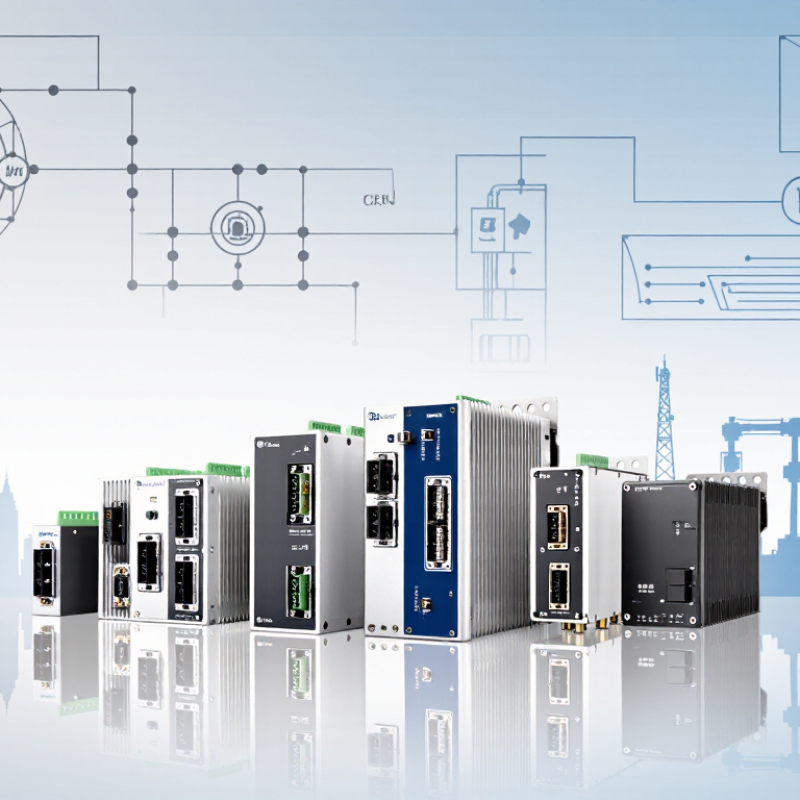
Understanding AC to DC Power Converters and Their Core Functions
An AC to DC power converter changes alternating current from a wall outlet into stable direct current. Many electronic devices need this controlled output to operate safely. Inside the converter, a transformer may adjust voltage and provide electrical isolation. A rectifier then changes the AC waveform into pulsating DC. It is not smooth yet.
Capacitors reduce this ripple by storing energy between voltage peaks. A regulation circuit keeps the output near its rated value when the input or load changes. Switching converters often use high-frequency control, smaller transformers, and improved efficiency. However, efficiency figures can hide heat losses, standby consumption, or poor performance at light loads. Check the full test conditions.
In practical selection, global buyers should verify input range, output voltage, current capacity, isolation, cooling method, and protection functions. Overload, short-circuit, and over-temperature protection are especially important. A converter rated at 60 watts should not run continuously at its limit without airflow. I still recheck connector polarity and cable temperature during testing. Small mistakes happen. Certification markings, operating temperature, and installation instructions also deserve careful review. A compact enclosure may look convenient, yet limited ventilation can shorten service life. No converter is perfect for every application.
Common AC to DC Converter Output Voltage Levels
AC to DC power converters rectify alternating current and regulate it into stable direct-current voltage. The chart shows widely used nominal DC output levels and their typical applications across global electrical and electronic systems.
Comparing Major Converter Types for Different Power Requirements
Global buyers usually compare three AC-to-DC architectures: linear, switched-mode, and modular rectifier systems. Each behaves differently at the load.
Linear converters are quiet and predictable, but they waste energy as heat. They suit low-noise instrumentation, not large battery rooms. Switched-mode supplies offer higher efficiency and smaller footprints, although switching noise demands careful filtering. The U.S. Department of Energy identifies efficiency and no-load consumption as key external power-supply performance measures.
At higher power, modular rectifiers allow parallel operation and easier maintenance. One failed module need not stop the cabinet. That resilience has a price: controls, airflow, and replacement matching become critical. The International Energy Agency estimates that data centres used about 240–340 TWh of electricity globally in 2022. This is not a converter statistic, but it shows how small efficiency losses scale quickly. Report estimates vary. Some market studies count adapters, while others include industrial rectifiers.
For global procurement, choose linear units for sensitive low-power circuits, switched-mode units for general equipment, and modular systems for uptime-focused installations. Check input range, inrush current, standby draw, thermal derating, isolation, and regional safety documentation. Field measurements matter. A converter rated at 500 watts may deliver less in a 50°C enclosure. Engineers often find this detail buried in derating graphs. The DOE and IEC guidance help, but neither replaces site testing. The most reliable comparison uses measured efficiency at the buyer’s actual load, not the headline peak.
Evaluating Efficiency, Output Performance, and Safety Features
Top AC to DC Power Converters for Global Buyers?
Efficiency should be measured across real operating conditions, not only at peak load. A converter rated at 95% efficiency may perform differently at 20% load. Test samples with a power meter, adjustable load, and thermal probe. Heat matters. Excessive warmth can shorten component life and raise enclosure temperatures. Buyers should also check standby consumption, cooling requirements, and input compatibility for regional voltage and frequency.
Output performance affects equipment stability. Look for tight voltage regulation, low ripple, and fast transient response during sudden load changes. A laboratory load bank can reveal dips that ordinary operation may hide. I once treated a stable multimeter reading as sufficient evidence, but that approach missed brief output spikes. That mistake still deserves attention. Continuous current ratings should match the application, while peak ratings need clear duration limits.
Safety features require equal scrutiny. Useful protections include overvoltage, overcurrent, short-circuit, surge, and thermal shutdown functions. Galvanic isolation is important when users or sensitive circuits could face hazardous input potential. Examine insulation design, grounding instructions, enclosure strength, and documented test procedures. Independent testing and recognized regional certifications add credibility, but certificates should match the exact model and configuration. Local requirements can differ, so importers should verify documentation before purchase. A reliable supplier should provide test data, wiring guidance, operating limits, and traceable production information. Fresh questions help.
Checking Global Voltage Standards, Certifications, and Compatibility
Top AC to DC Power Converters for Global Buyers?
Global buyers should inspect voltage standards before comparing price or wattage. Household input may range from 100–127 volts or 220–240 volts, with 50 or 60 hertz frequency. A converter marked for wide input can reduce risks, but its label must match the destination market. A simple plug adapter only changes the plug shape. It does not convert voltage.
Certification evidence also deserves careful checking. Look for applicable safety standards, test reports, and traceable certification numbers. Regional marks may address different requirements, while electromagnetic compatibility rules can vary by country. Ask suppliers for complete datasheets, installation instructions, and declarations of conformity. Check whether the documents cover the exact model, not a similar product. This detail is often missed.
Tips: Confirm output voltage, current, polarity, connector size, and power tolerance. Leave operating headroom above the device’s rated demand. Test the converter under a realistic load, including startup behavior. I have seen specifications look convincing until cable loss reduced the output at the far end. That is an imperfect but useful reminder: compatibility depends on the whole system, not one label. Also check ventilation, ambient temperature, plug type, and local after-sales support before ordering.
Top AC to DC Power Converters for Global Buyers: Voltage Standards, Certifications, and Compatibility
| Converter Category | Typical AC Input | Typical DC Output | Typical Power Range | Common Applications | Global Compatibility | Relevant Standards and Market Access |
|---|---|---|---|---|---|---|
| Compact wall-plug adapter | 100–240 V AC, 50/60 Hz | 5–24 V DC; fixed or USB output | 5–65 W | Consumer electronics, networking equipment, small instruments, charging devices | Universal input reduces voltage-selection issues; plug geometry still varies by country | IEC/EN 62368-1 may apply to ICT and audio/video equipment; EMC requirements commonly include CISPR 32 and CISPR 35; market-specific approvals may be required |
| Desktop external power supply | 100–240 V AC, 50/60 Hz | 5–48 V DC | 30–300 W | Monitors, terminals, laboratory equipment, routers, industrial control devices | Usually supplied with detachable AC cords for different national plug systems | IEC/EN 62368-1 or IEC/EN 61010-1 may be relevant depending on the end product; verify EMC, efficiency, and energy-label obligations |
| Open-frame AC/DC power supply | 85–264 V AC, 47–63 Hz is common | 5–48 V DC; single or multiple outputs | 15–1,000 W | Embedded equipment, automation panels, appliances, medical and measurement systems | Suitable for equipment designed for internal installation; requires enclosure, insulation, grounding, and thermal design by the integrator | IEC/EN 62368-1, IEC/EN 61010-1, or IEC/EN 60601-1 may apply according to the final application; conducted and radiated emissions must be assessed in the finished system |
| Enclosed industrial AC/DC supply | 85–264 V AC, 47–63 Hz | 12, 24, or 48 V DC are common | 50–1,500 W | PLC systems, sensors, relays, factory automation, security systems | Wide-range input supports 120 V and 230 V nominal systems; DIN-rail versions simplify panel installation | IEC/EN 62368-1, IEC/EN 61558-1, or IEC/EN 61010-1 can be relevant; confirm short-circuit, overload, surge, and industrial EMC performance |
| Medical-grade AC/DC supply | 90–264 V AC, 47–63 Hz is common | 5–48 V DC | 30–500 W | Patient-connected equipment, diagnostic devices, monitoring systems, clinical instrumentation | Requires careful evaluation of isolation, leakage current, insulation, grounding, and patient protection requirements | IEC/EN 60601-1 is the principal medical electrical equipment safety standard; IEC/EN 60601-1-2 addresses electromagnetic compatibility; approval depends on the complete medical device |
| High-power AC/DC converter | 90–264 V AC single-phase or 180–528 V AC three-phase | 24–400 V DC and application-specific outputs | 1–10 kW or higher | Battery charging, telecom infrastructure, industrial machinery, renewable-energy systems | Input phase, frequency, power factor, harmonics, cooling, and installation category must be matched to the destination grid | IEC/EN 62477-1, IEC/EN 61000 series, and applicable machinery or industrial standards may apply; high-voltage systems require engineered installation and protection |
| USB-C Power Delivery AC/DC supply | 100–240 V AC, 50/60 Hz | 5, 9, 12, 15, or 20 V DC; higher negotiated voltages may be available | 15–240 W, depending on the USB-C power profile | Laptops, tablets, handheld devices, displays, portable test equipment | Output voltage is negotiated with the connected device; cable rating and connector capability are critical | USB Power Delivery specifications govern communication and power profiles; product safety and EMC requirements remain market- and application-dependent |
Selecting the Right AC to DC Converter for International Applications
Choosing an AC to DC converter for international applications requires more than checking voltage and wattage. Start with the destination’s input range, frequency, plug system, and electrical regulations.
A converter rated for 100–240 VAC and 50–60 Hz usually offers broader compatibility. However, that label does not guarantee safe operation everywhere. Verify applicable safety and EMC requirements before procurement.
Load behavior matters in real installations. Motors, pumps, and communication devices may create startup surges that exceed their printed ratings. Select a converter with suitable peak capacity, short-circuit protection, and stable output regulation.
For enclosed equipment, inspect thermal performance carefully. A compact unit can fit neatly inside a cabinet, yet its case may become dangerously hot after eight hours.
Isolation is important when users can touch connected equipment or when multiple circuits interact. Check creepage, clearance, insulation ratings, and grounding methods in the technical documentation.
Efficiency also affects shipping size, cooling costs, and battery-backed operation. Do not rely on efficiency alone. I have seen efficient converters fail early because airflow was ignored.
That assumption can fail. Review derating curves, test samples under local conditions, and confirm replacement access before approving a global design. Regional documentation and service support can matter as much as the converter itself.
Related Posts
-
How to Select the Right AC to DC Converter for Your Specific Needs
-
2026 Top AC DC Power Supply Manufacturers for Global Buyers
-
Top 2025 Guide to Choosing the Best AC DC Power Supply for Your Needs
-
How to Select the Best Buck Converter for Efficient Power Management in Your Application
-

What is an AC DC Power Supply and How Does it Work?
-
Ultimate Tips for Choosing the Right Buck Converter?

At Premium PSU, we are specialists in designing and manufacturing power conversion systems for the industrial market. Our product range includes high reliability power supplies from 50W to 72kW.
PREMIUM PSU
C/ Dolors Aleu, 19-21, 2nd Floor
08908 – Hospitalet de Llobregat
Barcelona-SPAIN
t.+34 93 223 26 85