China Top Wire Winder Manufacturers for Global Buyers
China has become a major sourcing base for wire-processing equipment, supported by extensive electrical, automotive, renewable-energy, and electronics manufacturing. Within this ecosystem, a reliable Wire Winder can determine winding accuracy, production speed, material protection, and final spool quality. A small alignment error may create uneven layers, damaged insulation, or costly rework.
Market data supports the sector’s importance. Grand View Research estimates that the global wire and cable market reached approximately USD 216.5 billion in 2023 and may grow at a 5.2% compound annual rate through 2030. The International Energy Agency also reports continuing investment in electricity networks, renewable generation, and electrification. These trends increase demand for controlled wire handling and dependable winding systems. Automation matters. So does repeatability.
For global buyers, selecting among China’s top manufacturers requires more than comparing catalog prices. Factory experience, winding tension control, traverse accuracy, programmable settings, motor performance, and after-sales support deserve careful review. ISO 9001 certification can indicate documented quality processes, but it should not replace factory audits, sample testing, and technical verification. Public reports seldom isolate the wire-winder segment, and market definitions can differ. That limitation deserves attention. A strong supplier should provide application records, machine videos, test results, spare-parts planning, and clear export documentation. Buyers should also confirm compatibility with copper wire, aluminum wire, enamelled wire, or specialized cable designs before signing a purchase agreement. No ranking is perfect. Practical evidence remains decisive.
What Wire Winding Machines Are and How They Work
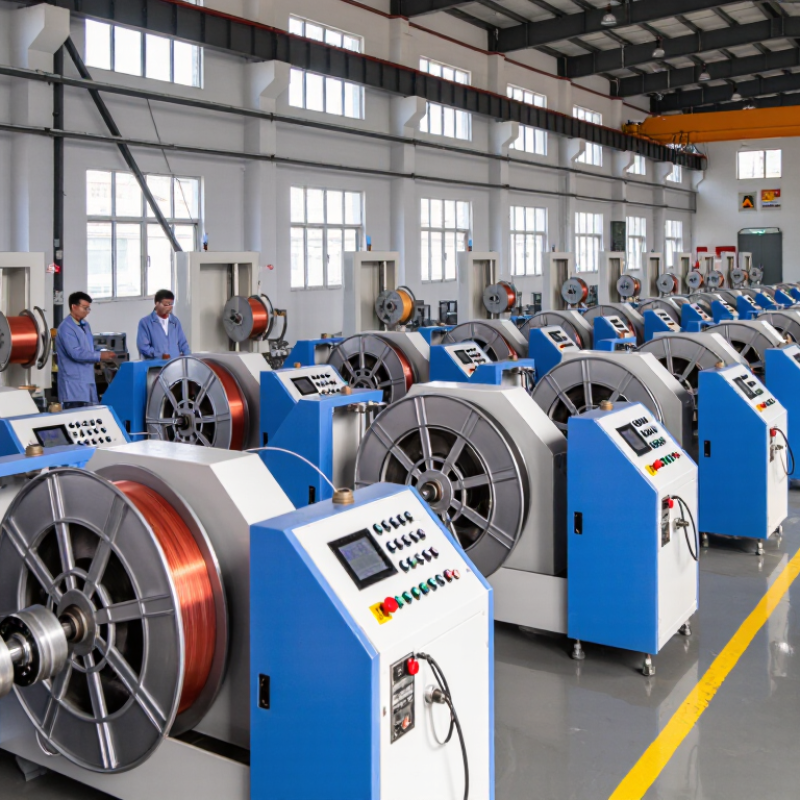
Wire winding machines form insulated or bare wire into controlled coils, bobbins, and electromagnetic windings. They are used in motors, transformers, relays, sensors, and other electrical components. A typical machine includes a rotating spindle, wire guide, tension controller, traverse system, and digital control panel.
The spindle turns the bobbin or core at a selected speed. At the same time, the guide moves sideways across its surface. This coordinated motion places each wire turn beside the previous one. Tension must remain stable. Too much force can stretch or damage thin wire, while loose wire creates gaps and uneven layers. Sensors can monitor rotation, wire breaks, and position during production.
Settings depend on wire diameter, insulation type, coil width, and required turns. A skilled operator checks the first sample with a gauge, rather than trusting the display alone. Small errors become serious inside compact coils. In practice, the neat diagram is not enough. Dust, temperature, and spool quality can change winding results.
Modern equipment may store winding programs and adjust speed automatically near the coil edges. This improves repeatability, but it does not remove human judgment. Engineers still inspect layer alignment, end connections, and insulation condition. A reliable machine is not defined only by speed. It should provide stable tension, accurate positioning, accessible maintenance, and clear production records for global buyers.
China Top Wire Winder Manufacturers for Global Buyers: What Wire Winding Machines Are and How They Work
Wire winding machines guide insulated copper wire onto bobbins, coils, or stators while controlling winding speed, wire tension, and traverse movement. The chart shows nominal bare-conductor diameters for commonly used American Wire Gauge (AWG) sizes. Smaller AWG numbers represent thicker wire, while larger AWG numbers represent finer wire often used in compact coils and precision winding applications.
How to Identify China’s Top Wire Winder Manufacturers
Identifying China’s top wire winder manufacturers requires more than comparing catalog prices. The global wire and cable market reached about USD 216.6 billion in 2023, according to Fortune Business Insights’ 2024 industry report. Rising demand increases supplier choices, but it also creates room for exaggerated claims. A capable manufacturer should show production records, engineering drawings, and traceable quality procedures.
Ask for measurable evidence. Check compatible wire diameters, winding speed, traverse accuracy, tension control, and coil dimensions. Request a live video test using your actual wire specification. Observe the spool edge, wire layering, machine vibration, and emergency-stop response. A reliable supplier should provide test data, inspection reports, electrical schematics, and spare-parts lists. ISO 9001 certification can support credibility, but certification alone proves little. The audit details matter more.
Review the factory’s engineering depth. Can technicians adjust software, motors, and tension systems without delaying every change? Ask how they manage failed components and operator training. Examine several completed machines, not only the newest display unit. In practical sourcing, a polished showroom can hide weak after-sales support. That is an easy mistake.
The International Trade Centre highlights China’s strong role in global machinery and electrical-equipment exports, yet export scale does not guarantee consistent workmanship. Compare at least three suppliers using the same technical checklist. Record response times, tolerance commitments, warranty limits, and installation responsibilities. A manufacturer that welcomes factory audits and accepts realistic performance testing is usually easier to trust. Still, no checklist is perfect. Your first trial order should remain limited and carefully documented.
How Global Buyers Can Evaluate and Source Suppliers
China Top Wire Winder Manufacturers for Global Buyers
Global buyers should evaluate wire winder suppliers beyond catalog prices. The IEA’s Global EV Outlook 2024 reported nearly 14 million electric car sales in 2023. This growth increases demand for precise motor coils and repeatable winding systems. Ask suppliers for documented tension ranges, winding speed, wire-size limits, and rejection rates. A polished sample proves little without process records.
Tips: Request a video factory audit, calibration certificates, and three recent export references. Compare total ownership cost, not only machine price. Confirm spare-part availability, software language, remote support, and operator training. Require a factory acceptance test using your actual wire, bobbin, and coil design. Small details matter.
ISO 9001 certification can support process discipline, but it does not guarantee machine performance. Check whether certificates cover the manufacturing site. Review inspection reports, corrective-action records, and component traceability. The supplier should explain how it controls tension variation and detects broken wires. In practice, buyers sometimes trust a fast quotation too quickly. That is a mistake worth admitting. A slower technical review may prevent unstable coils, missed delivery targets, and expensive rework. Also assess service response across time zones. A capable manufacturer should provide clear escalation contacts and measurable support times.