
Top 10 Flange Pipe Manufacturers for Global Buyers
Global buyers sourcing Flange Pipe face a practical challenge: product descriptions often look similar, while materials, dimensions, and inspection records differ. World Steel Association’s World Steel in Figures 2024 reports 1,888.2 million tonnes of crude steel production in 2023. That figure signals the scale of the upstream steel industry; it does not measure flange-pipe output or prove supplier quality. Buyers still need to verify the details.
For each manufacturer, this guide considers product range, material traceability, pressure and dimensional standards, testing capability, delivery reach, and after-sales support. ASME B16.5 covers pipe flanges and flanged fittings across specified sizes and pressure classes, making standards knowledge a useful screening point. Yet certification alone is not a factory audit. Ask for material test reports, inspection plans, and clear answers about how orders are handled. Details matter.
Quality-management expert W. Edwards Deming wrote, “Quality comes not from inspection, but from improvement of the production process” (Out of the Crisis, 1986). His principle is relevant to Flange Pipe purchasing: consistent controls matter before a shipment reaches the inspection bench. This shortlist offers a starting point, not a verdict. Even a polished catalog can leave gaps. Confirm the specifications against your service conditions, and assess each manufacturer’s evidence before committing to a supplier.
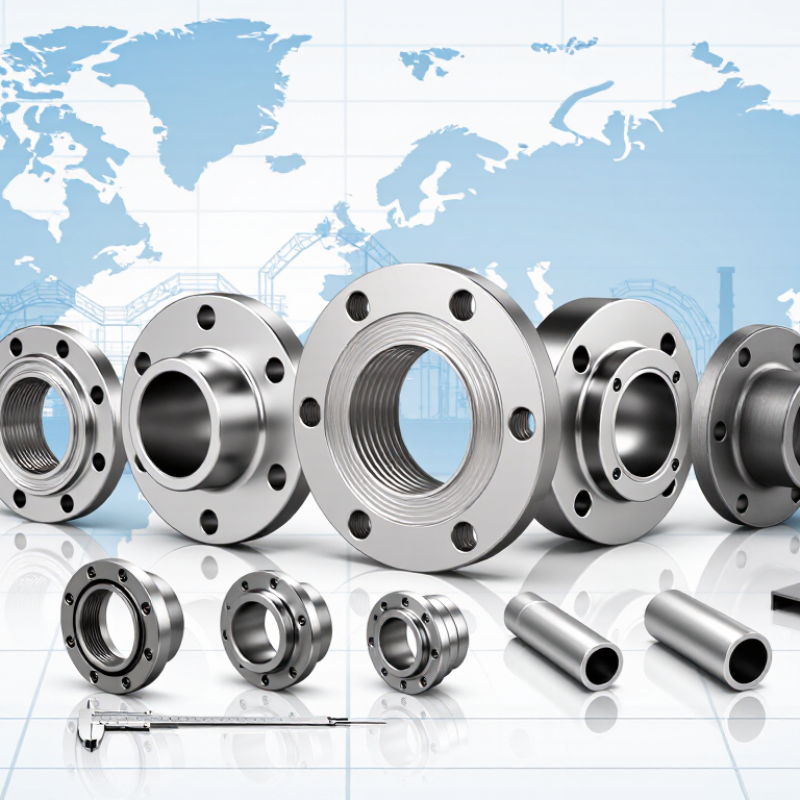
Understanding the Global Flange Pipe Manufacturing Industry
The global flange pipe manufacturing industry is shaped by more than production capacity. Buyers compare materials, dimensions, pressure ratings, delivery schedules, and inspection records. A flange that looks correct on a drawing may still fail to match the mating equipment. Details matter.
Manufacturers may use forging, casting, machining, or welded construction, depending on the design and service conditions. Each route affects lead time, material consistency, and the checks needed before shipment. Buyers should confirm the applicable dimensional and material specifications, rather than relying on a general product description. Ask for heat numbers, test reports, and clear records linking components to their materials. Even a tidy datasheet can leave questions. Still, gaps remain.
Supply chains often cross borders, so terminology, documentation practices, and logistics can vary between suppliers. A careful review should cover packaging, corrosion protection, marking, and the inspection plan—not just the quoted price. Samples or independent inspections may help with unfamiliar suppliers, especially for large orders or critical service. No checklist removes every risk. Manufacturing quality depends on both process control and honest communication, and buyers should allow time to resolve unclear details before production begins.

Criteria for Evaluating the Top 10 Manufacturers
When comparing flange-pipe manufacturers, look beyond polished catalogs and quoted prices. The World Steel Association reported 1,882.6 million tonnes of crude steel production in 2024, showing the scale of the materials market. High output alone does not guarantee consistent quality. Request traceable material test certificates, heat numbers, dimensional inspection records, and clear tolerances. Check how flange faces are protected during machining and packing; one deep scratch can delay installation.
Evaluate whether the manufacturer’s product range matches your pressure, temperature, size, and material requirements. Ask for documented procedures, inspection results, and evidence of testing against the standards named in your specification. Confirm actual production capacity and recent lead times, not just the best-case estimate. Export experience matters too: packaging, shipping documents, and communication can affect delivery. A quality certificate is useful, but it cannot prove that every batch meets your requirements. This is where buyers sometimes rely too heavily on paperwork.
Tips: Request a sample inspection report and compare it with the delivered goods. Check markings and dimensions before installation. Keep one detail in mind: no scorecard captures every production risk.
Top 10 Flange Pipe Manufacturers: Evaluation Criteria
Suggested weighting for comparing manufacturers serving global buyers (100 points total).
The weights are a proposed buyer evaluation framework, not scores or survey results for specific companies. Compare documented product standards and traceability, quality certifications, manufacturing capacity, delivery performance, export experience, and after-sales support.
Profiles of 10 Flange Pipe Manufacturers for Global Buyers
These ten profiles describe common flange-pipe supplier strengths, not a verified ranking. A broad-line manufacturer may offer carbon steel and stainless options for routine projects. A forging specialist can focus on dense, machined flanges. A stainless-focused producer may serve corrosive or hygienic applications. A large-diameter shop may handle heavier pipe connections. A custom fabricator can work from project drawings, though lead times may vary.
An export-oriented manufacturer may have experience preparing shipping documents and protective packing. A regional producer may offer shorter delivery routes. A small-batch supplier can suit repairs or limited production runs. A project-focused factory may coordinate pipe, fittings, and flange specifications. A value-focused producer may provide standard sizes at competitive prices, but buyers should check inspection scope carefully. Details matter. A polished catalog is not proof of consistent quality.
Tips: Compare material grades, dimensions, pressure ratings, and end connections against the project specification. Ask for recent inspection records, material traceability, and clear tolerances. Confirm coating, packing, delivery terms, and how nonconforming items are handled. If a quotation is vague, request clarification before placing an order.
Comparing Product Range, Standards, and International Reach
A useful comparison of the top 10 flange pipe manufacturers starts with product range. Check whether each supplier offers weld-neck, slip-on, blind, threaded, and lap-joint flanges. Material options matter too: carbon steel, stainless steel, and alloy grades serve different pressure, temperature, and corrosion needs. Details matter. A broad catalog is not proof that every size is regularly available.
Tips: Request current material certificates, dimensional drawings, and inspection records. Confirm the stated standard and grade match your project documents. Ask for evidence.
Standards and international reach can separate a convenient supplier from a dependable one. Compare relevant ASME, ASTM, or EN specifications, while checking dimensions and tolerances against the exact order. Export experience should include protective packaging, clear shipping documents, and realistic lead-time estimates. Regional stock can help, but verify quantities before relying on it. A polished website may show global coverage; actual delivery routes and after-sales support deserve closer questions. I would also compare response quality, not just price. Some details are easy to overlook, and that is worth admitting. A short technical call can reveal whether staff understand pressure class, facing type, and installation requirements.
Top 10 Flange Pipe Manufacturers for Global Buyers - Comparing Product Range, Standards, and International Reach
| Supplier Profile | Typical Product Focus | Relevant Standards | Common Material Specifications | Typical Buyer Applications | International Market Fit |
|---|---|---|---|---|---|
| 01 — General forged-steel flange producer | Weld-neck, slip-on, blind, threaded, and socket-weld flanges | ASME B16.5; EN 1092-1 | ASTM A105; ASTM A350 LF2; ASTM A182 F304/F316 | General process piping, industrial plants, and maintenance projects | Suitable for projects specifying ASME or EN flange systems; export coverage depends on the individual supplier. |
| 02 — Large-diameter pipeline flange producer | Large-bore weld-neck and blind flanges for transmission piping | ASME B16.47; MSS SP-44 | ASTM A694 F52–F70; ASTM A105, where specified | Oil, gas, and long-distance pipeline infrastructure | Relevant to international pipeline projects; confirm diameter, pressure class, and material requirements for each order. |
| 03 — Stainless-steel and alloy flange producer | Forged flanges in a range of stainless and alloy grades | ASME B16.5; EN 1092-1 | ASTM A182 F304/F304L, F316/F316L, F11, and F22 | Chemical processing, power generation, and corrosion-sensitive services | Useful for projects using international ASME or EN specifications; verify grade certification and traceability. |
| 04 — Broad-range pressure-piping producer | Common flange types across multiple nominal pipe sizes and pressure classes | ASME B16.5; ASME B16.47 | ASTM A105; ASTM A182; ASTM A350 LF2 | Refineries, industrial facilities, and replacement-parts procurement | ASME-based specifications are used across many global projects; product availability is supplier-specific. |
| 05 — Wellhead and oilfield flange producer | Flanges and pressure-containing connections for wellhead equipment | API Specification 6A | Material grades and performance requirements depend on the specified API 6A product designation and service conditions. | Oil and gas wellheads and related pressure-control equipment | Applicable to international projects requiring API 6A compliance; confirm the exact product scope and required documentation. |
| 06 — Waterworks flange producer | Steel flanges for water-pipeline and waterworks systems | AWWA C207 | Carbon steel; coating or lining requirements are project-specific | Municipal water supply, treatment plants, and water infrastructure | Best matched to projects that specify AWWA requirements; check local coating, potable-water, and regulatory requirements. |
| 07 — European-standard flange producer | Flanges manufactured to European dimensional and pressure-designation requirements | EN 1092-1 | Steel grades selected to the applicable order specification and material standard | European process plants and projects calling for PN-rated flange systems | Relevant where EN 1092-1 is specified; confirm flange type, PN designation, facing, and material documentation. |
| 08 — JIS-standard flange producer | Flanges designed to Japanese Industrial Standards dimensions | JIS B 2220 | Carbon steel and stainless steel, subject to the specified grade and product requirements | Projects using JIS-based piping systems and equipment interfaces | Suitable for JIS-specified projects in Japan and other markets using JIS systems; dimensional compatibility should be checked. |
| 09 — Low-temperature service flange producer | Forged flanges specified for low-temperature pressure-piping service | ASME B16.5; ASME B16.47, where applicable | ASTM A350 LF2 is a commonly specified low-temperature carbon-steel forging material | Low-temperature process and pipeline applications | Suitable where the design specification calls for low-temperature material performance; verify impact-test and temperature requirements. |
| 10 — High-yield pipeline flange producer | Pipeline flanges specified for higher-strength line-pipe systems | ASME B16.5; ASME B16.47; MSS SP-44, as applicable | ASTM A694 grades such as F52, F60, and F65; other grades may be specified by the project | High-pressure transmission pipelines and associated infrastructure | Relevant to cross-border pipeline procurement; confirm grade, pressure class, dimensions, and project-specific testing. |
Note: Company names are intentionally omitted. These are representative supplier profiles, not a verified ranking or claims about specific manufacturers. Standards and material grades shown are established specifications; actual product availability, certifications, export markets, and compliance must be confirmed with each supplier and against the project requirements.
Key Factors for Selecting a Flange Pipe Supplier
Top 10 Flange Pipe Manufacturers for Global Buyers
Key Factors for Selecting a Flange Pipe Supplier
Choosing a supplier starts with the service conditions, not the catalog. Specify pressure, temperature, fluid, flange size, facing, and material before comparing quotations. Check that the offered materials and dimensions match the project’s required standards, such as ASTM A105 or A182 and ASME B16.5. Ask for inspection records, material test certificates, and heat-number traceability. Small details matter. Confirm whether tests cover the finished product, not just incoming material.
The World Steel Association’s World Steel in Figures 2024 reports global crude steel production of 1,892.2 million tonnes in 2023. This is upstream context, not proof of any supplier’s quality or available stock. Buyers should verify mill sources, production capacity, and realistic delivery windows directly. Request sample documents and clarify packaging, export handling, and how nonconforming items are managed. A polished catalog can still hide vague lead-time assumptions. The lowest quote may carry costly gaps.
Tips: Compare suppliers using one shared specification sheet. Ask for a recent certificate sample, written lead time, and clear inspection scope. If an answer is vague, follow up before placing an order.
Article Source:
At Premium PSU, we are specialists in designing and manufacturing power conversion systems for the industrial market. Our product range includes high reliability power supplies from 50W to 72kW.
PREMIUM PSU
C/ Dolors Aleu, 19-21, 2nd Floor
08908 – Hospitalet de Llobregat
Barcelona-SPAIN
t.+34 93 223 26 85