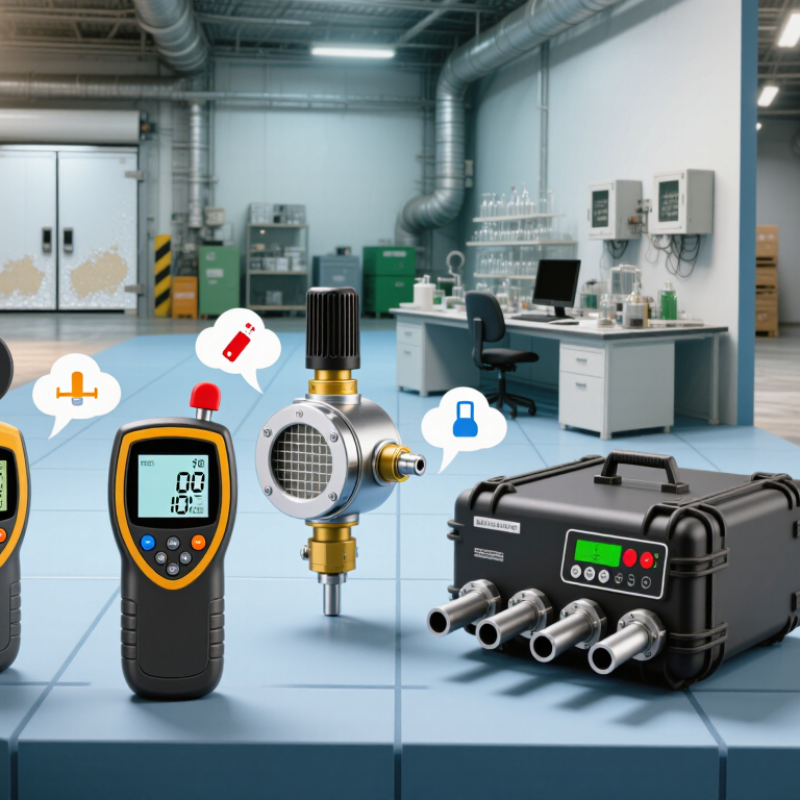
What Are the Top Gas Testers for Global Buyers?
Choosing the right Gas Testers is no longer a simple price comparison. Global buyers face different gases, work environments, climate conditions, and maintenance capabilities. A compact four-gas monitor may suit a refinery technician, while a fixed detector fits a warehouse, laboratory, or wastewater facility. The application must lead the decision.
MarketsandMarkets estimated the global gas detection equipment market at about USD 4.4 billion in 2023, with continued growth expected through 2028. Grand View Research also reported strong expansion, driven by stricter workplace monitoring and industrial automation. These figures show demand, but they do not prove that every popular model is suitable. That distinction matters.
Dr. Paul Schulte, an occupational-exposure scientist associated with NIOSH, has emphasized, “Exposure assessment is the foundation of prevention.” His point remains practical. Buyers should examine sensor type, detection range, alarm visibility, ingress protection, battery endurance, calibration support, and regional service coverage. A tester that performs well in a dry factory may respond differently in humidity, dust, or cold storage.
Independent certifications, clear technical manuals, and documented bump-test procedures strengthen trust. So does a supplier that explains limitations honestly. The cheapest unit can become expensive when calibration delays interrupt work. An expensive unit can also disappoint if workers find it difficult to wear or operate. No ranking is final. The best Gas Testers are the ones that match the hazard, the user, and the real working conditions. Some buying decisions still rely too heavily on specifications alone.
What Is a Gas Tester and How Does It Work?
A gas tester is a portable instrument that checks the air before workers enter a risky area. It commonly measures oxygen, flammable gases, and toxic gases. When air enters through a sensor, the sensor creates an electrical response. Software converts that response into a concentration reading. The display then shows normal, warning, or alarm conditions. Some testers use a sampling pump for remote spaces. Others rely on natural diffusion. Numbers can lie. A blocked inlet, weak battery, or expired sensor may produce a dangerously reassuring result.
The International Labour Organization estimated nearly three million work-related deaths worldwide in 2023. The U.S. Bureau of Labor Statistics recorded 5,486 fatal occupational injuries in 2022. These figures cover many hazards, but they reinforce one point: atmospheric testing deserves disciplined procedures. Professional guidance recommends testing oxygen first, followed by flammable and toxic gases. A bump test confirms that alarms respond properly. Calibration corrects measurement drift. Neither step should be skipped because the previous reading looked normal.
Global buyers should compare sensor ranges, response time, battery endurance, ingress protection, and operating temperature. For confined or poorly ventilated areas, a pump and sampling hose add practical value. Equipment should also match relevant IEC performance requirements and local workplace rules. Ask for calibration records, test certificates, and clear maintenance intervals. A tester may pass inspection yet fail in dust, moisture, or cold weather. In practice, reliable protection depends on the instrument, the procedure, and the person reading it. That last part is often underestimated.
Which Gas Tester Types Suit Different Testing Requirements?
Gas testers serve different risks, so selection should begin with the atmosphere being measured. For oxygen deficiency, an oxygen meter gives clear readings in confined work areas. A single-gas unit suits focused checks. It is simple and often easier to maintain. Multigas detectors monitor oxygen, combustible gases, and selected toxic gases together. They fit maintenance teams entering changing environments. However, extra sensors increase costs and may complicate calibration.
For volatile organic compounds, a photoionization detector can identify low-level vapors quickly. It needs correct lamp care and regular calibration. Infrared instruments suit certain combustible gas and carbon dioxide applications. They perform well where sensor poisoning is a concern. Refrigerant leak detectors target specific cooling gases. They cannot replace a general safety detector. Read the sensor range carefully. A low alarm setting can prevent delayed action.
Fixed gas monitors suit plants, boiler rooms, laboratories, and storage areas needing continuous surveillance. Portable testers work better for inspections, service calls, and temporary tasks. Response time, battery life, ingress protection, alarm volume, and glove-friendly controls matter in real workplaces. Check required national certifications before purchase. Bump testing before use remains essential. Calibration intervals should follow the manual, site risks, and local requirements. Traceable calibration gas improves confidence. Some buyers focus on purchase price and overlook replacement sensors. That is a costly blind spot. No tester is perfect. Humidity, dust, temperature, and poor placement can distort readings. Keep records and question results that do not match site conditions.
What Features Define the Best Gas Testers for Global Buyers?
For global buyers, the best gas testers combine accurate sensing with practical field design. A reliable unit should detect the gases relevant to the worksite, such as oxygen, carbon monoxide, hydrogen sulfide, or combustible gases. Sensor range matters. A device designed for a narrow range may miss dangerous changes outside its limits.
Clear alarms are essential. Look for bright visual signals, a loud sound, and strong vibration. Workers may wear gloves, hearing protection, or masks. A small screen should remain readable in sunlight and low light. Simple menus also reduce mistakes during stressful inspections. No tester is perfect.
Tips: Check calibration records, sensor replacement dates, and response-time data before purchasing. Ask whether the device supports local languages and common measurement units. Battery life should cover a full shift, including alarm use. A rugged enclosure, water resistance, and drop protection are valuable in dusty or wet areas. Data logging can support maintenance reviews and training, but stored data is only useful when teams actually examine it.
Global buyers should also review service access. Can trained technicians calibrate the instrument nearby? Are replacement sensors available without long delays? Independent testing reports, traceable calibration, and clear warranty terms improve purchasing confidence. Some products advertise advanced features but provide confusing instructions. That is a warning sign. In practice, the best choice may be less expensive and less impressive, yet easier to operate correctly every day.
| Gas Tester Type | Typical Target Gases | Typical Measuring Range | Common Sensor Technology | Typical Accuracy | Typical Response Time | Typical Operating Time | Recommended Protection Level | Key International Standards or Approvals | Best Application | Important Buying Features |
|---|---|---|---|---|---|---|---|---|---|---|
| Single-Gas Personal Monitor | Carbon monoxide, hydrogen sulfide, oxygen, sulfur dioxide, ammonia, chlorine or other task-specific gases | CO: 0–500 ppm H2S: 0–100 ppm O2: 0–30% volume | Electrochemical sensor | Usually ±5% of reading or ±2 ppm for toxic gases; approximately ±0.5% volume for oxygen | Typically T90 ≤30 seconds | Approximately 12–24 months, depending on sensor type and alarm use | IP65 or higher | IEC 60079-29-1, EN 45544 and regional hazardous-area approvals where applicable | Personal exposure monitoring, confined-space entry and routine workplace checks | Clear audible, visual and vibration alarms; replaceable sensor; event logging; simple one-button operation; low-temperature performance |
| Portable Four-Gas Monitor | Oxygen, combustible gases, carbon monoxide and hydrogen sulfide | O2: 0–30% volume LEL: 0–100% LEL CO: 0–500 ppm H2S: 0–100 ppm | Electrochemical sensors plus catalytic-bead or infrared combustible-gas sensor | O2: about ±0.5% volume LEL: about ±5% of reading Toxic gases: commonly ±5% of reading | Usually T90 ≤30 seconds; combustible-gas response may be faster | Approximately 14–20 hours per charge | IP65–IP68, depending on configuration | IEC 60079-29-1, IEC 60079-11, EN 45544 and applicable regional explosion-protection requirements | Confined spaces, oil and gas operations, utilities, construction and emergency response | Automatic sensor checks, pump option, calibration reminders, rechargeable battery, data logging, multilingual display and glove-friendly controls |
| Portable Multi-Gas Monitor with Pump | Up to five or six gases, such as O2, LEL, CO, H2S, CO2 and selected toxic gases | Configuration-dependent; commonly O2: 0–30% volume and LEL: 0–100% LEL | Electrochemical, catalytic-bead, infrared or photoionization sensors | Typically ±5% of reading for most channels; sensor-specific accuracy applies | Commonly 20–45 seconds through a sampling line, depending on line length and flow | Approximately 10–18 hours with continuous pump operation | IP65 or higher | IEC 60079-29-1, IEC 60079-11, EN 45544 and applicable local approvals | Remote sampling, tank inspection, sewer work, process areas and pre-entry testing | Reliable pump-failure alarm, adjustable flow monitoring, sample-line compatibility, water trap, replaceable filters and low-flow protection |
| Photoionization Detector for VOCs | Volatile organic compounds, solvents, fuels and hydrocarbon vapors | Typically 0.1–10,000 ppm as isobutylene equivalent; some configurations cover ppb-level detection | Ultraviolet photoionization detector, commonly using a 10.6 eV lamp | Typically ±3% of reading or ±0.3 ppm, whichever is greater | Usually T90 ≤10 seconds | Approximately 10–16 hours | IP54–IP65, depending on model | IEC 60079-29-1 may apply to flammable-gas functions; hazardous-area approval should be confirmed for the complete configuration | Solvent handling, leak surveys, industrial hygiene and environmental screening | Automatic lamp cleaning reminder, humidity compensation, selectable correction factors, quick response and easy field calibration |
| Carbon Dioxide Monitor | Carbon dioxide, with optional temperature and relative-humidity measurement | Typically 0–5% volume; higher-range versions may measure up to 20% volume | Non-dispersive infrared sensor | Typically ±(50 ppm + 3% of reading) over the specified operating range | Usually T90 ≤30 seconds | Approximately 8–24 hours for battery-powered units | IP54–IP65 | Performance requirements vary by application; ventilation-related installations may require local building or occupational-safety compliance | Indoor-air assessment, fermentation, greenhouse monitoring, food processing and confined-space screening | Automatic baseline correction option, pressure compensation, audible alarm, pump sampling and stable performance in high humidity |
| Combustible-Gas Leak Detector | Methane, propane, butane, hydrogen and other combustible gases | Typically 0–10,000 ppm or 0–100% LEL, depending on the sensor configuration | Semiconductor, catalytic-bead, infrared or heated-diode sensor | Commonly ±5–10% of reading; performance is gas- and sensor-specific | Usually less than 10 seconds for a detectable leak | Approximately 8–20 hours | IP54 or higher; IP65 is preferable for outdoor work | IEC 60079-29-1 and relevant hazardous-area requirements where the detector is certified for classified locations | Pipeline inspection, appliance testing, maintenance, utility work and leak localization | Adjustable sensitivity, flexible probe, pump or aspirated option, audible signal proportional to concentration and replaceable filter |
| Fixed Gas Transmitter | Combustible gases, oxygen, toxic gases, VOCs or carbon dioxide | Gas-specific; common examples include 0–100% LEL, 0–30% volume or 0–100 ppm | Electrochemical, catalytic-bead, infrared, PID or semiconductor sensor | Typically ±3–5% of full scale or reading, depending on sensor technology | Typically 10–60 seconds | Continuous operation; sensor life commonly 2–5 years depending on gas and environment | IP65–IP66; IP67 may be selected for severe outdoor exposure | IEC 60079 series, IEC 61508 where safety integrity is claimed, EN 45544 and local installation codes | Factories, boiler rooms, compressor stations, laboratories, warehouses and process plants | 4–20 mA output, Modbus or relay interfaces, local display, automatic fault reporting, remote calibration and compatible controllers |
| Area Gas Monitor | Multiple gases selected for the worksite, commonly LEL, O2, CO and H2S | Usually combines 0–100% LEL, 0–30% volume oxygen and task-specific toxic-gas ranges | Combination of electrochemical, catalytic-bead and infrared sensors | Typically ±5% of reading for most channels; confirm each sensor specification | Typically 15–40 seconds | Approximately 12–24 hours; some units support external power or solar charging | IP65 or higher | IEC 60079-29-1, IEC 60079-11 and applicable site or regional hazardous-area requirements | Temporary work zones, shutdowns, hot work, emergency response and perimeter monitoring | Wireless device networking, remote alarms, GPS, strobe and siren, daisy-chain capability, long battery life and rugged mounting points |
| Calibration and Bump-Test Station | Used to verify the response of compatible gas detectors with certified test gas | Determined by the connected detector and calibration-gas concentration | Controlled gas delivery with automated test and record functions | Gas-flow control commonly maintained near the detector manufacturer's specified test flow | Typically 30–90 seconds per detector during a bump test | Continuous mains operation or several hours on an optional battery | IP20–IP54; outdoor use requires a suitably protected enclosure | Calibration practice should follow the detector manufacturer's instructions and applicable workplace regulations | Large workforces, rental fleets, service centers and compliance-focused sites | Automatic pass/fail records, barcode or RFID identification, controlled flow, calibration certificates, cloud export and low-gas warnings |
| Selection note: Specifications shown are representative industry ranges rather than brand-specific claims. Actual performance depends on the selected sensor, target gas, temperature, humidity, pressure, calibration gas, sampling method and certification configuration. Global buyers should verify local electrical, hazardous-area, occupational-safety and wireless requirements before purchase. | ||||||||||

How Should Buyers Compare Gas Tester Accuracy and Reliability?
What Are the Top Gas Testers for Global Buyers?
How Should Buyers Compare Gas Tester Accuracy and Reliability?
Global buyers should compare gas testers by measurement performance, not by screen size or sales claims. Check the sensor type, detection range, resolution, and response time for each target gas. A reliable unit should detect changing conditions quickly, especially in confined work areas. Calibration records matter too. Look for clear dates, traceable reference gases, and simple adjustment procedures. Small details reveal quality.
Accuracy can change with temperature, humidity, pressure, and interfering gases. Ask for test data under realistic conditions, rather than laboratory results alone. A tester showing oxygen, toxic gases, and combustible gas may need different sensors and maintenance intervals. Read the technical manual carefully. It often explains more than the product page.
Buyers should examine battery life, alarm volume, data storage, enclosure protection, and service access. A strong device should survive drops, dust, moisture, and frequent daily checks. Independent certification can support confidence, but certification does not replace field verification. Perform a bump test before use and schedule calibration according to operating conditions. Skipping one check may create false confidence.
No tester stays perfect forever. Sensors age, batteries weaken, and users sometimes ignore warning messages. That uncomfortable fact deserves attention. Compare repair support, spare sensor availability, training materials, and total ownership cost across regions. The cheapest purchase may become expensive after repeated recalibration or delayed service. Reliable testing depends on both equipment and disciplined users.
What Standards and Certifications Should Gas Testers Meet?
For global buyers, a gas tester should meet recognized safety and performance standards before price enters the discussion. IEC 60079-29-1 covers performance requirements for flammable gas detectors. IEC 60079-29-2 addresses selection, installation, use, and maintenance. These standards help buyers compare instruments across different markets and applications.
Look for independent certification under IECEx or applicable regional explosion-protection rules, such as ATEX in the European Union. The certificate should match the intended hazardous area, gas group, temperature class, and protection method. Intrinsic safety markings, such as Ex ia, may be essential for work near combustible atmospheres. However, certification does not prove that every unit will remain accurate in the field. That assumption deserves caution.
Check calibration records issued by a competent laboratory, preferably one operating to ISO/IEC 17025 principles. A practical inspection should include sensor response time, alarm operation, battery condition, sampling tubing, and pump performance. Test readings should be traceable to known gas concentrations, not only to a factory sticker. Environmental ratings also matter: dust and water resistance, electromagnetic compatibility, and operating temperature should match the worksite. Certification documents can be confusing, even for experienced purchasers. Ask for the full certificate, manual, and declaration of conformity. Then verify model numbers, certificate expiry dates, and permitted sensor configurations. A tester that passed laboratory testing may still fail after poor storage, overdue calibration, or exposure to silicone vapors. Real purchasing decisions need both paperwork and field evidence.
What Are the Top Gas Testers for Global Buyers?
What Standards and Certifications Should Gas Testers Meet?
The chart compares the approximate lower explosive limits (LEL) of commonly monitored gases at atmospheric conditions. These values help buyers evaluate detector measuring ranges and alarm configuration; they are reference values, not universal alarm settings.
Performance requirements for flammable-gas detectors used for explosion protection.
Guidance for selection, installation, use and maintenance of flammable-gas detection systems.
Performance requirements for workplace toxic-gas detectors and instruments.
Select market-appropriate hazardous-area certification, such as ATEX or IECEx, plus applicable North American approvals.
Article Source:
At Premium PSU, we are specialists in designing and manufacturing power conversion systems for the industrial market. Our product range includes high reliability power supplies from 50W to 72kW.
PREMIUM PSU
C/ Dolors Aleu, 19-21, 2nd Floor
08908 – Hospitalet de Llobregat
Barcelona-SPAIN
t.+34 93 223 26 85