
Best High Voltage Power Supply Manufacturers in China?
Choosing among China’s high voltage power supply manufacturers takes more than comparing prices and headline voltage ratings. The right supplier should understand the actual load, duty cycle, operating environment, and consequences of unstable output. A specification sheet is only a starting point.
Michael Faraday, a pioneer of electrical science, wrote, “Nothing is too wonderful to be true, if it be consistent with the laws of nature.” That idea still matters in high-voltage engineering: performance claims should match test evidence. Ask manufacturers for measured output stability, ripple, insulation details, protection features, and test conditions. A neat cabinet and a bright display are not proof.
Look closely at how each company handles custom requirements. Can it explain connector choices, cooling needs, fault response, and service support in plain language? Request relevant test records and discuss how the unit will be integrated into your equipment. A capable manufacturer should welcome precise questions, not hide behind broad claims. Small details matter.
Price still matters, of course. But the lowest quote may leave gaps in testing or after-sales support. Buyers should compare technical fit, documented quality, delivery capability, and communication—not just voltage and cost. Even then, no supplier is perfect; clarify what has been verified and what remains uncertain before selecting a partner.
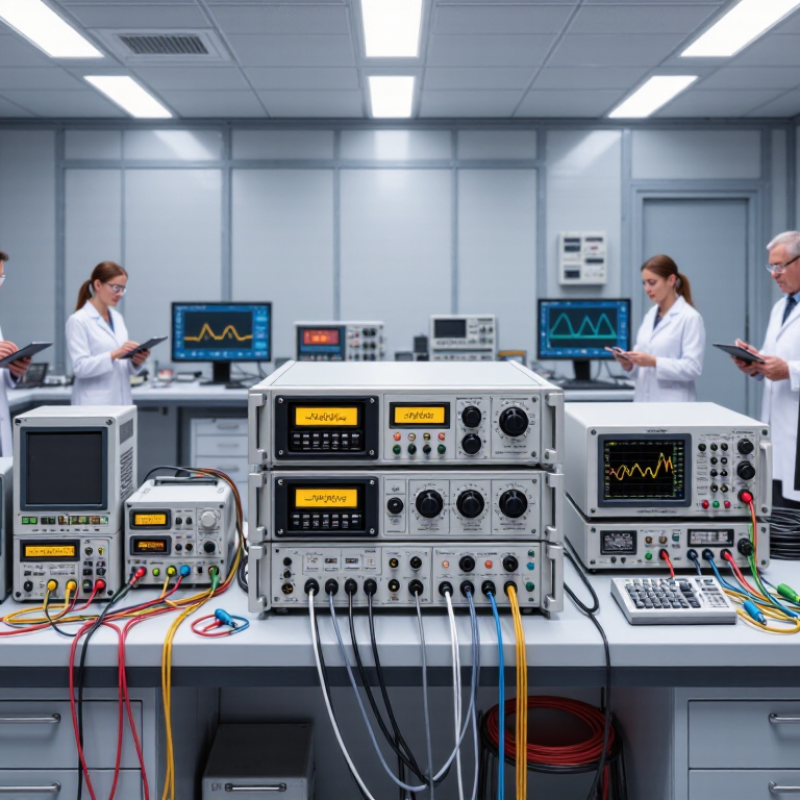
What Is a High-Voltage Power Supply?
A high-voltage power supply converts incoming electrical power into a controlled output at a much higher voltage. It may provide direct current or alternating current, depending on the equipment it serves. “High voltage” has no single useful cutoff for every application; the required level depends on the system and its design. Inside the supply, conversion circuitry raises the voltage, while feedback controls help keep the output near its set point. The output current is often limited. Very little current can still be hazardous.
These supplies support equipment such as imaging systems, laboratory instruments, detectors, and insulation test rigs. Their key specifications include output voltage, current limit, polarity, ripple, regulation, and response to changing loads. Good insulation and spacing between internal parts help prevent unwanted electrical discharge. In practice, selecting a unit means checking the whole setup, not just the voltage printed on its label. Cables, connectors, and the connected load matter too. Stored energy may remain after power is switched off. Easy to overlook. A clear operating procedure and suitable measurement equipment help reduce risk, though they cannot replace training. Even a well-regulated supply may behave differently when its load changes quickly, so that detail deserves testing.
Best High Voltage Power Supply Manufacturers in China? - What Is a High-Voltage Power Supply?
| Power Supply Type | Typical Output Characteristics | Common Applications | Key Selection Considerations |
|---|---|---|---|
| DC High-Voltage Supply | Converts input power into a high-voltage direct-current output. Voltage, current, polarity, and regulation depend on the design. | Electrostatic equipment, detector biasing, insulation testing, and laboratory experiments. | Check output range, polarity, ripple, regulation, load behavior, and protection features. |
| Programmable High-Voltage Supply | Allows output settings to be adjusted and controlled, commonly through a panel or remote interface. | Automated test systems, research laboratories, and production testing. | Review programming resolution, readback accuracy, interface options, response time, and safety interlocks. |
| High-Voltage DC-to-DC Converter | Converts one DC input level to another; some designs provide an isolated high-voltage output. | Portable instruments, sensors, photomultiplier tubes, and embedded electronic systems. | Confirm input range, isolation rating, output stability, size, and operating temperature range. |
| Capacitor-Charging Supply | Charges a capacitor to a set voltage, often for pulsed-energy applications. The required charging time depends on the supply and load. | Pulse lasers, flash lamps, and pulsed-power research equipment. | Assess charging voltage, repetition rate, stored-energy requirements, and discharge-system safeguards. |
| X-Ray Generator Supply | Provides high voltage to an X-ray tube and is typically designed to work with tube-current and exposure controls. | Medical, industrial inspection, and scientific X-ray systems. | Consider tube compatibility, voltage and current control, insulation, monitoring, and system-level radiation safety. |
| High-Voltage AC Supply | Provides an alternating high-voltage output; frequency and waveform depend on the application. | Electrical testing, dielectric research, and specialized equipment. | Specify RMS and peak voltage, frequency, waveform, load characteristics, and required test standards. |
What is a high-voltage power supply? It is a power-conversion device designed to generate and control an electrical output at a voltage higher than its input or operating circuit requires. “High voltage” is application-dependent; output ratings, accuracy, and safety features vary by product. Compare specifications against the intended load and applicable safety requirements.
Related Posts
-

Top 10 High Voltage DC Power Supply Manufacturers
-

Top 10 High Voltage DC Power Supply Applications You Should Know?
-
How to Choose the Best High Voltage Power Supply for Your Needs?
-
What is a Power Inverter and How Does It Work?
-
Why Use a DC to AC Converter for Your Power Needs?
-

10 Essential Tips for Understanding and Using Buck Converters Effectively