Why You Need UPS Electrical Systems for Home and Business Protection

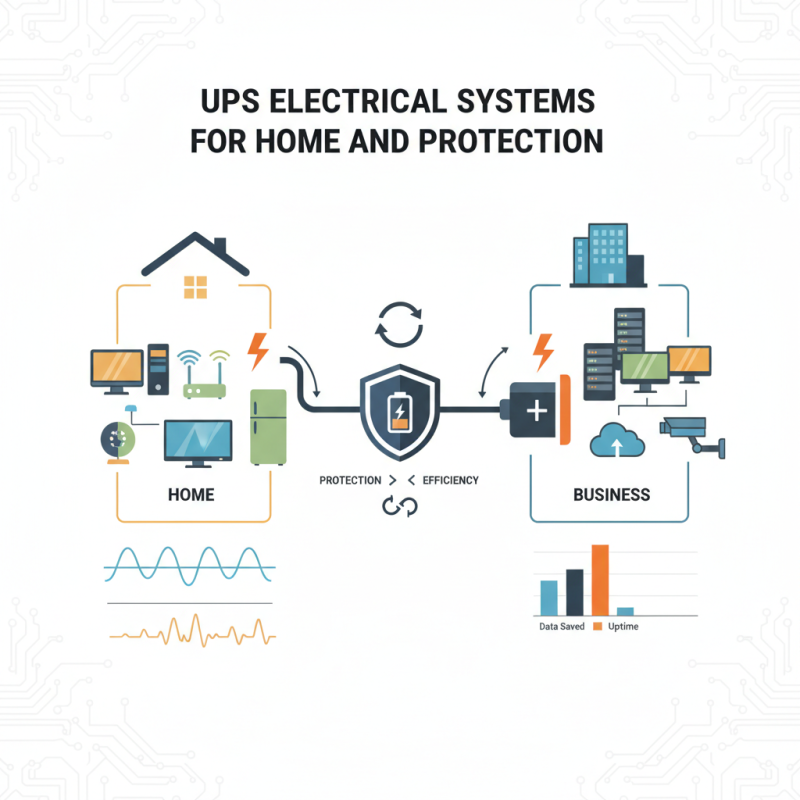
In today's world, the reliance on electrical systems for daily operations at home and in businesses has never been greater. However, with the increasing frequency of power disruptions caused by natural disasters, equipment failures, and unexpected outages, the need for reliable and uninterrupted power supply has emerged as a top priority. This is where UPS electrical systems come into play, offering crucial protection against the risks associated with power loss. By providing a backup power source, UPS electrical systems ensure that essential devices remain operational, safeguarding important data and preventing costly downtime.

Investing in UPS electrical solutions goes beyond mere convenience; it is a smart strategy for both residential and commercial environments. These systems not only protect against unexpected power cuts but also enhance the longevity of electronic equipment by providing a stable and clean power supply. Moreover, with the rise of remote work and digital-dependent businesses, having a reliable power backup system is essential for maintaining productivity and security. In this discussion, we will explore the various reasons why integrating UPS electrical systems into your home or business operations is a wise investment.
Why You Need UPS Electrical Systems for Home and Business Protection

Understanding UPS Electrical Systems: A Comprehensive Overview
Why You Need UPS Electrical Systems for Home and Business Protection

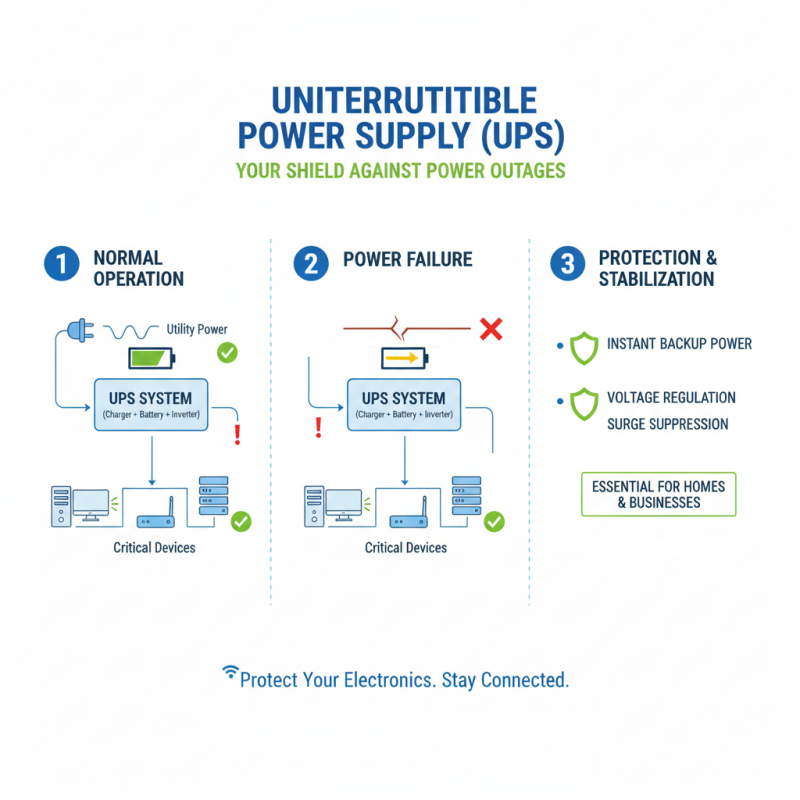
Uninterruptible Power Supply (UPS) systems serve as a critical safeguard for both homes and businesses, ensuring continuous power even during outages. These systems consist of batteries and power electronics that provide instantaneous backup when the primary power source fails. Understanding how UPS electrical systems work is essential for anyone looking to protect sensitive electronic equipment from power interruptions, surges, and fluctuations. When the main power supply is inconsistent, the UPS takes over, providing not only backup energy but also stabilizing voltage and mitigating the risk of equipment damage.

Moreover, UPS systems vary in design and capacity to meet diverse needs. From small, standalone units for personal computers to larger, more complex systems for data centers, these systems can be tailored to specific requirements. Different types of UPS systems include offline, line-interactive, and online configurations, each offering unique advantages depending on the power quality and reliability needed. By integrating UPS systems into your electrical infrastructure, you not only enhance operational dependability but also protect valuable data and equipment, ultimately fostering a consistent and productive working environment. Understanding these systems deepens your ability to customize power solutions that meet both your home and business demands effectively.
The Importance of Power Backup for Home and Business Security

In today's increasingly digital world, the significance of power backup systems cannot be overstated, especially for homes and businesses reliant on uninterrupted electricity. A power failure can lead to not only immediate inconvenience but also long-term consequences, including data loss, equipment damage, and compromised safety. Thus, investing in an Uninterruptible Power Supply (UPS) is essential for maintaining operational continuity and safeguarding critical assets.

UPS systems serve as a reliable power source during outages, providing a seamless transition to backup power. This is crucial for businesses, which often rely on sensitive equipment and technology that cannot afford downtime. Similarly, homes filled with smart devices, security systems, and home offices require consistent power to remain secure and functional. The importance of having a UPS extends beyond mere convenience; it represents a proactive approach to ensuring safety and security in unpredictable circumstances. With the right power backup solutions in place, both homes and businesses can mitigate the risks associated with power disruptions, safeguarding their operations and peace of mind.

Why You Need UPS Electrical Systems for Home and Business Protection

Dimension Home Application Business Application
Power Outage Duration Up to 2 hours Up to 4 hours
Equipment Supported Computers, routers, and lights Servers, security systems, and phones
Typical Battery Life 3-5 years 5-7 years
Average Cost $100 - $300 $500 - $2000
Monitoring Features Basic indicators Advanced software monitoring
Installation Complexity Easy setup Professional installation recommended

How UPS Systems Protect Against Power Outages and Surges

Power outages and surges can be detrimental to both home and business environments, leading to data loss, hardware damage, and interrupted operations. Uninterruptible Power Supply (UPS) systems serve as a crucial safeguard against these threats. By providing a steady stream of power during an outage, UPS systems ensure that critical devices remain functional, allowing for safe data saving and system shutdowns. This feature is particularly vital in environments where data integrity is paramount, such as servers, medical equipment, and even home offices filled with important documents.

Surge protection is another significant benefit of UPS systems. Power surges, often caused by lightning strikes or fluctuations in the electrical grid, can wreak havoc on electronic devices, leading to costly repairs or replacements. UPS systems are equipped to absorb these surges, preventing excess voltage from reaching sensitive equipment. By acting as a buffer, they not only protect investments in technology but also contribute to the longevity of devices, making them a wise choice for both residential and commercial applications.

Key Features to Look for in a Quality UPS System

Why You Need UPS Electrical Systems for Home and Business Protection

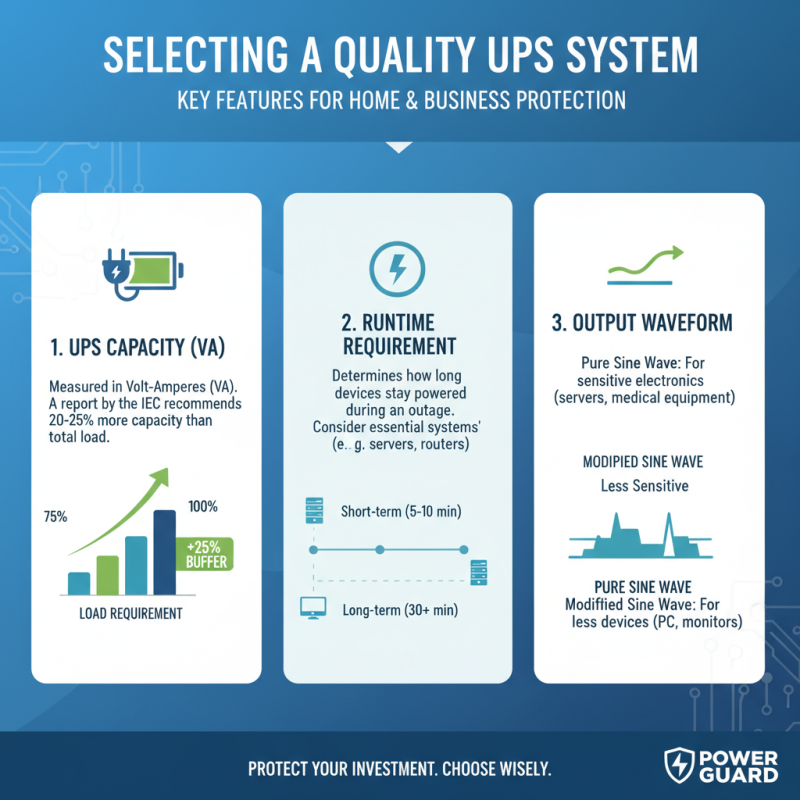
When selecting a quality Uninterruptible Power Supply (UPS) system, several key features should be prioritized to ensure optimal protection for your home or business. One critical aspect is the capacity of the UPS, measured in Volt-Amperes (VA). According to a report by the International Electrotechnical Commission, businesses should consider a UPS that can handle at least 20-25% more than their total load requirements. This buffer helps accommodate any unexpected surges in power demand, ensuring that essential systems remain operational in the event of an outage.

Additionally, the battery type and runtime are vital considerations. Lithium-ion batteries are gaining traction due to their higher energy density and longer life cycle compared to traditional lead-acid batteries. A study from the U.S. Department of Energy indicates that lithium-ion batteries can offer up to 10 years of service life with proper maintenance. Furthermore, it's essential to evaluate the management features, such as automatic voltage regulation, which helps stabilize voltage levels and extend the lifespan of connected devices. Systems equipped with sophisticated monitoring and alert systems enable users to track performance metrics and receive notifications about battery health, which is crucial for ensuring reliability in critical applications.

Implementing UPS Solutions: Best Practices for Maximum Protection

Implementing an Uninterruptible Power Supply (UPS) system is crucial for both homes and businesses to ensure that operations continue smoothly during power interruptions. To maximize protection, it's essential to select the right UPS solution that suits your specific needs. Evaluate your power requirements by calculating the total wattage of devices you wish to protect. Choosing a UPS with adequate capacity not only prevents data loss during outages but also extends the life of your equipment by providing steady power.

Tips for implementation: First, ensure proper placement of your UPS. It should be located in a dry, well-ventilated area away from direct sunlight and heat sources. This helps to maintain optimal operating conditions. Second, regularly schedule battery maintenance checks. A UPS is only as reliable as its batteries, and replacing them at the recommended intervals ensures consistent performance.

Another best practice is to configure your UPS with monitoring software. This allows you to stay informed about the battery status, load levels, and even receive alerts for potential issues. Such proactive management can significantly reduce the risks of unexpected downtime, ensuring your systems remain operational even during adverse conditions.

UPS Systems Usage Statistics for Home and Business Protection

This bar chart illustrates the percentage of UPS system adoption across various user segments, highlighting the growing reliance on UPS solutions for both home and business protection. The data indicates a stronger adoption rate in larger enterprises, emphasizing their critical need for reliable power systems.