
What is a Waterproof Micro Switch and How Does It Work?

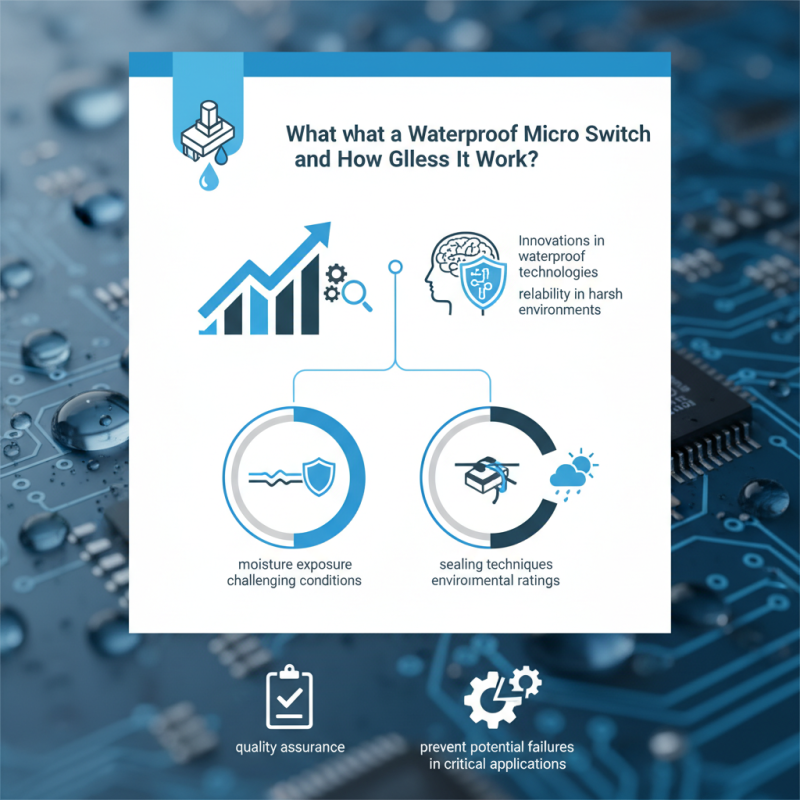
Waterproof Micro Switches play a critical role in various applications, particularly in industries like automotive, aerospace, and home appliances. According to a recent market report by Technavio, the global micro switch market is projected to grow at a CAGR of 5.8% from 2023 to 2028. This growth drives innovations in waterproof technologies, ensuring reliability in harsh environments.

Dr. Emily Chen, a leading expert in sensor technology, states, "The development of waterproof Micro Switches has revolutionized applications where moisture exposure is a concern." These switches can withstand challenging conditions, making them essential for devices that operate outdoors or in wet environments.

However, not all waterproof micro switches are created equal. Variability in manufacturing processes can lead to inconsistencies in performance. It's crucial for companies to prioritize quality assurance. Users must consider factors like sealing techniques and environmental ratings when selecting a waterproof micro switch, ensuring durability and optimal function. A careful examination of these aspects will prevent potential failures in critical applications.
What is a Waterproof Micro Switch and How Does It Work?

Definition and Purpose of Waterproof Micro Switch

A waterproof micro switch is a crucial component in various applications. It is designed to function reliably in wet or damp environments. These switches are perfect for devices exposed to moisture, like outdoor lighting or kitchen appliances.

The primary purpose of a waterproof micro switch is to ensure safety and durability. Its sealing mechanisms protect internal parts from water damage. This protection extends the switch's lifespan and enhances performance. Many of these switches meet stringent industry standards, confirming their robustness. However, not all waterproof switches are created equal; some might struggle with extreme conditions, leading to malfunction.

Manufacturers use different materials for these switches. Stainless steel and specially formulated plastics are common choices. These materials resist corrosion and wear. Still, there's room for improvement. Some designs may create challenges in installation or maintenance. Users might face issues like difficulty in alignment or connection. Each aspect warrants careful consideration to maximize efficiency and reliability in practical situations.


Key Features of Waterproof Micro Switches

Waterproof micro switches are essential components in various industries. They provide reliable operation even in challenging environments. Their design includes sealed casings that protect internal mechanisms from water and dust. This makes them ideal for outdoor applications or equipment exposed to moist conditions.

One key feature of waterproof micro switches is their durability. They can withstand harsh weather conditions without compromising performance. Many models are rated for high cycles, which ensures long-lasting use. The tactile feedback they provide allows for precise control. This is crucial in applications that need accurate responses.

Another important aspect is their compact size. Despite their small footprint, these switches deliver powerful performance. They can fit into tight spaces where larger switches cannot. However, achieving waterproof capabilities can involve trade-offs in size and complexity. As a result, some users may find installation challenging. Proper attention is needed to ensure function and longevity. Using these switches requires careful consideration of their specifications and application context.

Mechanism of Action: How Waterproof Micro Switches Operate

Waterproof micro switches are essential components in various devices. They operate by using a small mechanical lever. When pressed, the lever activates an internal mechanism. This mechanism can either open or close an electrical circuit. The waterproof feature is crucial, as it protects these switches from moisture. This protection ensures reliability in harsh environments.

The design of a waterproof micro switch includes sealing elements. These elements prevent water and dust from entering the switch. In practice, this allows the switch to function properly even in extreme conditions. However, the effectiveness of sealing can vary. Sometimes, improper sealing leads to water ingress. Regular inspections are necessary to ensure continued performance.

Understanding the operation further reveals its complexities. The movement of the lever translates into electrical action. But adjustments might be needed to optimize performance. Users may experience issues if the switch does not align correctly. Over time, components wear down. It is essential to address such wear to maintain functionality. In summary, waterproof micro switches present a blend of simplicity and complexity.

Applications of Waterproof Micro Switches in Various Industries

Waterproof micro switches are essential in various industries. They offer reliability and durability in harsh environments. Their design ensures protection against moisture and contaminants. This makes them ideal for applications like automotive systems, outdoor equipment, and industrial machines. A malfunction in these systems can lead to costly downtime and safety risks. Therefore, choosing the right micro switch is crucial.

In the automotive industry, these switches are used in headlights and wipers. They ensure systems operate effectively in rain or snow. Waterproof micro switches also play a role in medical devices. Accuracy and reliability are vital in this sector. However, sometimes, the harsh cleaning processes may wear out switches faster than expected. In agriculture, these switches help control irrigation systems. They withstand wet conditions and ensure continuous operation.

While applications are vast, some users overlook maintenance. Regular checks can prevent failures. Adapting to changing conditions is also important. With advancements in technology, the performance of waterproof micro switches is improving. Yet, users must remain vigilant.

Advantages and Limitations of Using Waterproof Micro Switches

Waterproof micro switches are essential in many industries, offering reliable operation in harsh environments. These switches prevent water and dust intrusion, ensuring longevity and durability. They are commonly used in automotive, home appliances, and outdoor equipment. However, understanding their advantages and limitations is crucial for effective deployment.

One major advantage of waterproof micro switches is their resilience. According to industry data, these switches can maintain functionality even when submerged in water up to 1 meter deep for 30 minutes. This makes them ideal for applications exposed to moisture. Their longevity is also notable; many can last over a million cycles. However, they often cost more than standard switches. This can be a significant factor for large-scale projects with tight budgets.

**Tip:** Always assess the specific environment where your micro switches will be installed. Consider humidity, temperature fluctuations, and possible exposure to chemicals. Limiting the use of waterproof switches in non-critical applications can cut unnecessary costs.

Additionally, waterproof micro switches may require specialized mounting. This can complicate the design process. While they offer protection, choosing to use them in a non-water-related application can lead to over-engineering. Balancing your design needs with cost is essential. Finding the right fit between durability and economic efficiency is not always straightforward.

What is a Waterproof Micro Switch and How Does It Work? - Advantages and Limitations of Using Waterproof Micro Switches

Feature Details
Definition A waterproof micro switch is a compact switch that can withstand exposure to moisture and environmental conditions.
Working Principle Operates through a mechanical movement that closes or opens electrical contacts in response to an actuator's motion.
Common Applications Used in appliances, automotive systems, and outdoor instruments where moisture resistance is critical.
Advantages High reliability in wet conditions, durable construction, and compact design.
Limitations Higher cost compared to standard micro switches, potential for reduced sensitivity in extreme conditions.
Environmental Rating Typically rated IP67 or higher, indicating full protection against dust and immersion in water.
Maintenance Generally low maintenance; however, regular checks for wear in high-use applications are recommended.