
What Are Precision Mold Components?
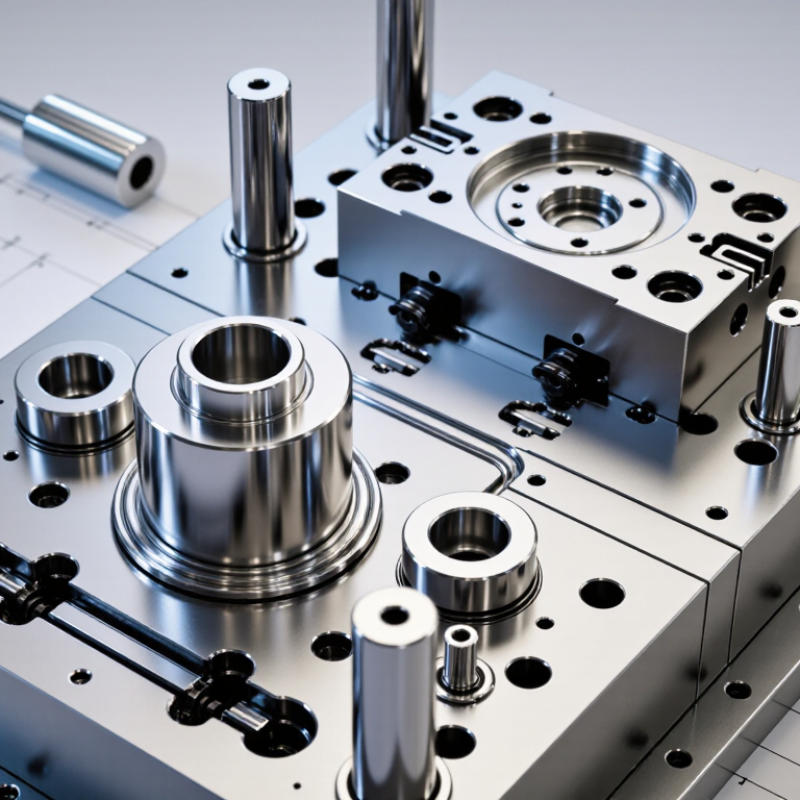
Precision Mold Components are the small, tightly controlled parts that help a mold form products consistently. They include cores, cavities, inserts, pins, sleeves, and guide elements. Each has a specific job. A cavity shapes the outside; a core forms internal features. Ejector pins help release the finished part. Tiny details matter.
In a production mold, a few microns can affect fit, alignment, cooling, or wear. Picture a polished steel insert seated beside a narrow cooling channel: a burr, rough surface, or dimensional mismatch may disrupt the process. Material choice, heat treatment, machining, and inspection all influence performance. So does maintenance. Precision is not a single machining operation.
A useful perspective can be expressed through fictional composite expert Alex Chen, a mold-design specialist created for this introduction: “A component is only precise when it fits, performs, and remains dependable in the real mold.” This is an illustrative line, not a verified quotation. The distinction matters; expertise deserves accurate attribution. And the work is rarely perfect. Drawings may omit operating details, while actual wear can reveal assumptions that looked sound on screen. Those gaps deserve review, not excuses. This guide explains what Precision Mold Components are, how their main types function, and which manufacturing and inspection factors shape their reliability. Short answer: small parts, major consequences.
Definition of Precision Mold Components
Precision mold components are the engineered parts that form, guide, position, and release a molded product. They may include cavity and core inserts, guide pins and bushings, ejector pins, slides, and locating features. “Precision” describes controlled dimensions, geometry, surface finish, and fit—not simply a small part size. Fit matters. A slight mismatch at a shutoff surface can leave flash, while a misaligned guide pin can accelerate wear.
These components are commonly made from tool steel or other wear-resistant materials selected for the molding process, production volume, and material being molded. Their tolerances are set according to the mold design; there is no single tolerance that suits every application. In practice, machinists inspect critical diameters and flatness with suitable measuring tools, then verify how mating parts move together. Small parts, big effects. A drawing may specify a precise dimension, yet thermal expansion, polishing, or repeated cycling can change the working fit. That detail is easy to underestimate. Maintenance records and periodic inspection help identify wear before it affects part quality, though inspection intervals depend on actual use.
| Component | Definition and Function | Common Material Examples | Precision Considerations | Typical Mold Use |
|---|---|---|---|---|
| Cavity insert | Forms the external surfaces and features of a molded part. It is fitted into the cavity side of the mold. | P20 tool steel, H13 tool steel, 420 stainless steel | Surface finish, cavity geometry, fit in the mold plate, and dimensional stability affect part quality. | Injection molds, compression molds, and other tooling that forms a part’s exterior. |
| Core insert | Forms internal surfaces, recesses, and other features of a molded part. It is commonly fitted into the core side of the mold. | P20 tool steel, H13 tool steel, 420 stainless steel | Core alignment, feature dimensions, surface finish, and resistance to wear are important. | Molds for parts with internal shapes, holes, ribs, or pockets. |
| Guide pin | Aligns the mold halves as the mold closes and opens. | Hardened tool steel | Straightness, diameter, surface finish, and alignment with the guide bush influence smooth operation. | Guiding and aligning the moving and stationary mold halves. |
| Guide bush | Provides a mating bearing surface for a guide pin and helps maintain mold-half alignment. | Hardened tool steel, bearing-grade steel | Bore size, roundness, fit, and wear resistance affect alignment and service life. | Installed in one mold half to receive the guide pin from the other half. |
| Ejector pin | Pushes a molded part away from the core after the mold opens. | Hardened tool steel, nitrided tool steel | Pin diameter, straightness, clearance, and end-face finish help prevent sticking, bending, or visible marks. | Part ejection in injection molds and other molds using pin-based ejection. |
| Ejector sleeve | A hollow ejector element that pushes around a core pin or cylindrical feature. | Hardened tool steel | The sleeve bore and outside diameter must work with the mating core and guide features. | Ejecting parts with bosses or other circular features. |
| Return pin | Returns the ejector plate assembly to its original position when the mold closes. | Hardened tool steel | Length, contact surfaces, and alignment help ensure consistent reset of the ejector system. | Mechanical return of an ejector plate assembly. |
| Sprue bushing | Provides the entry path through which molten material flows from the machine nozzle into the mold. | Hardened tool steel, hot-work tool steel | Nozzle-seat geometry, sprue passage finish, and alignment support reliable material transfer. | The inlet between an injection machine nozzle and the mold runner system. |
| Locating ring | Centers the mold on the injection molding machine platen so the machine nozzle aligns with the sprue bushing. | Carbon steel, alloy steel | Outer fit and concentricity with the sprue bushing are important for correct positioning. | Machine-to-mold alignment on injection molding machines. |
| Core pin | Creates a hole, passage, or narrow internal feature in a molded part. | H13 tool steel, hardened tool steel, stainless tool steel | Diameter, straightness, support, and resistance to wear or deflection are key considerations. | Forming holes and slender internal features in molded parts. |

Main Types and Their Functions
Precision mold components are the fitted parts that guide, shape, and release material during molding. Common types include mold bases, cavities, cores, guide pins, ejector pins, and cooling channels. The cavity forms the part’s outer surface; the core creates internal features such as holes or ribs. Guide pins align the two mold halves, while ejector pins push the finished part free. Small misalignment can leave a visible seam or uneven dimensions.
Cooling channels carry fluid through the mold to control heat and cycle time. Their placement matters: uneven cooling may cause warping, sink marks, or longer production runs. Ejector pins also need careful positioning, since a mark on a cosmetic surface may be unacceptable. These choices depend on the part’s geometry, material, and required finish. No single component solves every molding issue.
Tips: Check pin clearance, alignment, and wear during maintenance. Look for residue around vents and cooling connections. Keep measurements. A simple inspection log can reveal gradual changes, though it will not catch every cause of defects. When a part sticks, review both ejection and cooling before changing the mold.
Materials Used in Precision Mold Components
Material choice affects a mold component’s accuracy, service life, and ability to withstand repeated production cycles. Hardened tool steel is common for cores, cavities, and guide elements because it resists wear and holds its shape under pressure. Different grades offer different balances of hardness, toughness, and machinability. More hardness is not always better; a brittle component can chip during use.
Stainless steel can suit components exposed to moisture or corrosive materials, though its performance depends on the specific grade and operating conditions. Aluminum alloys are lighter and easier to machine, making them useful for some prototype or lower-wear applications. They may wear faster in demanding production. Copper alloys, including beryllium-free options, can help move heat away from localized hot spots. Carbide may be selected for small areas facing severe abrasion, but machining and repair can be more difficult.
The choice should reflect resin type, cycle temperature, clamping forces, expected output, and maintenance plans. A thin guide pin, for example, needs adequate wear resistance without becoming too fragile. Material certificates and inspection records help verify what was supplied. Still, the drawing alone may not reveal every real-world load; trial runs can expose issues that calculations miss. Even a polished surface can show wear sooner than expected.
How Precision Mold Components Are Manufactured
Precision mold components are made through a controlled sequence of design, machining, heat treatment, and inspection. The work usually begins with a drawing that defines dimensions, tolerances, surface finishes, and material requirements. Even a small mismatch can affect how the mold closes or how a part releases.
Machinists cut mold steel or other specified materials using CNC milling and turning. For narrow slots, sharp corners, or intricate cavities, electrical discharge machining may be used. Heat treatment can improve hardness, but it may also cause slight distortion. That is why critical surfaces are often ground or machined again afterward. The exact route depends on the component’s shape and service conditions.
Then comes measurement. Coordinate measuring machines, gauges, and surface testers help verify dimensions and finishes against the drawing. Small details matter. A pin that looks smooth may still bind if its diameter is off by a few microns. Components are cleaned, checked for burrs, and fitted into a trial mold to assess alignment and movement. Inspection cannot fix an unclear design, though; specifications sometimes need a second look before production starts.
Applications Across Industries
What Are Precision Mold Components?
Applications Across Industries
Precision mold components are the working elements inside a mold, including cores, cavities, ejector pins, and guide parts. Their geometry and fit influence how consistently a mold forms each product. Small parts. Large consequences. In automotive manufacturing, these components help produce repeatable plastic housings, clips, and connectors. OICA reported 93.5 million motor vehicles produced worldwide in 2023, illustrating the scale of manufacturing that depends on reliable tooling. A tiny mismatch can leave flash along an edge or make assembly difficult.
Electronics manufacturers use precision molds for compact enclosures, switches, and connector bodies, where thin walls and close tolerances matter. Medical-device production also relies on carefully controlled tooling for items such as instrument housings and fluid-handling parts. The International Federation of Robotics reported 4.28 million industrial robots operating worldwide in 2023. That level of automation raises the value of consistent parts, since robotic handling leaves less room for dimensional variation. Still, a component that performs well in one mold or factory may need adjustment elsewhere; materials, cooling, and maintenance all affect results.
Tip: Specify the material, expected production volume, and critical dimensions before selecting mold components. Ask for inspection data, not just a tolerance claim.
What Are Precision Mold Components? Applications Across Industries
Precision molding enables the production of detailed, repeatable parts for demanding applications, from small gears and connectors to medical fluid-handling components.
The bars count representative component examples listed for each industry. They illustrate application variety—not market size, production volume, or industry share.
Article Source:
At Premium PSU, we are specialists in designing and manufacturing power conversion systems for the industrial market. Our product range includes high reliability power supplies from 50W to 72kW.
PREMIUM PSU
C/ Dolors Aleu, 19-21, 2nd Floor
08908 – Hospitalet de Llobregat
Barcelona-SPAIN
t.+34 93 223 26 85