What Is a High Voltage DC DC Converter?
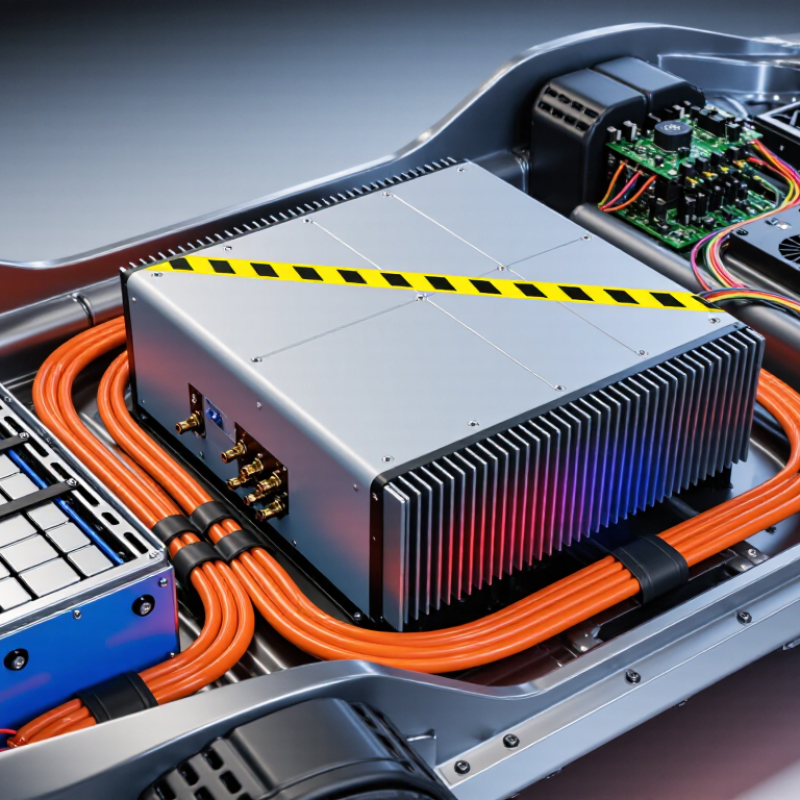
A high voltage dc dc converter is a critical power electronics device in modern electric vehicles, renewable energy systems, and industrial equipment. It converts high-voltage DC power into stable lower-voltage outputs for batteries, control units, sensors, lighting, and communication systems. A vehicle may carry a 400-volt or 800-volt battery, while many auxiliary components still require 12 or 48 volts. The converter connects these different electrical domains safely.
The market need is expanding rapidly. The International Energy Agency reported in its Global EV Outlook 2024 that global electric car sales approached 14 million in 2023, representing about 18% of new car sales. This growth increases demand for efficient and reliable power conversion. The IEA also highlighted the continuing development of higher-voltage vehicle platforms, which can reduce charging time and cable losses. However, higher voltage introduces stricter insulation, cooling, electromagnetic compatibility, and fault-protection requirements.
The U.S. Department of Energy’s Vehicle Technologies Office emphasizes that power electronics strongly influence vehicle efficiency, cost, performance, and reliability. In practical terms, a converter may operate beside a hot battery pack, switching thousands of times per second. Small losses become significant heat. Poor thermal design can shorten component life.
No converter is perfect. Engineers still balance efficiency, size, isolation, noise, and manufacturing cost. This article explains how a high voltage dc dc converter works, where it is used, and which design factors determine dependable operation. Some specifications look impressive on paper. Real-world performance can still differ.
Definition and Core Function of a High-Voltage DC-DC Converter
What Is a High Voltage DC DC Converter?
A high-voltage DC-DC converter is an electronic power circuit that changes one direct-current voltage level into another. Its input may reach hundreds of volts, while its output can be lower, higher, or electrically isolated. The term “high voltage” depends on the application and safety standard. It has no universal boundary.
Its core function is controlled energy conversion. Switching devices rapidly interrupt the input voltage, while inductors, capacitors, and transformers shape the resulting power. A control circuit adjusts switching timing to maintain a stable output. This matters when batteries, motors, sensors, or control systems require different voltage levels. Some designs provide galvanic isolation through a high-frequency transformer. Others use non-isolated boost, buck, or buck-boost structures.
In practical testing, engineers check voltage ripple, temperature rise, efficiency, and response during sudden load changes. A converter may show a clean output at light load, then behave differently near its rated current. Small layout errors can also create unwanted noise or dangerous hot spots. Protection against overvoltage, overcurrent, short circuits, and excessive temperature is therefore essential. Insulation distance and enclosure design deserve equal attention. A simple definition can still mislead. The converter is not merely a voltage-changing box; it is a coordinated power, control, thermal, and safety system.
Main Types of High-Voltage DC-DC Converters
What Is a High Voltage DC-DC Converter?
Main Types of High-Voltage DC-DC Converters
A high-voltage DC-DC converter changes one direct-current voltage into another. It manages power between batteries, inverters, fuel-cell systems, and auxiliary circuits. Typical electric vehicles use 400-volt or 800-volt battery platforms. The IEA’s Global EV Outlook 2024 reported nearly 14 million electric car sales in 2023. This growth increases demand for efficient and carefully protected conversion stages.
Non-isolated converters include buck, boost, and buck-boost designs. A buck converter reduces voltage, such as converting a 400-volt bus for control electronics. A boost converter raises voltage from a lower battery source. Buck-boost circuits handle voltage variation in both directions. They are compact and efficient, but they do not provide galvanic isolation. That limitation matters during fault conditions.
Isolated converters use a transformer between input and output. Common forms include push-pull, full-bridge, phase-shifted full-bridge, and resonant LLC converters. Full-bridge designs suit higher power levels. LLC converters can reduce switching losses near their resonant point.
Bidirectional converters transfer energy both ways, supporting battery charging and regenerative braking. The U.S. Department of Energy identifies soft-switching and high-frequency magnetics as important paths toward improved converter efficiency. Real systems still lose energy through heat, switching, and standby consumption. Designers sometimes optimize peak efficiency too heavily. That choice can weaken light-load performance.
IEC 61800-5-1 also highlights insulation, clearance, and protective requirements for power conversion equipment.
Electrical Ratings, Efficiency, and Safety Considerations
A high-voltage DC-DC converter changes one direct-current voltage into another, often within electric vehicles, battery systems, and industrial equipment. Electrical ratings define its operating limits. Check the input voltage range, output voltage, continuous current, peak current, and total power before selecting a unit. A converter rated for 800 volts may not tolerate an 800-volt source continuously. Temperature, voltage spikes, and battery charging conditions can reduce that margin. Details matter.
Efficiency affects heat, size, and operating cost. A 95% efficient, 5-kilowatt converter still releases about 250 watts as heat. That heat needs a clear path through mounting surfaces, airflow, or liquid cooling. Heat always wins. Measure efficiency across the real load range, rather than trusting one value from a datasheet. Light-load performance may be weaker. My design reviews often find that wiring losses and connectors were overlooked, making laboratory results look better than field performance.
Safety requires more than insulation. Confirm isolation voltage, creepage distance, clearance, grounding, and protection against overcurrent and short circuits. High-voltage capacitors can remain charged after power is removed, so discharge circuits and visible status indicators are important. Use interlocks, insulated probes, guarded terminals, and documented verification procedures. Never assume the enclosure alone provides protection. That assumption fails. Engineers should test abnormal conditions, including blocked cooling, sudden load changes, and incorrect polarity. Standards and local electrical rules must guide the final design, while measured test data should challenge optimistic calculations.
Common Applications Across Modern Power Systems
What Is a High Voltage DC-DC Converter?
A high voltage DC-DC converter changes one direct-current voltage level into another. It may raise voltage, reduce it, or reverse power flow. Internal switching devices operate at high frequency, while transformers and inductors control energy transfer. Isolation can also protect users and connected equipment.
The applications are expanding quickly. In solar farms, converters connect variable panel output to stable DC collection buses. They also support battery storage, where voltage changes as cells charge and discharge. IRENA’s Renewable Capacity Statistics 2024 reports 473 GW of renewable capacity added worldwide in 2023. More renewable capacity means more conversion stages between generation, storage, and consumption.
Electric vehicles use these converters between high-voltage batteries and lower-voltage auxiliary systems. Fast-charging stations also rely on controlled DC conversion. In rail systems, converters manage traction power and regenerative braking. Data centers are another growing application. The IEA’s Electricity 2024 report estimates that data-center electricity demand could more than double by 2026, reaching about 1,000 TWh globally. That growth increases pressure on efficient DC distribution.
Efficiency matters. So does heat.
In practical installations, engineers monitor switching losses, insulation stress, electromagnetic interference, and cooling performance. Bidirectional designs can improve battery utilization, but control software becomes more demanding. A converter may meet laboratory targets yet perform poorly in dust, vibration, or partial-load operation. That gap deserves more attention.
What Is a High-Voltage DC-DC Converter?
A high-voltage DC-DC converter transfers electrical energy between different direct-current voltage levels while regulating voltage, current, and power. The chart shows representative DC bus voltages commonly associated with modern power-system applications.
High-voltage converters are used in electric vehicles, renewable-energy systems, data centers, industrial equipment, and DC microgrids. Actual voltage levels vary by system design, insulation requirements, power rating, and safety standards.