
Why Choose a Combination Wrench?
A Combination Wrench brings two useful working ends into one compact tool: an open jaw for quick access and a closed ring for a firmer grip. That pairing matters when a fastener sits near a bracket, beneath a sink, or inside a crowded engine bay. One end slips on quickly. The other helps reduce the chance of rounding a nut when space allows a full fit.
Tool reviewer Roy Berendsohn is a recognized voice in practical tool testing, but I can’t verify a verbatim quotation from him on this specific topic. Rather than put invented words in his mouth, here is a practical principle: “Choose the wrench that fits the fastener fully and gives your hand a controlled path.” It is simple advice. Yet it catches a common mistake: reaching for a convenient tool before checking the fit.
This guide examines where a Combination Wrench earns its place, how its size and finish affect everyday use, and what to inspect before buying. A polished surface may wipe clean faster, while a longer handle can add leverage; neither feature guarantees a better choice for every job. The honest answer depends on access, fastener size, and how often the wrench will be used. Even experienced users misjudge tight clearances sometimes. A careful fit check is still worth the pause.
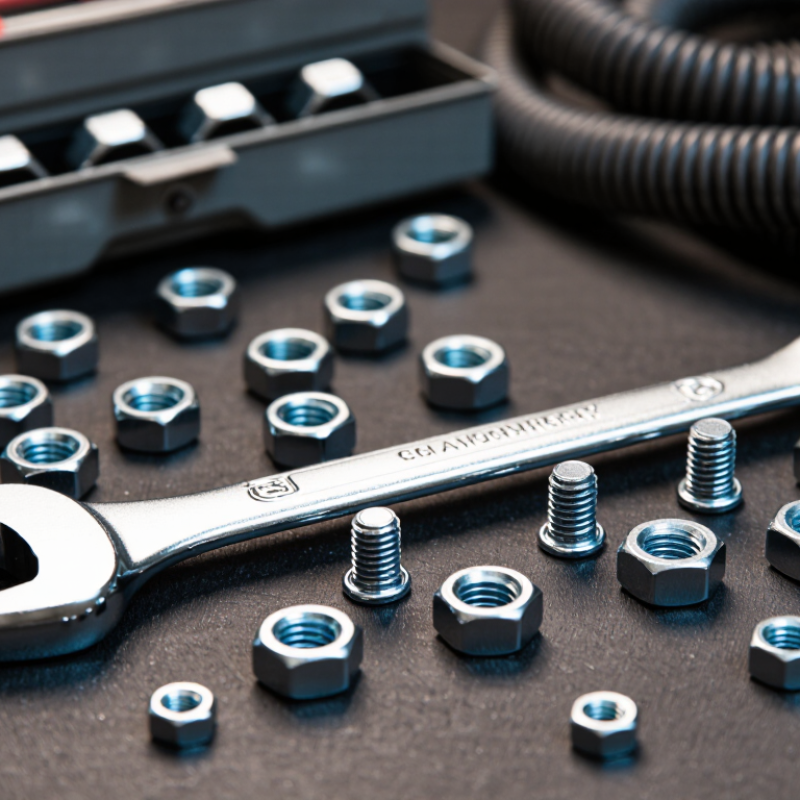
What Is a Combination Wrench?
A combination wrench is a hand tool with two working ends. One end has open jaws; the other is a closed ring. Both ends usually fit the same fastener size. The ring surrounds a nut or bolt head, helping maintain contact with its flat sides. Many rings have six or twelve contact points, while the open jaw lets you approach from the side. That difference matters.
The open end is handy when a bolt is partly blocked or you need to reposition the tool quickly. The ring end is often a better choice when you need a steadier grip. Check the size marking and seat the wrench fully before turning; a loose fit can round a fastener. A slightly worn nut may still slip, even when the tool seems properly seated. That can be frustrating.
For routine repairs, choose a wrench that fits snugly and keep your hand clear of nearby edges. Pulling with controlled pressure is often easier to manage than a sudden jerk. Avoid adding a pipe for extra leverage, since it can overload the tool or fastener. A combination wrench is useful, but it cannot reach every tight space or rescue every damaged bolt.
Why Choose a Combination Wrench? - What Is a Combination Wrench?
| Topic | Details | Why It Matters |
|---|---|---|
| What it is | A fixed-size hand tool with an open-end jaw on one side and a closed box end on the other. Both ends are generally made for the same fastener size. | Combines two useful ways to turn a compatible nut or bolt in one tool. |
| Open end | The open jaw engages the fastener from the side. It is useful when a wrench cannot be slid over the end of a fastener or when access is limited. | Allows quick placement and repositioning, though it contacts fewer sides of the fastener than a box end. |
| Box end | The closed end fits over the fastener and commonly has a 6-point or 12-point profile. A 6-point profile contacts the flats of a compatible hex fastener; a 12-point profile offers more starting positions. | Provides a more enclosing grip than an open end when there is enough clearance to place it over the fastener. |
| Size systems | Wrenches are commonly sized in metric units (millimeters) or SAE inch fractions. The stated size refers to the fastener size the wrench is designed to fit. | Using the correct system and size helps reduce poor fit and the risk of damaging fastener corners. |
| Fixed vs. adjustable | A combination wrench fits one specified size and does not adjust. An adjustable wrench has a movable jaw intended to fit a range of sizes. | A fixed-size fit can be convenient for repeated work on fasteners of a known size; an adjustable wrench offers more size flexibility. |
| Common construction | Many combination wrenches are made from alloy steel and may have a plated or polished surface. Materials and finishes vary by tool. | A suitable finish can help resist corrosion, but tools should still be kept clean and dry. |
| Best suited for | General fastening and loosening tasks where the fastener size is known and both open-end and box-end access may be useful. | A practical choice for a tool kit because one wrench provides two engagement styles for the same size. |
| Use and safety | Select a wrench that fits fully, pull in a controlled direction, and avoid extending the handle with a pipe. Use a torque wrench when a specified tightening torque is required. | Correct use helps protect the tool, fastener, and user from avoidable damage or injury. |

How Do Its Open-End and Box-End Features Work?
Why Choose a Combination Wrench?
How Do Its Open-End and Box-End Features Work?
A combination wrench places two different working ends on one handle, usually sized for the same fastener. The open end has a U-shaped jaw that slips onto a nut from the side. This helps when a bolt or nearby part blocks access from above. The box end forms a closed ring around the fastener. Its inner faces engage the nut’s flats, helping distribute force more evenly than an open jaw. Many box ends have six or twelve points; six-point designs generally grip intact hex fasteners securely, while twelve-point designs offer more positions for fitting in tight spaces.
In use, the open end is handy for quick turns, but it can slip if the wrench sits crooked or the fastener is worn. The box end is often a better choice when you need a firm grip, especially to loosen a stubborn nut. Check that the wrench size matches the fastener exactly. A nearly fitting wrench can round the corners. Access still matters, though; a combination wrench cannot make an awkward angle disappear.
Tips: Seat the box end fully before applying steady pressure. Keep the wrench aligned with the fastener, and stop if it starts to rock or slip. A little patience beats forcing it.
What Advantages Does a Combination Wrench Offer?
Why Choose a Combination Wrench?
A combination wrench offers two useful working ends in one compact tool. Its closed box end grips a fastener across multiple flats, helping distribute force and reduce the chance of rounding a correctly sized nut. The open end slips onto a fastener from the side, which is handy when a bolt is obstructed or the wrench cannot pass over it. In a cramped engine bay, that small difference can save repeated repositioning. Less clutter, more reach.
The two ends also support a practical workflow: loosen with the open end, then use the box end where access allows. For dependable results, match the wrench size to the fastener and pull steadily rather than jerking. A loose fit can still slip; the tool is not magic.
The U.S. Bureau of Labor Statistics reported about 2.6 million nonfatal workplace injury and illness cases in private industry in 2023. That figure is not specific to wrench use, but it reinforces the value of controlled work and suitable tools.
A combination wrench is versatile, though it may not fit every angle or fastener. For stubborn bolts, a different tool may be the better choice.
Where Is a Combination Wrench Commonly Used?
Combination wrenches are common in automotive repair, where nuts and bolts sit at different angles around engines, battery trays, and suspension parts. The open end slips onto a fastener quickly, while the closed end can grip it more securely when space allows. In a cramped engine bay, that small difference saves repeated repositioning. Not everywhere.
They are also useful for assembling machinery, maintaining workshop equipment, and tightening accessible fasteners on bicycles or household fixtures. A mechanic may use one to hold a nut while another tool turns the bolt. In a workshop, keeping several metric or imperial sizes nearby helps prevent rounding from a poor fit. Match the wrench closely to the fastener.
A combination wrench is less suitable when a fastener needs a precise torque setting or is badly rusted. Use the specified tool for critical assemblies, and avoid forcing a wrench that rocks on the nut. I still think of it as a dependable everyday tool, not a universal answer. That distinction matters.
How Do You Choose the Right Combination Wrench?
Choosing the right combination wrench starts with the fastener, not the tool rack. Match the wrench to the bolt’s measurement system: metric and inch sizes can look close but still slip. The wrench should sit fully and snugly on the flats. Fit matters most.
Consider the ring end’s shape. A six-point opening usually grips hex fasteners securely, while a twelve-point opening can engage them at more angles in cramped spaces. The open end is handy for quick placement, but it can round a worn nut if the wrench sits crooked. Check nearby hoses or panels before choosing a longer handle. Extra leverage helps, but the wrench still needs room to move. Small details count.
Choose length for access and control, not just reach. Use a correctly sized wrench with steady pressure; don’t add a pipe or strike it unless the tool is designed for that use. Inspect the jaws and ring for cracks, spreading, or rounded edges. Chrome-vanadium steel is common, but the material label alone does not guarantee quality. Clear size markings and a smooth finish make daily use easier. If you use both measurement systems, keep the sizes separated to avoid mix-ups. I would still test the fit before applying force; a near-match can feel convincing, then slip.
Why Choose a Combination Wrench?
Choose a wrench that fits the fastener precisely. This chart converts common metric wrench sizes to inches to help compare measurements when selecting the right tool.
Tip: Inch values are mathematical conversions rounded to three decimal places—not a recommendation to substitute a nearby inch-size wrench. Use the exact wrench size that fits the fastener snugly.
Article Source:
At Premium PSU, we are specialists in designing and manufacturing power conversion systems for the industrial market. Our product range includes high reliability power supplies from 50W to 72kW.
PREMIUM PSU
C/ Dolors Aleu, 19-21, 2nd Floor
08908 – Hospitalet de Llobregat
Barcelona-SPAIN
t.+34 93 223 26 85