Why Choose a VCB Circuit Breaker for Your Project?
Choosing a Vcb Circuit Breaker is a project decision, not merely a catalogue choice. Vacuum interrupters extinguish arcs inside sealed chambers, helping reduce routine maintenance and equipment footprint. That can matter in a compact indoor substation, where service access and floor space are limited. But the right selection still depends on the actual system.
Dr. R. P. P. Smeets is a recognized researcher in circuit-breaker technology. A practical paraphrase of the system-duty approach reflected in his work is: “Choose the breaker for the fault duty, not the brochure.” Treat that as an engineering reminder, not a verified verbatim quotation. Check rated voltage, short-circuit breaking capacity, operating sequence, insulation level, and coordination with upstream protection. Then compare the manufacturer’s test evidence with the project specification.
Details matter. A breaker that suits one switchboard may not suit another. Ambient temperature, installation altitude, switching frequency, and control-supply conditions can change the evaluation. Ask how the breaker performs under the project’s real operating conditions. Review maintenance access and spare-parts support, too.
No breaker is perfect. Vacuum technology can be a strong fit, but assumptions deserve a second look. A rushed specification may overlook a site constraint. That is worth admitting. A careful review helps engineers decide whether a Vcb Circuit Breaker offers the right balance of safety, reliability, and lifecycle cost for their project.
What a Vacuum Circuit Breaker Is and How It Works
Why Choose a VCB Circuit Breaker for Your Project?
What a Vacuum Circuit Breaker Is and How It Works
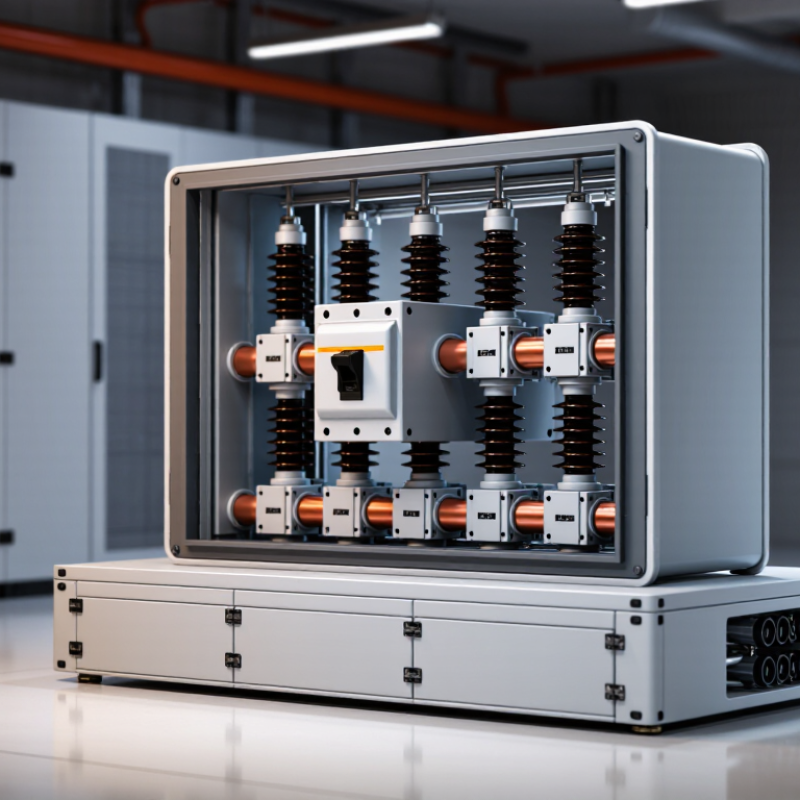
A vacuum circuit breaker, or VCB, opens electrical contacts inside a sealed vacuum interrupter. When a fault occurs, a protection relay signals the operating mechanism to separate the contacts. A brief arc forms as metal vapor leaves their surfaces. This is normal. In an alternating-current system, the arc usually extinguishes at the next natural current zero. The vapor then condenses, and the contact gap quickly regains its insulating strength. No long plume of hot gas is released inside the interrupter.
The sealed chamber helps limit contact oxidation and reduces some routine maintenance needs. During an inspection, technicians still check the mechanism, connections, and operating timing; a vacuum interrupter is not a maintenance-free device. VCBs are commonly used in medium-voltage installations, such as substations and industrial switchgear. Their suitability depends on rated voltage, fault current, switching duty, and the surrounding equipment. That detail matters. A breaker that fits the voltage rating may still be unsuitable for frequent switching or a particular fault level. Selection should be checked against system studies and the manufacturer’s technical data, not appearance alone. Even a compact unit deserves careful review.
How VCBs Interrupt Fault Currents
Why Choose a VCB Circuit Breaker for Your Project?
A vacuum circuit breaker interrupts fault current inside a sealed vacuum interrupter. When its contacts separate, an electrical arc forms between them. The arc briefly contains metal vapor released from the contact surfaces. In alternating-current systems, the arc extinguishes at the next natural current zero. The vapor then condenses, allowing the gap to regain insulating strength quickly. This helps prevent the arc from striking again. No breaker is magic. Its performance depends on correct ratings and protection settings.
A VCB can be a practical choice for many medium-voltage applications, especially where frequent operation and compact equipment matter. Still, choosing one from voltage alone is a mistake. The available fault current, switching duty, operating conditions, and coordination with protective relays all matter. A site assessment can reveal details that a specification sheet misses, such as dust, temperature, or limited access for maintenance. I would recheck those assumptions before final selection.
Tips: Confirm the system voltage and expected fault current with qualified electrical professionals. Check the interrupter’s rated breaking capacity and the relay’s trip settings together. Keep the manufacturer’s operating and maintenance instructions available for inspections. A small mismatch can matter.
Key Advantages of VCBs in Electrical Systems
A vacuum circuit breaker earns its place through the way it interrupts current. When its contacts separate, an arc forms inside a sealed vacuum interrupter and is quickly extinguished. This helps the contacts recover their insulating strength. In medium-voltage systems, that can mean dependable switching in a compact assembly. Less equipment space is needed. That matters in crowded switch rooms.
VCBs also avoid the insulating oil used in some older breaker designs, reducing oil-related spill and fire concerns. Their sealed interrupters generally need less routine attention, while contact wear depends on switching frequency and fault duty. It is tempting to call them maintenance-free, but that is not quite right. Operators still need to inspect mechanisms, test controls, and follow the equipment’s rated service intervals. A practical detail can be overlooked: the breaker must match the system voltage, fault level, and protection settings. Vacuum interruption is useful, not magic. Careful selection and periodic checks help keep its advantages real over the life of the installation.
Why Choose a VCB Circuit Breaker for Your Project?
A vacuum interrupter uses no greenhouse-gas insulating medium to extinguish the arc. This chart compares the direct 100-year global warming potential (GWP100) of vacuum and SF₆ as interruption media.
Vacuum’s value represents the absence of a greenhouse-gas interruption medium; it is not a lifecycle emissions figure for a complete breaker. SF₆ GWP100: 25,200 kg CO₂e/kg (IPCC Sixth Assessment Report, 100-year time horizon).
Where VCBs Fit in Different Project Applications
Where VCBs Fit in Different Project Applications
VCB circuit breakers are a practical choice for medium-voltage distribution in factories, commercial campuses, substations, and renewable energy projects. They can protect transformer feeders, motor circuits, and bus sections, where reliable fault interruption and frequent switching matter. Their compact interrupter design can also help when switchroom space is limited. That matters.
Data centers are another growing application. The IEA’s Electricity 2024 report estimates that data centers used about 460 TWh globally in 2022, with consumption potentially exceeding 1,000 TWh by 2026. For projects with dense electrical loads, VCBs can support sectionalized distribution, letting operators isolate a faulted feeder while keeping other sections energized. The IEA’s Renewables 2024 report forecasts nearly 5,500 GW of new renewable capacity worldwide from 2024 to 2030. Wind and solar projects often need medium-voltage collection networks, where breakers protect feeders and switching points.
The fit is not automatic. Engineers should check system voltage, prospective fault current, switching duty, relay coordination, and maintenance access before specifying a VCB. A breaker may meet its interrupting rating yet still be poorly matched to the project’s operating pattern. That detail is easy to miss. A dusty plant room or frequent motor starts can change maintenance needs, so site conditions deserve a careful review.
Factors to Consider When Selecting a VCB
Why Choose a VCB Circuit Breaker for Your Project?
Factors to Consider When Selecting a VCB
A vacuum circuit breaker (VCB) can suit medium-voltage systems where compact equipment and reliable interruption matter. Selection begins with the system’s rated voltage, continuous current, and required short-circuit breaking capacity. The IEA’s 2023 report, Electricity Grids and Secure Energy Transitions, says more than 80 million kilometres of grids need to be added or refurbished by 2040. That expansion makes careful equipment planning important, but it does not replace site-specific engineering.
Check the fault level at the installation point, not just the switchgear’s headline rating. Confirm operating sequence, switching frequency, protection coordination, and compatibility with control power and existing panels. Temperature, altitude, dust, and humidity can affect equipment performance. Also assess available space, maintenance access, spare-part availability, and the consequences of downtime. A rating sheet may look complete while overlooking an awkward cable entry or a control-voltage mismatch. Small details matter.
Tips: Compare test certificates and rated values against the project’s actual design conditions. Ask the supplier to clarify any rating that depends on specific installation assumptions. Record those assumptions; they are easy to miss later. A qualified electrical engineer should verify the selection before procurement.