Top Buck Converter Manufacturers in China?

A buck converter is a switching power supply that reduces voltage while helping maintain efficient, stable output. It sits inside everyday equipment, from network switches and industrial controllers to vehicle electronics. Small component, serious job. Buyers comparing Chinese manufacturers should look beyond price and headline efficiency. They need to check input and output ranges, rated current, thermal limits, protection features, and test conditions.

The wider semiconductor market offers useful context, though it does not measure buck converters alone. In its November 2024 forecast, the World Semiconductor Trade Statistics (WSTS) organization projected global semiconductor sales of about $626 billion for 2024, a 19% increase year over year. This growth reflects demand across many chip categories, not a guaranteed increase in power-conversion products. That distinction matters. Broad market figures can frame the search, but they cannot verify one supplier’s design quality or production consistency.

This guide examines leading buck converter manufacturers in China through practical evaluation criteria: product documentation, application experience, manufacturing capabilities, quality controls, and technical support. Look for published datasheets, clear derating curves, and credible reliability information. Ask how samples are tested, too. A polished catalogue is not proof. Supplier rankings can change with product needs, and public information is sometimes incomplete. Treat any shortlist as a starting point, then confirm specifications and sample performance directly with the manufacturer.
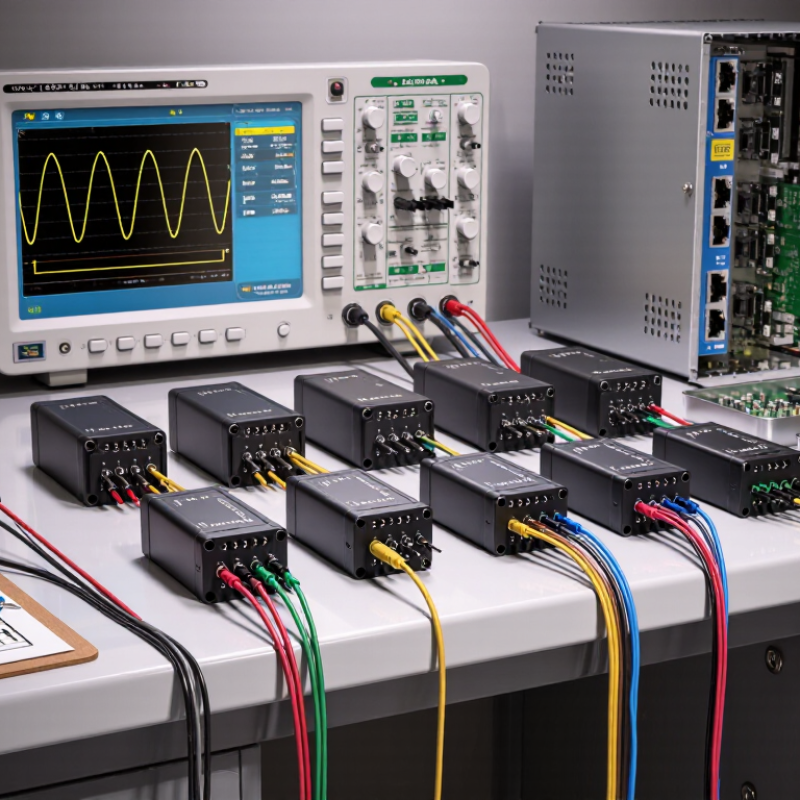
Top Buck Converter Manufacturers in China?

Understanding Buck Converters and China's Manufacturing Landscape

A buck converter steps down direct-current voltage by switching energy through an inductor and capacitor. The control circuit adjusts switching to keep the output near its target. Engineers check efficiency, output ripple, load response, and heat under real operating conditions. A compact board can still run hot. Tiny layout mistakes matter.

China’s manufacturing landscape includes component suppliers, circuit-board assemblers, and engineering teams that may support custom designs. Their capabilities differ, even when product descriptions sound similar. A datasheet cannot show every production detail. Ask how samples are tested, what input and load ranges are covered, and whether thermal performance is measured. One useful check is comparing sample results with the stated specifications.

Tip: Share your voltage range, output current, board space, and cooling limits before requesting a quote. Request test records for efficiency, ripple, and temperature. Then inspect a sample in your own setup; a neat specification sheet is helpful, but it is not the whole story.

Key Criteria for Evaluating Chinese Buck Converter Manufacturers

When comparing buck converter manufacturers in China, look beyond headline efficiency figures. Ask for datasheets that show input range, output accuracy, ripple, and efficiency at several loads. A converter used near its maximum current may behave differently from one tested at room temperature and light load. Request test conditions and sample reports. Check whether the manufacturer can explain component selection, thermal limits, and protection behavior in plain technical terms. Clear answers matter.

Tips: Test samples with your actual input voltage and load. Measure output ripple and case temperature after steady operation. Keep the test setup consistent. Small details can change results.

Review production controls, not just prototype performance. Ask how incoming components are checked, how revisions are tracked, and whether each production lot receives documented electrical tests. For a compact board, inspect solder quality and component placement under magnification; request photos or a factory audit when practical. Confirm that support engineers can help investigate failures, rather than only forwarding sales documents. No checklist is perfect, and supplier claims still need verification. I would also compare lead-time consistency, since a technically strong sample is less useful if later batches differ. Share expected operating conditions early, including ambient temperature and ventilation, so the proposed design can be assessed realistically.

Leading Buck Converter Manufacturers in China

China’s leading buck converter manufacturers serve automotive, industrial, telecom, and consumer electronics markets. Their capabilities vary: some supply converter ICs, while others deliver complete power modules. Buyers should compare the actual product class, not just headline efficiency. Details matter.

Demand indicators are strong, though they do not prove any supplier’s quality. The IEA’s Global EV Outlook 2024 reports that China accounted for more than 60% of global electric car sales in 2023. The China Association of Automobile Manufacturers reported 12.866 million new-energy vehicle sales in China in 2024, representing 40.9% of domestic vehicle sales. These figures point to a growing need for compact, thermally robust power conversion in vehicle systems.

When assessing suppliers, request efficiency curves across load levels, thermal test conditions, protection behavior, and electromagnetic-interference data. Check whether specifications cover the intended input voltage, output current, and ambient temperature. Ask for traceable test reports and sample boards; inspect heat around inductors and switching components under sustained load. A polished datasheet is useful, but it cannot reveal every layout weakness. I would still question claims that omit test conditions. A careful comparison takes longer, and that is not a flaw.

Comparing Product Range, Technical Capabilities, and Certifications

Comparing buck converter manufacturers in China starts with the application, not the catalog. Check whether a supplier offers fixed-output modules, adjustable converters, and options for different input voltages and current levels. A design for a compact sensor may need low standby current, while an industrial controller may need stable output during load changes. Look for published efficiency curves, ripple measurements, and thermal derating data. These details reveal more than a headline efficiency figure.

Technical capability also shows in testing and documentation. Ask how the converter performs during startup, transient loads, and operation near its rated temperature. Request test reports for the exact model, not a similar product. Ask for evidence. Component traceability and clear revision control can make later production changes easier to manage. Still, a polished datasheet does not guarantee consistent results across every batch. That deserves a closer look.

Certifications should match the product and its intended market. Check whether quality-system certification applies to the manufacturing site, and whether safety or environmental documents cover the specific model. Standards such as IEC 62368-1 may be relevant in some applications, but applicability depends on the end product. Review certificate scope, dates, and test conditions. A supplier with a wide range may still have limited documentation for one particular converter. That gap is easy to miss.

Top Buck Converter Manufacturers in China? - Comparing Product Range, Technical Capabilities, and Certifications

This is a brand-neutral evaluation framework, not a verified company ranking. It compares product and supplier capabilities buyers can check; no company-specific ratings or certifications are implied. Standards and qualifications apply to particular organizations, products, or markets and should be verified for the exact part number.

Comparison Dimension Basic Portfolio Broad Portfolio Specialized or High-Reliability Portfolio Evidence to Verify
Product range Typically centered on standard, non-isolated step-down regulators for common power-conversion needs. May include synchronous and asynchronous buck regulators, controller ICs, integrated power modules, and multiple package options. May include parts designed for specific environments or applications, such as automotive, industrial, or high-temperature use. Current product catalog, datasheets, lifecycle status, and ordering codes.
Input and output coverage Check the input-voltage range, adjustable or fixed output options, and supported operating conditions for each device. Compare the number of voltage options and whether the portfolio covers the intended supply rails and load conditions. Confirm ratings across the full operating-temperature and transient conditions required by the end application. Electrical characteristics and recommended operating conditions in the datasheet; do not rely on absolute-maximum ratings for normal operation.
Current and power capability Output-current capability is device- and board-dependent; thermal conditions can limit usable output below a headline rating. A wider selection may offer different current ratings, switching frequencies, and integrated or external power-switch options. For demanding designs, confirm derating, overload behavior, current limiting, and performance at worst-case ambient temperature. Datasheet load curves, thermal data, evaluation-board results, and written application guidance.
Efficiency and switching performance Efficiency varies with input voltage, output voltage, load, switching frequency, and component selection. Portfolio options may trade off efficiency, size, transient response, and electromagnetic emissions. Application-specific validation may be needed for thermal limits, conducted or radiated emissions, and transient requirements. Efficiency curves and test conditions, switching-frequency range, reference layout, and EMC test reports where applicable.
Protection and control features Check for features such as undervoltage lockout, overcurrent protection, thermal shutdown, and soft start. Some devices may add features such as power-good indication, synchronization, tracking, or selectable operating modes. Confirm fault response, restart behavior, diagnostics, and functional-safety documentation if required by the system design. Datasheet feature list, fault-condition specifications, and safety documentation for the specific device.
Packages and integration Common options include surface-mount regulator ICs; external inductors and capacitors are usually part of the design. May include multiple package footprints, integrated-switch devices, or power modules with selected power components integrated. Verify package thermal limits, assembly requirements, moisture sensitivity, and long-term availability for the target product. Package drawings, assembly notes, MSL information, and product-change or end-of-life policies.
Automotive qualification Do not assume a general-purpose part is qualified for automotive use. Check whether the exact device is listed as AEC-Q100 qualified and review its specified temperature grade. AEC-Q100 is a component stress-test qualification; it is not, by itself, a certification of the complete vehicle system. Exact-part qualification statement, applicable revision or grade, and supporting reliability documentation.
Quality management Request the supplier’s current quality-system certificate and confirm its scope and issuing body. ISO 9001 specifies requirements for a quality management system; certification applies to the certified organization and scope. IATF 16949 is an automotive quality-management-system standard. Confirm the certificate covers the relevant manufacturing site and activities. Current certificates, site names and addresses, scope, validity dates, and certificate verification details.
Environmental and substance compliance Request product-specific material declarations rather than relying only on a general company statement. RoHS restricts certain hazardous substances in covered electrical and electronic equipment; REACH obligations depend on the substance and supply-chain role. Compliance documentation should identify the exact product, applicable requirements, and any exemptions or declared substances. Product declarations, material data, and the applicable regulatory version or market scope.
Product safety standards Determine whether a safety standard applies to the end equipment; a buck converter IC is not automatically certified by meeting an equipment standard. IEC 62368-1 applies to safety of audio/video, information, and communication technology equipment, subject to product scope and market adoption. For regulated equipment, verify the end-product evaluation and any component approvals required by the applicable certification scheme. Relevant test reports or certificates for the finished equipment and confirmation of the standard edition required in the target market.
Design-in and supply support Check availability of accurate datasheets, reference circuits, and sample ordering. Look for simulation models, evaluation boards, layout guidance, and documented technical-support channels. For production programs, review traceability, change-notification practices, capacity planning, and continuity commitments. Published design resources, support response process, traceability policy, and written supply or change-control terms.

How to Choose a Manufacturer for Your Application

Choosing a Chinese buck converter manufacturer starts with your load profile, not the catalogue headline. Record input voltage range, output current, startup behavior, ripple limits, and ambient temperature. Then compare efficiency across the actual load range; peak efficiency alone can mislead. Grand View Research’s 2024 power-electronics market report estimated the global market at about USD 49.8 billion in 2023. That growth makes supplier choice more important, but market size does not prove product quality. Ask for test conditions, component tolerances, thermal derating curves, and traceable production records.

Request samples and test them on your own board. Check output stability during load steps, startup, and low-input operation. For compact designs, inspect the inductor and switching-node layout closely; a small placement change can increase noise or heat. Ask how the factory handles incoming inspection, soldering controls, and lot-to-lot verification. A tidy datasheet can still hide gaps. I would not treat it as a substitute for measurements.

Tips: Send each candidate the same written specification and test plan. Compare response time, engineering support, sample consistency, and lead-time commitments—not just unit price. Check whether protection features, such as overcurrent and thermal shutdown, are documented and verified. One detail is easy to miss: confirm the stated efficiency at your expected load, not only at a convenient test point.