Top China AC to DC Converter Manufacturers for Global Buyers
Choosing an ac to dc converter from China requires more than comparing prices or browsing polished product pages. Global buyers need stable output, verified efficiency, dependable insulation, and clear technical documentation. A converter may look excellent on paper. Real performance appears under heat, vibration, voltage fluctuation, and continuous load.
Dr. Alex Lidow, a respected power-electronics specialist, has described power electronics as “the enabling technology for energy efficiency.” His observation matters here. A capable ac to dc converter can reduce energy waste, control operating temperature, and support longer equipment life. These benefits become visible in practical settings, such as a factory cabinet running for sixteen hours, or a compact medical device operating beside sensitive instruments.
This guide examines leading Chinese manufacturers serving international customers. It considers product range, engineering experience, safety testing, customization, production capacity, and after-sales support. Certifications such as CE, UL, CB, or IEC-based test reports can strengthen confidence, but documents alone are not enough. Buyers should also request sample testing, thermal data, waveform measurements, and traceable quality records.
No supplier is perfect. Some manufacturers communicate clearly but offer limited customization. Others provide impressive specifications yet explain failures poorly. That gap deserves attention. A reliable evaluation should connect datasheet claims with observed results, delivery consistency, and responsive technical support. The manufacturers discussed here represent useful options, but buyers must still match each ac to dc converter with the application, environment, and compliance requirements. Careful verification remains essential.
What AC to DC Converters Are and Why Chinese Manufacturers Matter
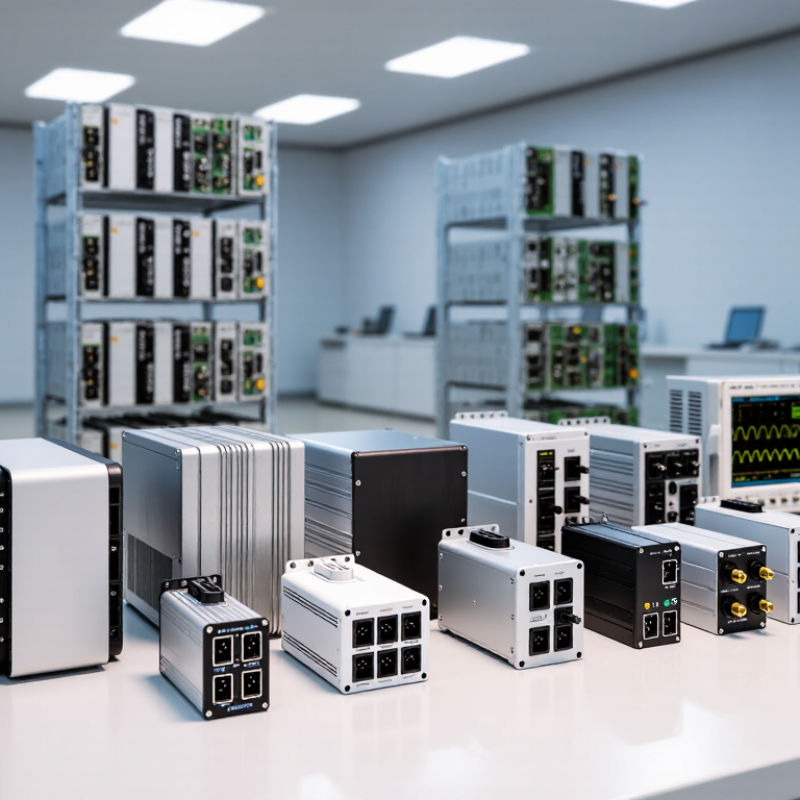
An AC to DC converter changes alternating current from a wall outlet into stable direct current. This process powers routers, medical devices, industrial controls, and charging equipment. Inside, transformers, rectifiers, capacitors, and control circuits regulate voltage and reduce electrical noise. Small details matter.
Grand View Research projects the global power supply market to expand at roughly 6% annually through 2030. The U.S. Department of Energy also continues tightening efficiency requirements for external power supplies. These trends push buyers toward cooler, smaller, and more efficient converters.
Market estimates differ by definition, however. That limitation deserves attention.
Chinese manufacturers matter because China combines component access, engineering labor, tooling, and high-volume assembly within dense industrial networks. This structure can shorten development cycles and support customized voltage, connector, enclosure, and protection requirements. Experienced suppliers can provide thermal testing, insulation checks, EMC reports, and production traceability. Buyers should still verify these records independently. A catalogue is not evidence.
The International Electrotechnical Commission’s safety framework, including IEC 62368-1, influences many converter evaluations. Reliable factories design around creepage distance, overload protection, short-circuit response, and operating temperature. Global buyers should request test reports, sample units, factory audit records, and certificates matching the final model. Low prices can hide weak validation. That risk is real.
Key Standards for Evaluating China-Based Converter Manufacturers
When evaluating China-based AC to DC converter manufacturers, buyers should look beyond price and catalog specifications. A dependable supplier should provide clear input, output, efficiency, temperature, and protection data. Ask for test reports covering short-circuit, overload, insulation, and thermal performance. Reports should identify test methods, equipment, and dates.
Factory capability also matters. Review production-line controls, component traceability, incoming inspection, and final testing records. A serious manufacturer can explain how failed units are isolated and corrected. Relevant safety certifications should match the destination market and the exact converter model. Do not accept a certificate for a similar-looking product. An independent laboratory review may be worth the extra cost.
Tips: Request three samples from different production batches. Measure output stability after cold start, continuous operation, and load changes. Check the enclosure temperature with a simple thermal device. Ask for a written warranty, change-notification process, and replacement timeline. Keep every revision in writing.
Communication reveals technical maturity. Engineers should answer directly, not hide behind sales language. Production capacity, minimum order quantities, lead times, and export documents should be consistent. A polished audit file is not proof of stable manufacturing. This is easy to forget. Buyers should also inspect packaging, labeling, and connector quality, because small omissions can create costly field problems. A trial order remains useful, even when the factory looks highly qualified.
Leading China AC to DC Converter Manufacturers for Global Buyers
Top China AC to DC Converter Manufacturers for Global Buyers
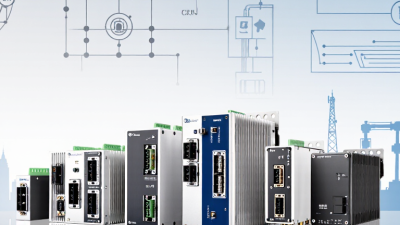
Leading China AC to DC converter manufacturers serve global buyers through broad product ranges, flexible production, and export-oriented engineering. Their factories commonly build enclosed, open-frame, desktop, and DIN-rail units for industrial controls, lighting, appliances, and telecom equipment. A capable supplier should explain input range, output regulation, isolation distance, efficiency, ripple, and operating temperature in clear technical documents. Numbers matter more than polished photographs.
Experienced buyers usually request samples from the same production line planned for volume orders. They inspect solder quality, terminal markings, insulation materials, and thermal behavior under continuous load. Factory audits can reveal calibration records, component traceability, burn-in procedures, and corrective-action habits. Ask for test reports from recognized laboratories, while checking whether each report matches the exact model. Certification logos alone are not enough.
China manufacturers can support custom connectors, cable lengths, output voltages, labels, and packaging. This flexibility helps when equipment has limited cabinet space or unusual installation requirements. Still, customization may increase tooling time and minimum order quantities. Communication is not always perfect. Clarify tolerances, warranty handling, shipping terms, and after-sales response before payment. Small pilot orders often expose weaknesses earlier than ambitious forecasts.
Product Types, Customization Options, and Technical Capabilities
Top China AC to DC Converter Manufacturers for Global Buyers
Chinese AC to DC converter manufacturers offer several product types for different power requirements. Common options include enclosed supplies, open-frame modules, DIN-rail units, desktop adapters, and compact board-level converters. Buyers can select single-output or multi-output designs, depending on system architecture. Typical input ranges cover 85–264 VAC, while output options may include 5 V, 12 V, 24 V, or higher industrial voltages.
Customization often goes beyond printed labels. Engineers can adjust output voltage, connector placement, cable length, cooling methods, and enclosure dimensions. For a control cabinet, a DIN-rail converter may save installation time. For medical or communication equipment, low leakage current and reinforced insulation deserve closer attention. The enclosure matters. It should resist dust, vibration, and heat during actual operation.
Technical capability is best judged through test evidence. Reliable suppliers should explain efficiency curves, ripple measurements, overload protection, short-circuit response, and thermal derating. Ask for samples tested at low and high input voltages. Review schematic control, burn-in procedures, and traceable inspection records. Safety and electromagnetic compatibility testing should match the destination market. Certification alone is not enough. A recurring mistake is trusting a datasheet without checking performance at 45°C or higher. I have seen compact units pass room-temperature tests but lose output stability inside sealed cabinets. Thermal design still needs careful review.
Top China AC to DC Converter Manufacturers for Global Buyers - Product Types, Customization Options, and Technical Capabilities
Representative product and engineering capabilities commonly available from qualified Chinese AC to DC power supply manufacturers
| Product Type | Typical Input Range | Typical Output Range | Power Range | Common Form Factor | Customization Options | Technical Capabilities | Typical Certifications and Compliance | Common Applications |
|---|---|---|---|---|---|---|---|---|
| Enclosed Switching Power Supply | 90–264 VAC, 47–63 Hz | 5–48 VDC; single or multiple outputs | 15–1,000 W | Perforated metal enclosure with screw terminals and integrated fan or convection cooling | Output voltage Terminal layout Cable length Cooling method | Short-circuit, over-current, over-voltage, and over-temperature protection; typical efficiency of 80–92% | CE, RoHS, EMC testing; UL or CB documentation may be available for selected models | Industrial controls, LED systems, security equipment, automation panels, and instrumentation |
| Open-Frame AC to DC Supply | 85–264 VAC, 47–63 Hz | 5–48 VDC | 15–300 W | Compact PCB assembly designed for integration inside customer equipment | PCB dimensions Mounting holes Connector type Output tolerance | Low-profile design, reinforced insulation options, remote sensing on selected designs, and controlled inrush current | CE, RoHS, EMC and LVD-related documentation; medical versions require additional evaluation | POS terminals, appliances, telecom equipment, displays, measurement devices, and embedded systems |
| DIN-Rail Power Supply | 85–264 VAC or 120–370 VDC, depending on model | 12, 24, or 48 VDC | 15–480 W | DIN 35 mm rail-mount housing | Housing width Output current Alarm contact Redundant input | High-temperature operation, DC OK relay, parallel or redundant operation on selected units, and convection cooling | CE, RoHS, EMC; IEC 62368-1 or relevant industrial safety standards may apply by model | Factory automation, building management, control cabinets, transportation systems, and process monitoring |
| Medical-Grade AC to DC Supply | 85–264 VAC, 47–63 Hz | 5–48 VDC, single output or multi-output | 30–550 W | Enclosed, open-frame, or external adapter formats | Low leakage current Isolation level Custom connectors Fanless design | 2 x MOPP options on qualified designs, low touch current, reinforced isolation, and controlled electromagnetic emissions | IEC 60601-1 evaluation, applicable EMC requirements, RoHS, and regional market documentation | Patient monitors, diagnostic equipment, laboratory instruments, dental equipment, and home healthcare devices |
| External AC/DC Adapter | 100–240 VAC, 50–60 Hz | 5–48 VDC | 5–300 W | Desktop or wall-plug enclosure with DC cable | AC plug type DC connector Cable gauge Label artwork | No-load energy optimization, interchangeable plugs, short-circuit protection, and stable regulation under dynamic loads | CE, FCC, UKCA, RoHS; country-specific safety approvals depend on the target market and rated power | Networking devices, consumer electronics, office equipment, smart-home products, and portable instruments |
| LED Constant-Voltage Driver | 90–305 VAC, 47–63 Hz | 12, 24, or 48 VDC | 30–600 W | Indoor enclosed, outdoor IP-rated, or slim linear housing | Dimming interface IP rating Output voltage Cable assembly | Constant-voltage regulation, power-factor correction on selected models, surge protection, and PWM or 0–10 V dimming options | CE, RoHS, EMC; IP65 or higher enclosure protection may be offered for outdoor versions | Commercial lighting, architectural lighting, signage, display cabinets, and industrial illumination |
| LED Constant-Current Driver | 90–305 VAC, 47–63 Hz | Output current typically 350 mA–2,000 mA | 20–300 W | Compact enclosed or linear driver housing | Current setting Dimming control Output leads Thermal design | Constant-current regulation, open-load protection, thermal foldback, power-factor correction, and programmable output options on selected models | CE, RoHS, EMC; lighting safety and performance testing depends on the final product design | LED modules, street lighting, high-bay fixtures, tunnel lighting, and industrial luminaires |
| High-Power Industrial AC/DC Converter | 180–528 VAC, single-phase or three-phase depending on design | 24–400 VDC | 600 W–10 kW or higher | Rack-mount, cabinet-mount, modular, or forced-air cooled enclosure | Output voltage Parallel operation Communication bus Cooling system | Active power-factor correction, current sharing, remote monitoring, CAN or RS-485 communication, and N+1 redundancy options | CE, RoHS, EMC and industrial safety evaluation; additional requirements may apply to energy-storage or transportation systems | Robotics, battery charging, renewable-energy equipment, telecom infrastructure, industrial machinery, and test systems |
| Configurable Multi-Output Power Supply | 85–264 VAC, 47–63 Hz | Multiple outputs from 3.3–48 VDC | 100–1,500 W | Modular enclosed or rack-mount platform | Output combinations Connector panels Auxiliary output Monitoring signals | Independent regulation, remote sense, power-good signals, programmable outputs, and selectable protection thresholds | CE, RoHS, EMC; safety documentation is normally configured according to the final equipment category | Test and measurement equipment, broadcast systems, automation platforms, servers, and communication cabinets |
| Custom AC to DC Power Module | Customer-defined, commonly 85–305 VAC | Customer-defined, commonly 5–400 VDC | Application-specific, from less than 10 W to several kilowatts | PCB module, potted assembly, enclosed unit, or integrated mechanical chassis | Electrical design Mechanical design Firmware Packaging Compliance testing | Transformer and topology selection, thermal simulation, EMI filter design, prototype validation, reliability testing, and pilot production support | Compliance plan selected according to destination market, application class, insulation requirements, and end-equipment standard | OEM equipment, specialized machinery, smart infrastructure, transportation electronics, and application-specific control systems |
How Global Buyers Can Select and Work With the Right Supplier
Global buyers should choose a supplier by verified performance, not by catalog variety or a low initial quote.
Request datasheets, factory test records, and samples matching the intended voltage, current, and enclosure. Ask for evidence. Confirm input range, output tolerance, ripple, efficiency, isolation, thermal rise, and protection behavior under realistic loads.
Test samples before discussing large production. For regulated markets, verify applicable safety, EMC, and environmental certifications through the issuing organization.
Do not treat a PDF as final proof. Certificates can expire, cover another model, or omit required conditions.
Strong cooperation begins with a clear technical package.
Include operating temperature, duty cycle, connector details, installation limits, packaging needs, and target quantities. An online meeting with engineering staff can reveal more than polished sales language.
Ask who approves design changes and how customers receive notifications. During a factory audit, review incoming inspection, calibration records, traceability, and final testing.
If travel is difficult, request a live video walkthrough and time-stamped production evidence.
Communication matters. Slow technical replies often become production delays.
Start with a controlled pilot order and define acceptance criteria before payment.
Use independent inspection when order value or application risk is high. Agree on lead times, warranty handling, corrective actions, spare units, and ownership of tooling.
Keep one approved sample for future comparisons. Supplier selection is rarely perfect.
A cheaper quote may hide higher testing costs, unstable component sourcing, or weak after-sales support.
Recheck assumptions after the first shipment, especially packaging damage, temperature performance, and documentation accuracy. Small details can expose larger weaknesses.
Related Posts
-
Top AC to DC Power Converters for Global Buyers?
-
2026 Best AC to DC Inverter Types for Global Buyers
-
How to Select the Right AC to DC Converter for Your Specific Needs
-
2026 Top AC DC Power Supply Manufacturers for Global Buyers
-
Best AC DC Adapter Options for Global Buyers in 2026?
-
What is an AC to DC Converter and How Does it Work?

At Premium PSU, we are specialists in designing and manufacturing power conversion systems for the industrial market. Our product range includes high reliability power supplies from 50W to 72kW.
PREMIUM PSU
C/ Dolors Aleu, 19-21, 2nd Floor
08908 – Hospitalet de Llobregat
Barcelona-SPAIN
t.+34 93 223 26 85